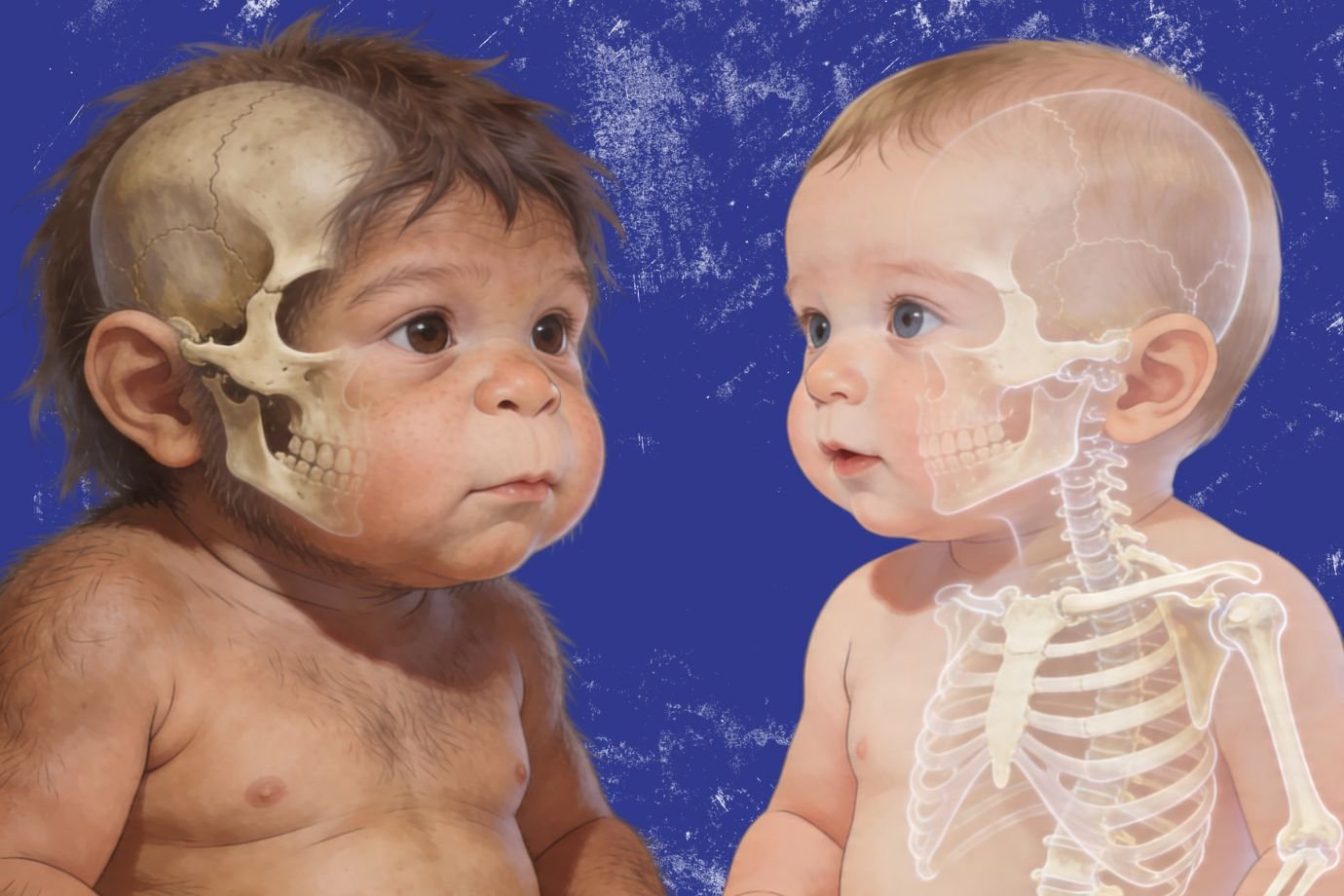
Prolonged childhood is a hallmark of humanity, a period of vulnerability that facilitates complex brain development. However, new data suggest that our closest evolutionary relatives, the Neanderthals, adhered to a more accelerated biological timetable. A recent study, reported by *New Scientist*, indicates that Neanderthal infants were significantly larger than *Homo sapiens* infants at the same age.
Analysis of fossil remains indicates that this difference in stature was not merely a matter of adult robustness, but a growth pattern evident from an early stage. While modern human development is characterized by a slow and gradual progression, Neanderthals appeared to invest energy in rapid physical growth, reaching milestones in body mass and stature much earlier than observed in our own species.
This divergence in maturation rates raises questions regarding the environmental pressures of the era. Accelerated growth may have conferred an evolutionary advantage in harsh climates and high-risk environments, where survival depended on the speed with which an individual achieved physical independence. Conversely, this biological acceleration contrasts with the human strategy of prioritizing long-term neural development.
Although genetic similarities between the two species are extensive, it is these nuances in ontogenetic development that help explain why we followed such distinct trajectories. The discovery reinforces the image of Neanderthals not as a rudimentary version of modern humans, but as a sophisticated lineage with their own biological solutions to the challenges of prehistory.
With information from Exame Inovação.
Source · Exame Inovação