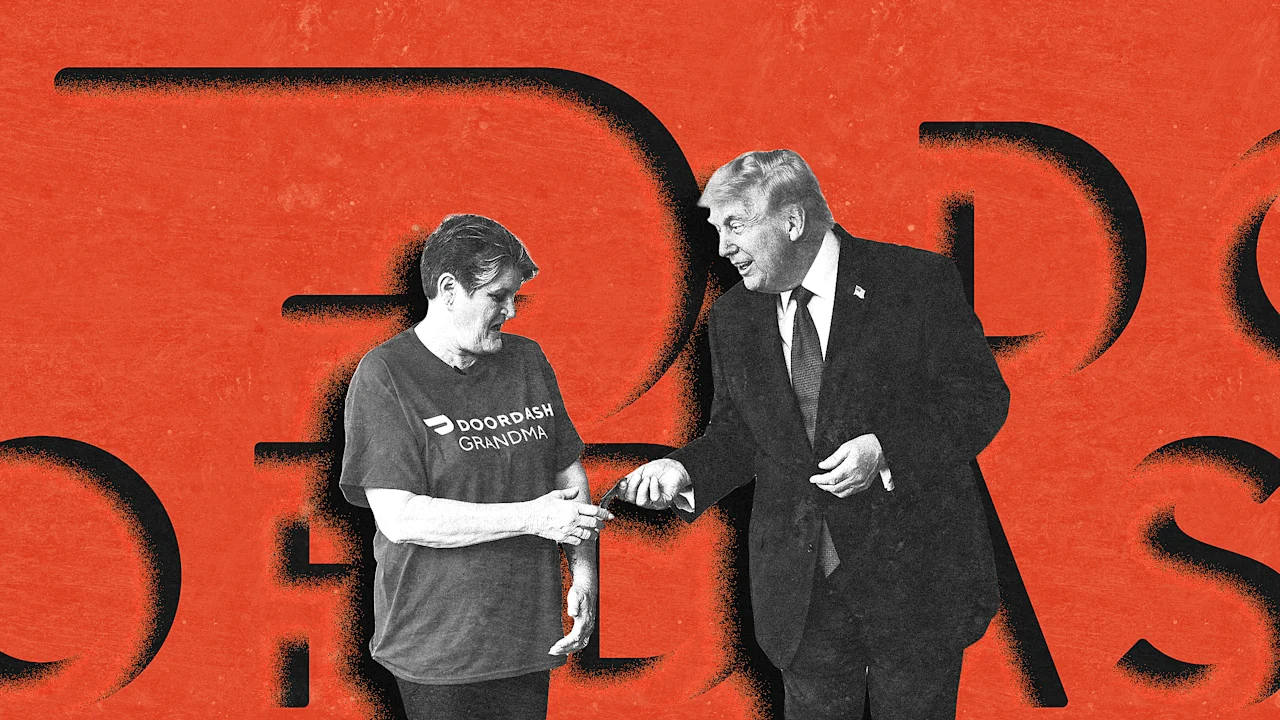
On April 13, 2026, the White House lawn hosted a tableau designed for the age of viral optics: Sharon Simmons, a 58-year-old grandmother of ten, delivering McDonald’s to President Trump. Wearing a "DoorDash Grandma" T-shirt, Simmons was there to serve as the human face of a "No Tax on Tips" policy. The delivery was intended to be a victory lap for both the administration and DoorDash, framing the gig economy as a platform for individual resilience and financial autonomy.
However, the narrative quickly buckled under the weight of its own staging. Critics and observers immediately questioned the authenticity of the encounter, debating whether Simmons was a genuine worker or a political plant. This fixation on her "legitimacy" as a partisan figure, while predictable in a polarized media landscape, ultimately missed the more unsettling reality inherent in the brand’s chosen symbolism.
Whether Simmons is a dedicated "Dasher" or a strategic "ringer" is secondary to what her presence represents. By highlighting a woman who relies on food delivery tips to fund her husband’s Stage 3 cancer treatment, the stunt inadvertently exposed the fragility of the modern social contract. When a brand uses the necessity of elder labor and medical debt as a marketing hook, it ceases to be an aspirational story of "keeping more of what you earn" and becomes a stark portrait of an economy where the safety net has been replaced by the hustle.
With reporting from Fast Company.
Source · Fast Company Design