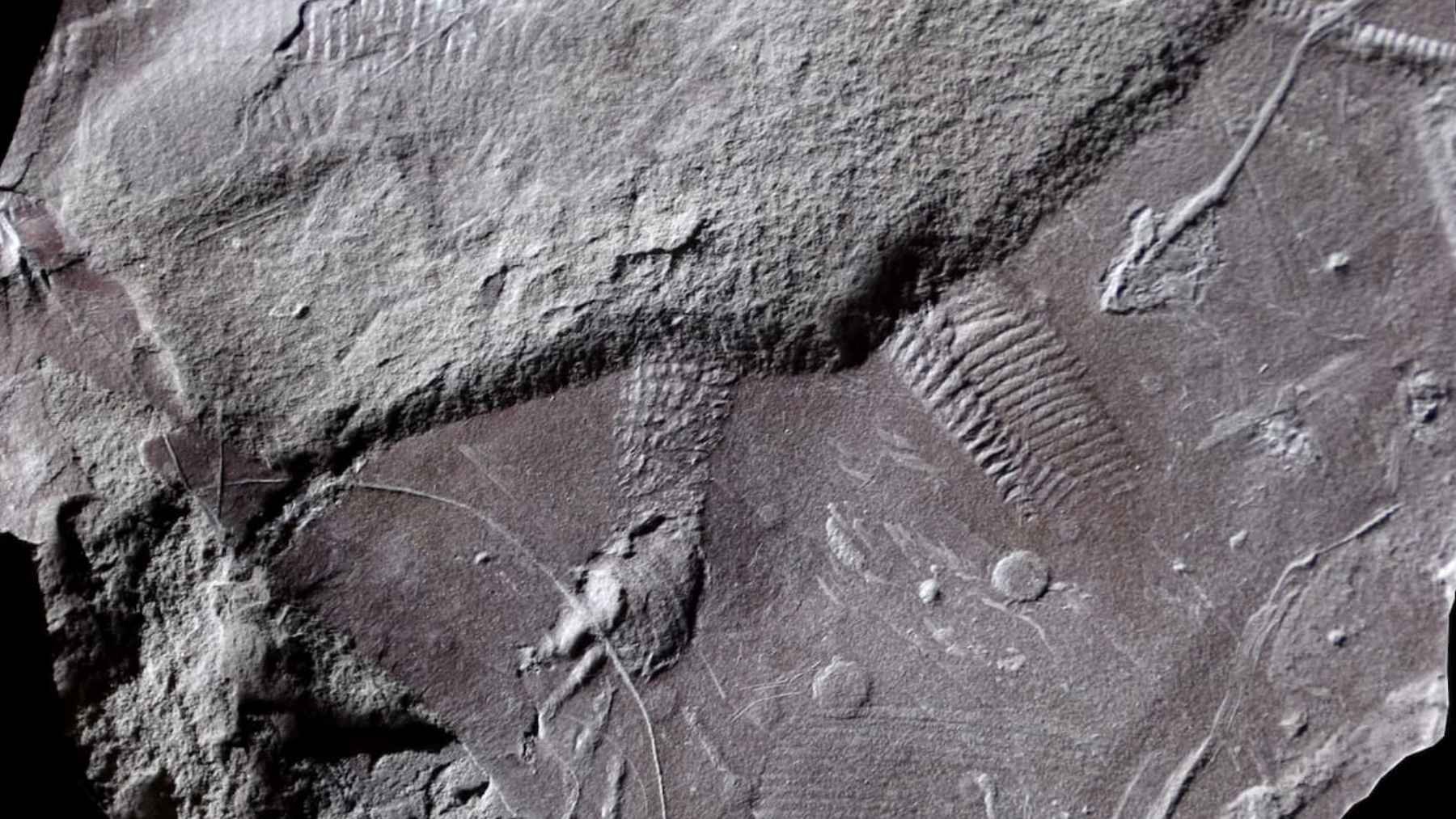
Paleontology often relies on the architecture of bone, leaving the softer realities of ancient life—skin, muscle, and scales—to the imagination. However, a recent discovery in central Germany has provided a rare, literal impression of the past. A series of rock slabs, dating back roughly 300 million years, has surfaced with exceptionally preserved soft-tissue details, offering a glimpse into the physical texture of a prehistoric reptile.
The specimens are remarkable not for their skeletal structure, but for the fidelity of the impressions they left in fine-grained sediment. These "pointy" imprints record the distinct contours of the animal’s body, including scale patterns that bear a striking resemblance to those found on modern reptiles. Such preservation is an anomaly in the fossil record, where soft tissues typically decay long before mineralization can occur.
Beyond the aesthetic intrigue, the find provides a significant data point for the long arc of evolutionary biology. The similarity between these Paleozoic scales and those of contemporary species suggests that certain biological designs reached a functional peak early in the history of terrestrial life. By studying these ancient surfaces, researchers can better understand how early land-dwellers adapted to their environments, using a structural blueprint that nature has seen little reason to revise in the intervening 300 million years.
With reporting from Exame Inovação.
Source · Exame Inovação