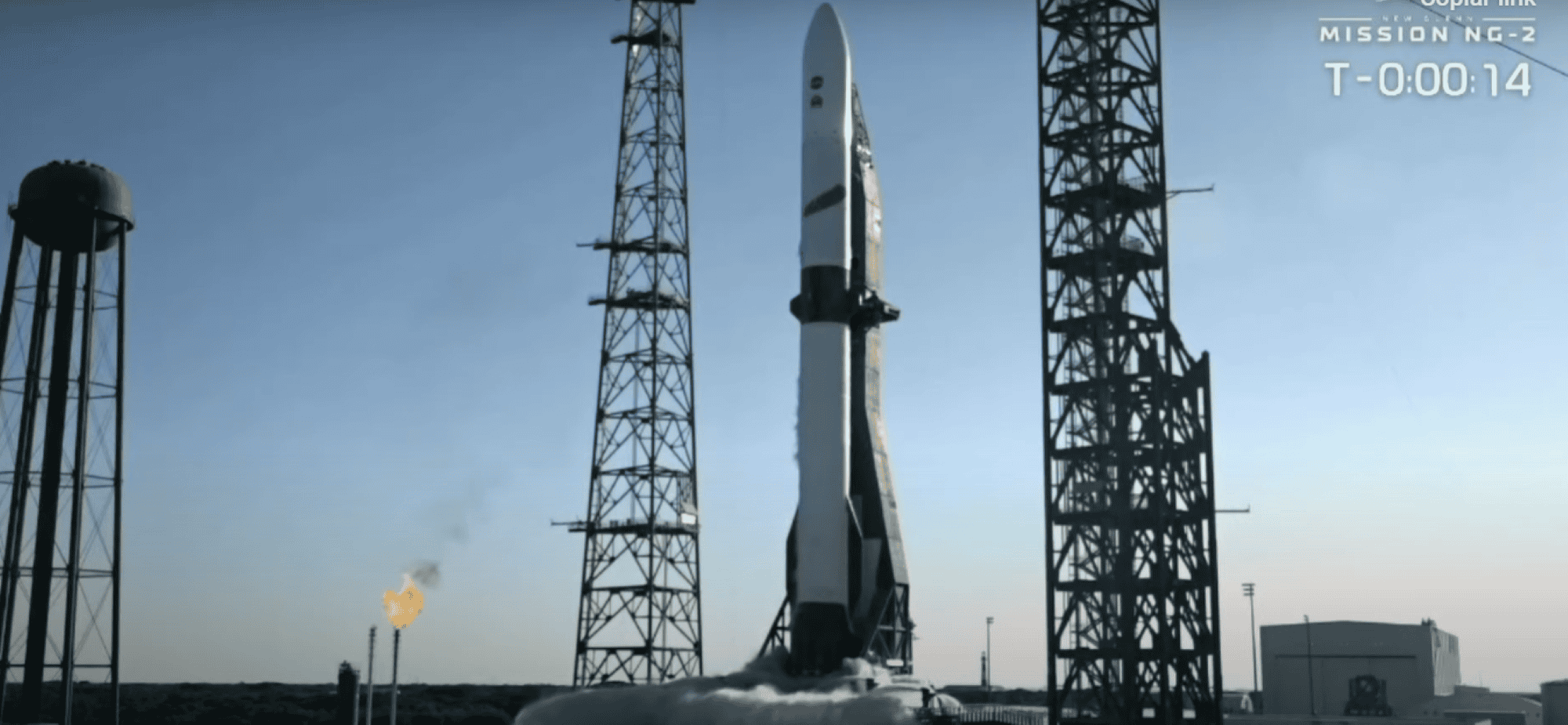
Blue Origin, Jeff Bezos's aerospace company, has reached an operational maturity stage that redefines its extra-atmospheric ambitions. Last Sunday (19), the New Glenn rocket completed its third flight, marking the first time a company booster was reused in an orbital mission. This achievement occurs just over a year after the system's official debut, concluding a decade of rigorous development and testing.
The booster in question boasts a notable resume: in November, it was responsible for propelling two NASA robotic probes toward Mars. Following its successful return to an oceanic platform on that occasion, the component underwent review processes to now place an AST SpaceMobile communications satellite into orbit. The maritime landing maneuver was precisely repeated approximately ten minutes after launch, solidifying the recovery cycle.
The capacity for reusability is not merely a technical triumph but the central pillar of Blue Origin's commercial viability. By emulating SpaceX's efficiency model with the Falcon 9, the company seeks to drastically reduce space access costs and increase the frequency of its operations. The immediate horizon includes robust contracts with NASA for lunar missions, signaling that the orbital economy is poised to become significantly more competitive.
With information from Olhar Digital.
Source · Olhar Digital