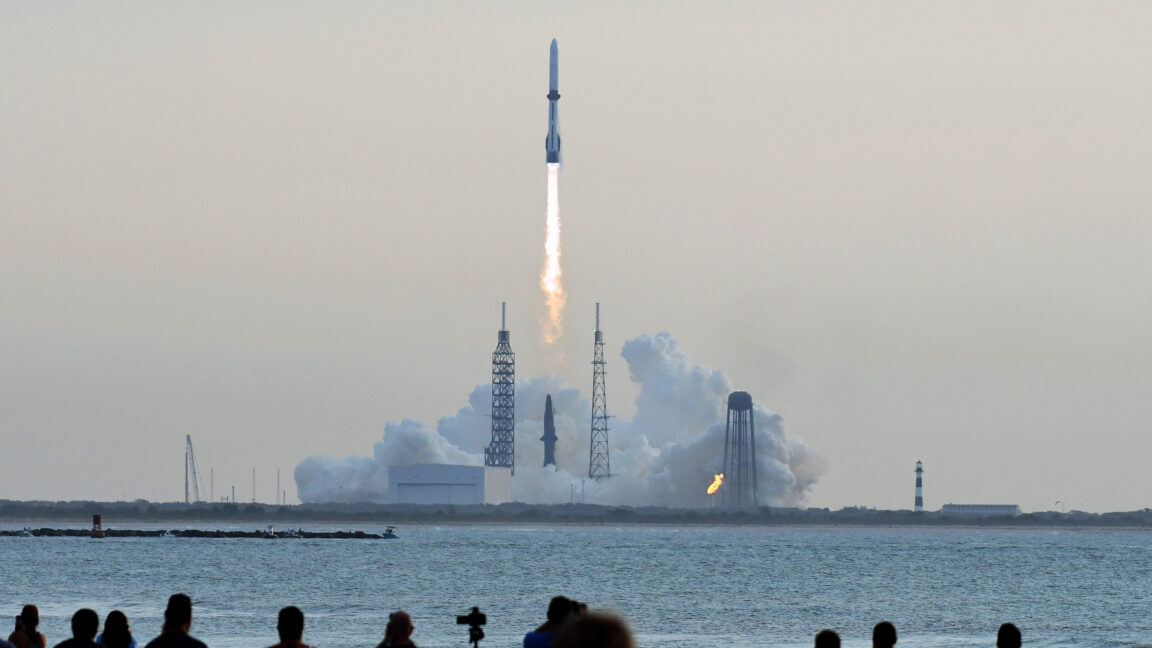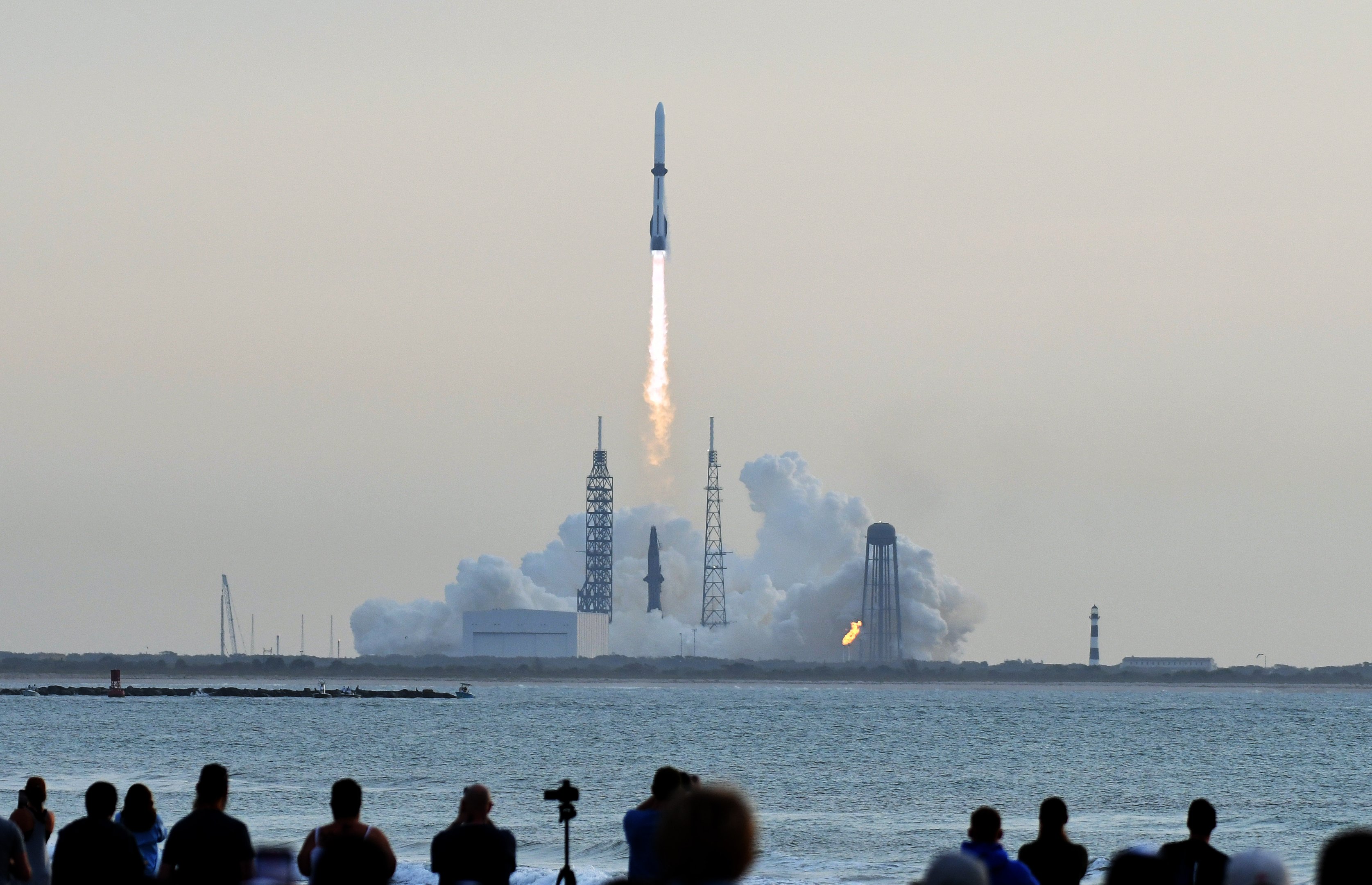
On Sunday, Blue Origin reached a long-awaited milestone in the private space race: the successful landing of its New Glenn booster. While the sight of a rocket returning to Earth has become a familiar spectacle for Elon Musk’s SpaceX, for Jeff Bezos’s aerospace firm, the event marks a critical transition from suborbital experiments to the serious business of orbital logistics.
The New Glenn is a heavy-lift vehicle designed to carry massive payloads into orbit, a significantly more complex undertaking than the company’s previous suborbital New Shepard flights. By successfully recovering the first-stage booster, Blue Origin has demonstrated it can execute the precise maneuvers required for reusability—a feat that is no longer just an engineering trophy, but a baseline requirement for economic viability in modern spaceflight.
This successful recovery places Blue Origin in direct competition with SpaceX’s Falcon 9 and Starship programs. As the industry moves toward a model of high-frequency launches, the ability to refurbish and relaunch hardware is the only way to drive down the cost per kilogram to orbit. For Bezos, the New Glenn’s landing is more than a technical success; it is the first real step toward breaking a monopoly on reusable heavy-lift architecture.
With reporting from Exame Inovação.
Source · Exame Inovação