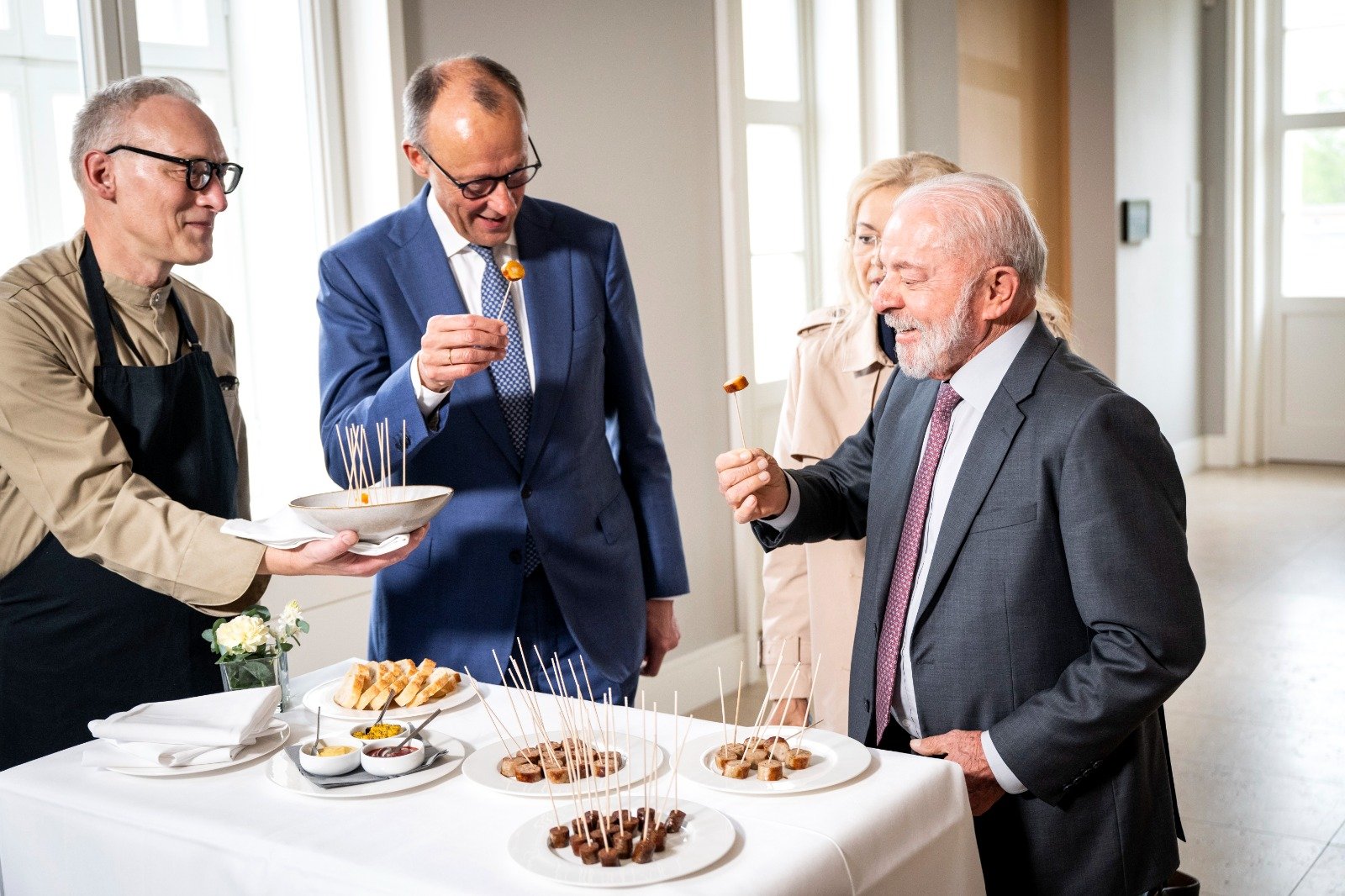
Diplomacy is often a performance of local customs, a series of choreographed gestures designed to signal alignment. During his recent state visit to Germany, Brazilian President Luiz Inácio Lula da Silva punctuated his itinerary with a specific, low-stakes promise: a tasting of the local bratwurst. In Hannover, the leader took a brief detour from high-level economic discussions to engage in the age-old ritual of the diplomatic photo-op meal.
The stop was more than a mere culinary whim; it served as a calculated follow-up to a recent controversy in Belém. After remarks regarding local food traditions sparked a minor domestic debate in Brazil, the president’s public embrace of German sausages appeared to be an exercise in narrative management. By leaning into a display of culinary curiosity, Lula sought to replace the friction of previous comments with a simpler, more relatable image of international goodwill.
While the image of a head of state sampling street food is a staple of political theater, it underscores the softer mechanics of international relations. Beyond the trade agreements and climate pacts discussed in Berlin, these moments are designed to project cultural openness. In the theater of geopolitics, the humble sausage becomes a tool of soft power—a digestible symbol of the ongoing rapport between Brasília and Berlin.
With reporting from Exame Inovação.
Source · Exame Inovação