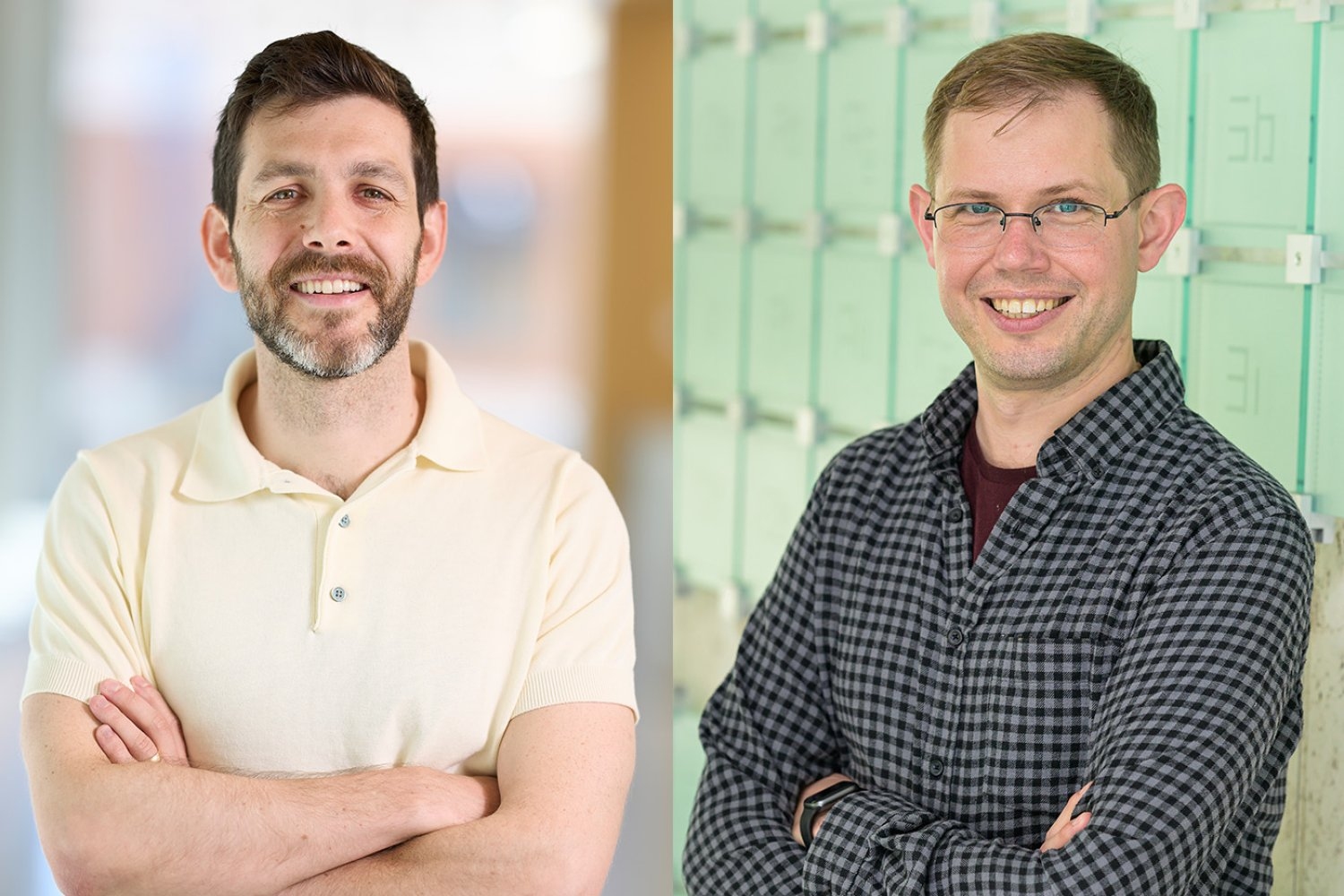
The Harold E. Edgerton Faculty Achievement Award, established in 1982 to honor the legacy of the legendary "Doc" Edgerton, remains one of MIT’s most significant recognitions for junior faculty. This year, the Institute has named Associate Professors Jacob Andreas and Brett McGuire as the 2026 recipients, highlighting their contributions to the disparate but increasingly intersecting fields of computational intelligence and interstellar chemistry.
In the Department of Chemistry, Brett McGuire has fundamentally altered the scientific understanding of the carbon cycle beyond Earth. By synthesizing laboratory spectroscopy with radio astronomy, McGuire’s lab has successfully identified molecular "fingerprints" within the faint data of the cold interstellar medium. His discovery of polycyclic aromatic hydrocarbons—complex organic molecules—suggests a much richer chemical complexity in the vacuum of space than previously theorized, providing a new lens through which to view the chemical origins of the universe.
Across the campus in the Department of Electrical Engineering and Computer Science (EECS), Jacob Andreas is being recognized for research that sits at the vanguard of how machines interpret human intent. As an innovative force within the department, Andreas’s work focuses on the intersection of language and computation, seeking to build systems that move beyond simple pattern matching toward a more profound structural understanding.
The Edgerton Award serves as a bellwether for the future of the American research university. In honoring McGuire and Andreas, MIT signals its continued investment in the "long-arc" of science: the slow, methodical work of decoding the universe’s oldest chemical signals and building its newest cognitive architectures.
With reporting from MIT News.
Source · MIT News