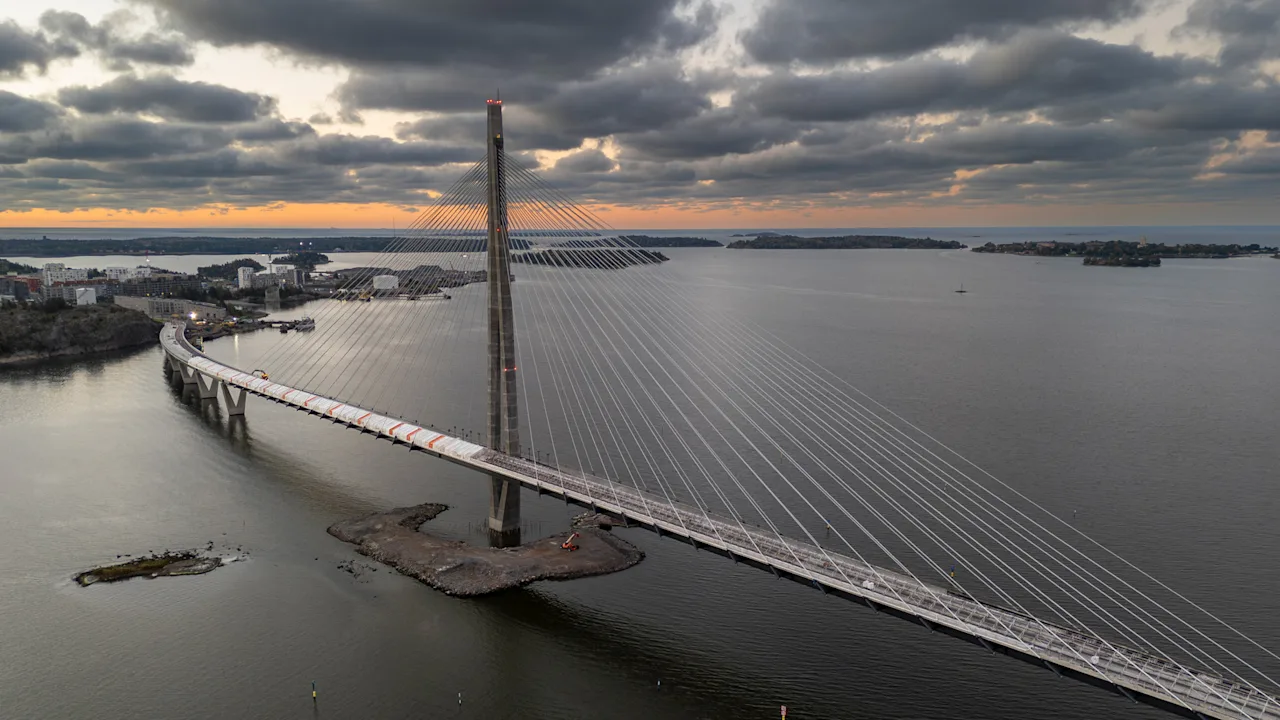
Helsinki is undergoing a quiet transformation as it expands into former industrial zones. On the island of Laajasalo, new apartment blocks are replacing old infrastructure, bringing a surge of residents who need a direct link to the city center. The solution is the Kruunuvuorensilta, or \"Crown Bridge,\" a 1.2-kilometer span that represents a firm commitment to the city’s goal of reducing car dependency.
While most modern bridges are built to accommodate the roar of traffic, the Kruunuvuorensilta explicitly bans private vehicles. Opening to pedestrians and cyclists this month, with tram service to follow, the bridge forces drivers to take longer, existing routes. It is a key node in Helsinki’s burgeoning \"bicycle superhighway\" network, designed to move people across the water without contributing to downtown congestion.
The design, a collaboration between Knight Architects and WSP Finland, prioritizes the human experience over mere throughput. Because a tram crossing takes only minutes, the architects focused on the texture of the journey for those walking or cycling. The goal was to create a space that feels accessible and inviting; as Tom Osborne of Knight Architects notes, if a path feels too arduous or utilitarian, the public simply won't use it. In Helsinki’s view, the future of urban transit isn't just about speed, but about the quality of the connection.
With reporting from Fast Company Design.
Source · Fast Company Design