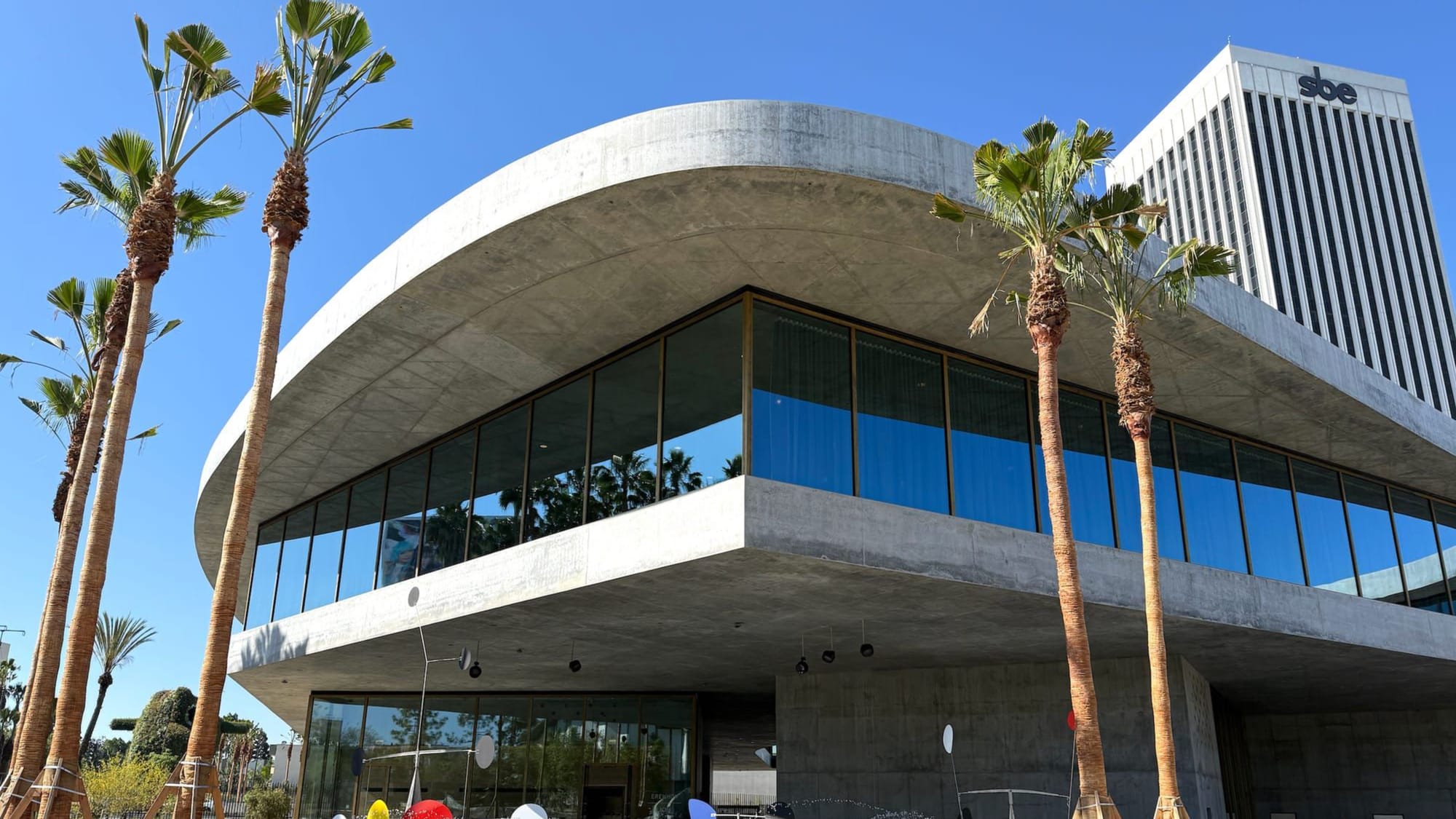
The Los Angeles County Museum of Art (LACMA) has long been a centerpiece of the city’s cultural landscape, but its latest architectural evolution signals a departure from the rigid structures of the past. At the heart of this transformation is a new building that prioritizes fluidity, anchored by the return of Alexander Calder’s 1964 fountain, "Three Quintains (Hello Girls)." The restored work serves as a kinetic prelude to a space designed to challenge how visitors interact with institutional art.
The museum’s new layout eschews the traditional, chronological "march through history" in favor of an open plan. This design encourages free-floating associations, allowing disparate works and eras to exist in conversation without the heavy hand of a predetermined path. For the curator, it is an exercise in thematic flexibility; for the visitor, it is an invitation to chart a personal, perhaps even accidental, trajectory through the collection.
While the unconventional approach has been met with praise for its modern sensibility, it also presents a certain level of disorientation. Some visitors may find themselves feeling unmoored by the lack of a singular narrative arc. Yet, this shift toward a more decentralized and subjective museum experience reflects a broader trend in the art world toward democratized interpretation, moving away from the rigid hierarchies that have historically defined the gallery experience.
With reporting from Hyperallergic.
Source · Hyperallergic