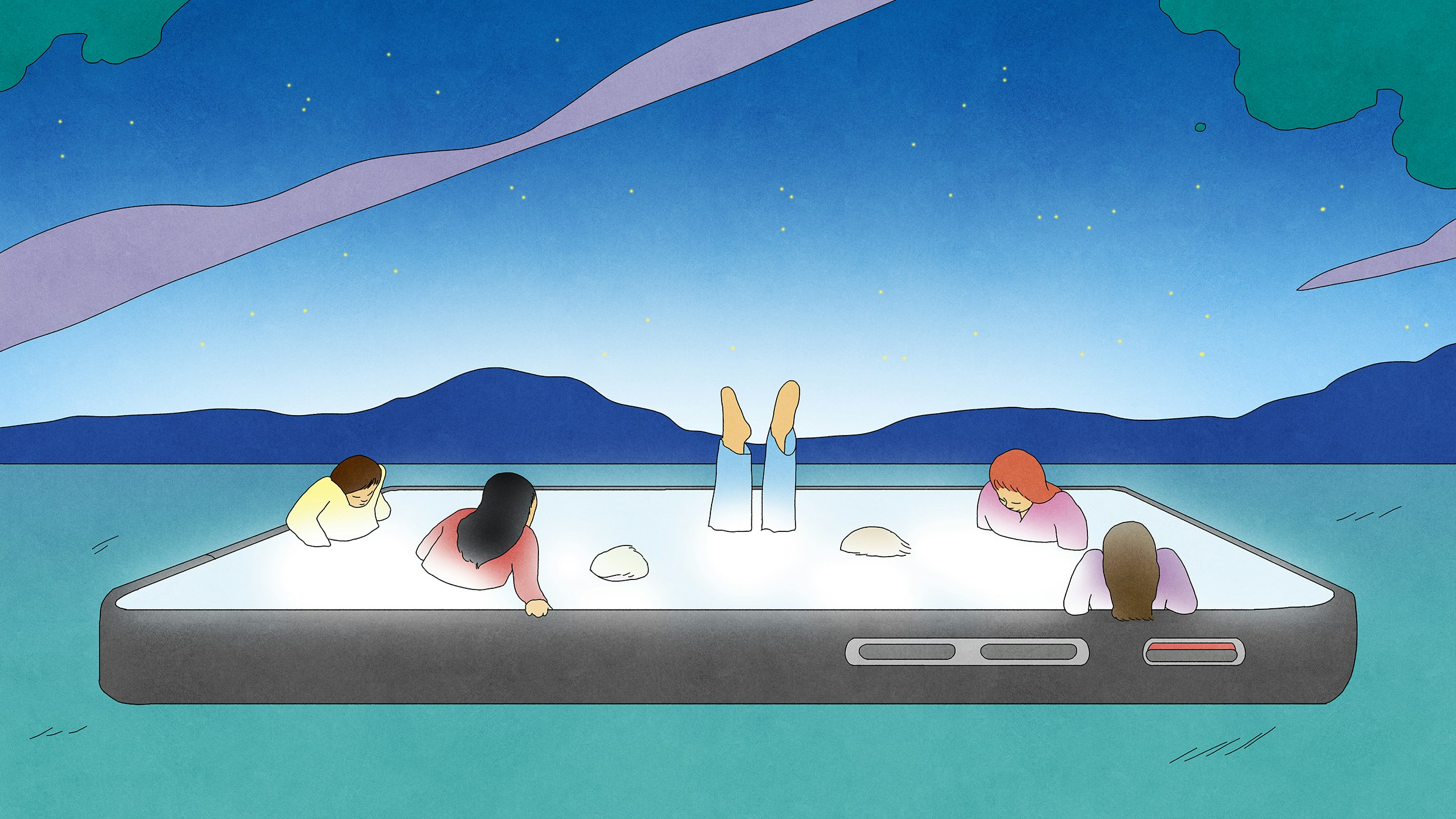
The first time you check your work email in the bathroom, it feels like a minor coup—a small optimization of a crowded day. But that "tiny victory" masks a profound shift in the geography of our lives. For the "hinge generation"—those who spent a childhood offline and an adolescence tethered to the web—the internet has transitioned from a window we peer through into an atmosphere we simply inhabit.
In the era of dial-up, the internet required a ceremony. It was a fixed point in the home, often a single desk in a specific room. To "go online" was a deliberate act, one that involved negotiating with family members and listening to the modem’s nervous hymn. Because the portal was stationary, the rest of the house remained a sanctuary. The internet was a destination you visited, much like going to the attic or the garden.
The fundamental change of the early 2000s wasn't just an increase in users; it was the evaporation of the effort required to connect. As the internet became pervasive, it stopped being a place and became an environment. It followed us into the most private corners of our domestic lives, dissolving the boundaries between public discourse and personal solitude. We no longer go to the internet; we live inside it.
With reporting from Noema Magazine.
Source · Noema Magazine