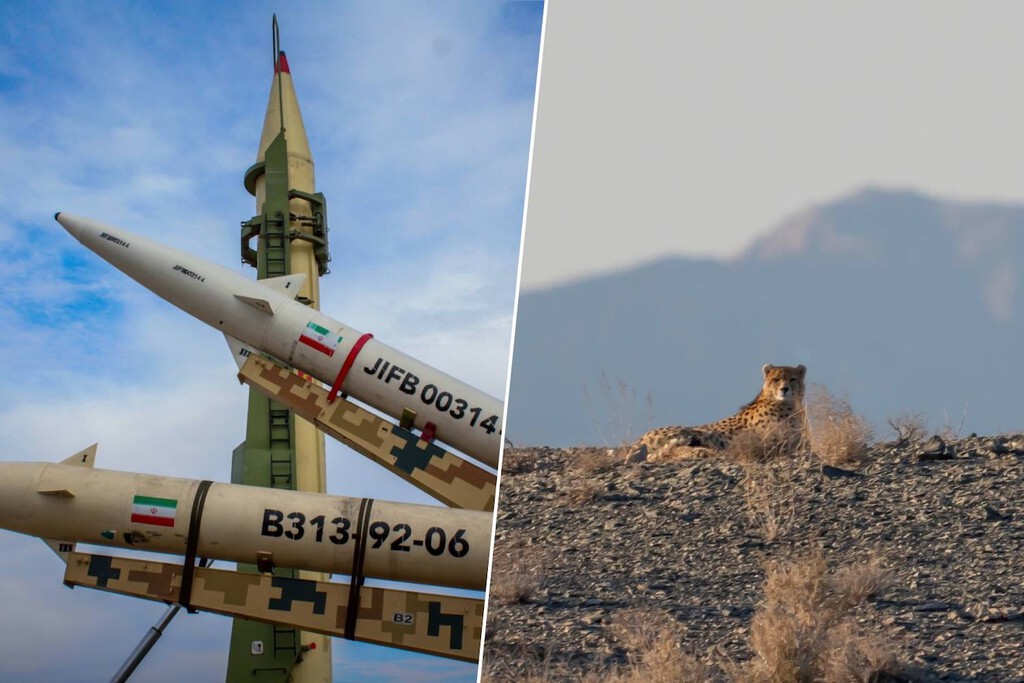
For the Asiatic cheetah (*Acinonyx jubatus venaticus*), survival has never been a matter of speed, but of statistics. With only 27 individuals remaining globally—all identified and located within Iranian territory—the subspecies already teetered on the brink of extinction. However, the onset of military hostilities involving the United States, Israel, and Iran in February 2026 transformed a biological crisis into an imminent collapse.
The greatest peril lies not merely in direct bombardments, but in the logistical paralysis imposed by the war. According to Bagher Nezami, director of the Asiatic Cheetah Conservation Project, the conflict has disrupted the monitoring system vital for the protection of these felines. Field vehicles utilized by scientists and rangers now risk being mistaken for military targets in the vast desert areas, compelling the suspension of anti-poaching patrols and habitat maintenance.
The tragedy is compounded by a cruel irony of timing: just days before the conflict's escalation, researchers had documented a female with five cubs in North Khorasan province, a rare beacon of hope for local biodiversity. With the country under blackouts and severe movement restrictions, the fate of these and the other few survivors remains unknown, underscoring how geopolitics can dictate the irremediable end of an evolutionary lineage.
With information from Xataka.
Source · Xataka