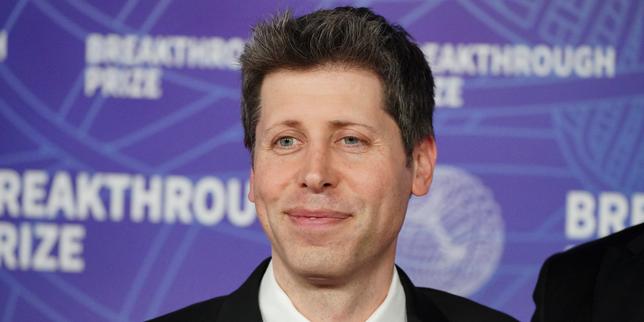
OpenAI, under the leadership of Sam Altman, has positioned itself not just as a developer of cutting-edge technology, but as a primary architect of its future governance. However, the company’s recent proposals regarding social risk mitigation and benefit sharing have reignited a fundamental debate: whether the responsibility for defining the "rules of the game" can safely be left to the very entities profiting from the disruption.
The core of the issue lies in the inherent conflict of interest when a private corporation acts as both player and referee. While OpenAI advocates for frameworks to manage the societal shifts triggered by artificial intelligence, these models often reflect the interests of Silicon Valley rather than the public interest. Trusting a commercial giant to self-regulate assumes that its corporate objectives will naturally align with broader social stability—a premise that history rarely supports.
As the technological revolution accelerates, the question of who benefits remains unanswered. Relying on the goodwill of major AI players to distribute the gains of productivity or to safeguard against systemic risks is a precarious strategy. True oversight requires a neutral, public-facing counterweight to ensure that the rules governing AI are not merely extensions of a corporate business plan.
With reporting from Le Monde Pixels.
Source · Le Monde Pixels