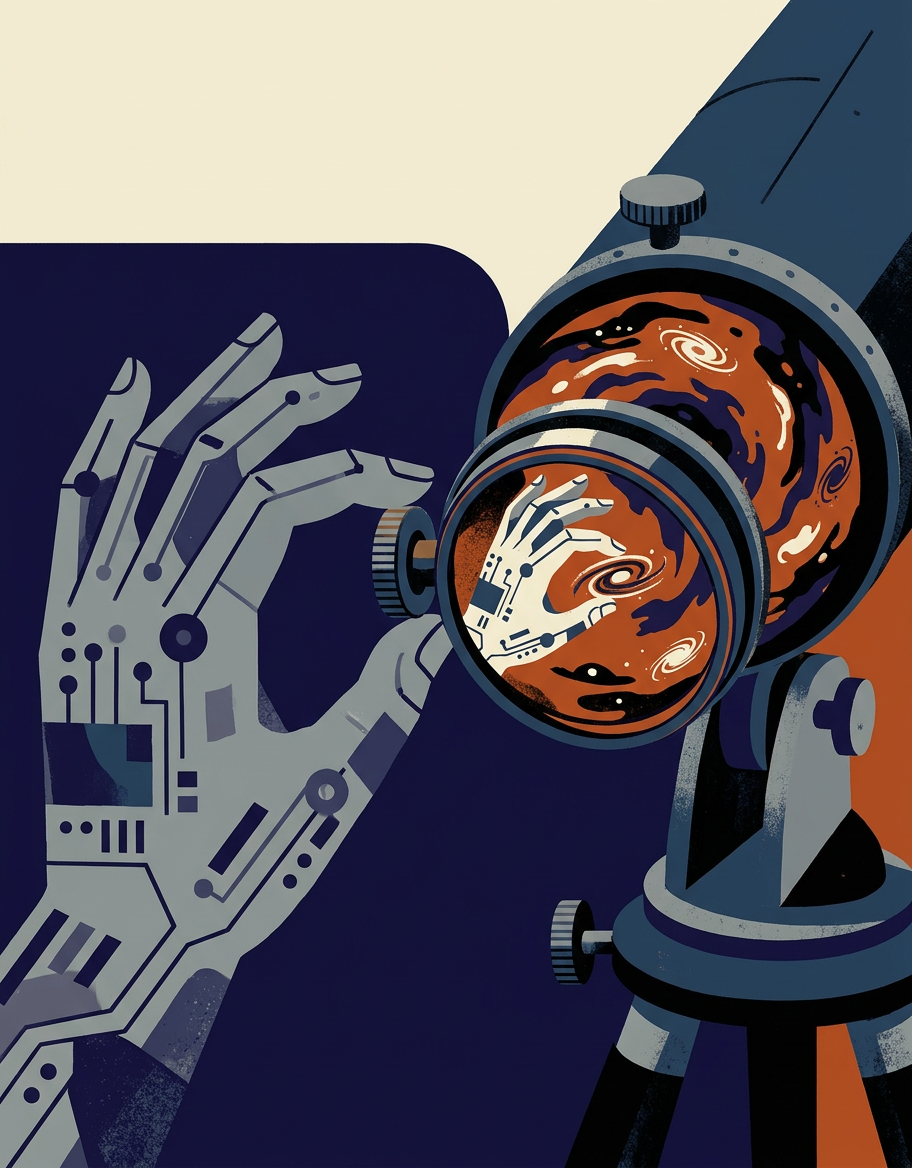
Science has recently produced the most faithful portrait of the cosmos's infancy and maturity. Named COLIBRE, the project, led by researchers from the universities of Durham, Leiden, and Portsmouth, utilized the COSMA8 supercomputer to solve fundamental physics equations within a scenario of universal expansion. The result is a "synthetic universe" that spans from the first billion years after the Big Bang to the current configuration of galaxies.
COLIBRE's primary distinction from previous models lies in its meticulous treatment of galactic dust and cold gas. Hitherto, large-scale simulations typically neglected these elements due to computational complexity. However, it is precisely within the collapse of these frigid clouds that stars ignite. By incorporating these variables, scientists have achieved unprecedented precision in reproducing molecule formation and stellar dynamics.
The model's visual and statistical fidelity is such that even experienced astronomers find it challenging to distinguish simulated images from actual telescope observations. The model not only "draws" galaxies but autonomously calculates physical properties such as luminosity, color, and size. For the team, the project's success demonstrates that our current understanding of the laws of physics is robust enough to reconstruct, bit by bit, the history of time.
With information from Olhar Digital.
Source · Olhar Digital