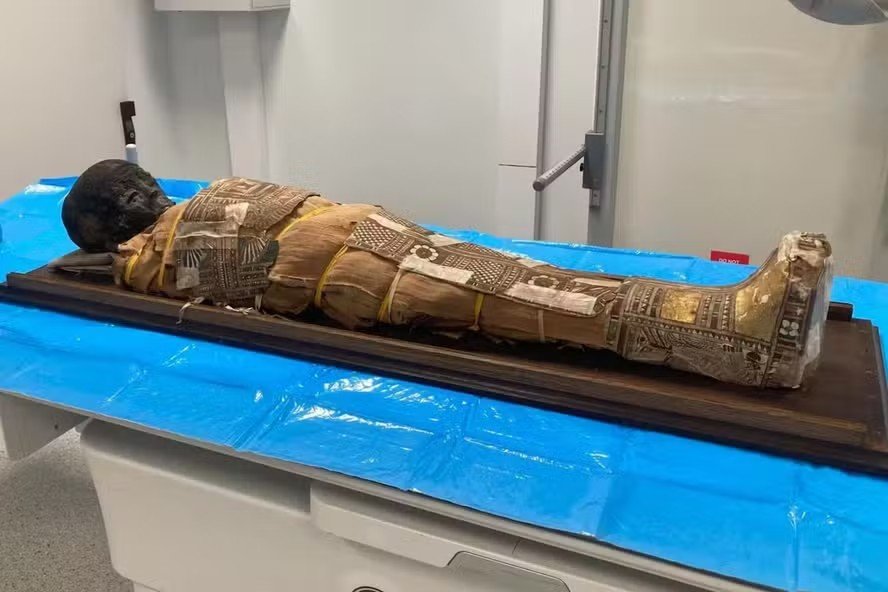
For more than a hundred years, the remains of an eight-year-old Egyptian child were treated as a static artifact within the collection of the Archdiocesan Museum in Wrocław, Poland. The mummy, dating back over two millennia, was a fixture of the museum’s historical archive, yet its internal secrets remained largely unexamined by modern forensic standards.
Recent investigations into the mummy’s composition have revealed a hidden papyrus scroll tucked away within the ancient wrappings. This discovery, made possible by more sophisticated non-invasive analysis, transforms the artifact from a mere archaeological specimen into a potential vessel of lost literature or ritual instruction. Such scrolls were often placed with the deceased to serve as guides or protections in the afterlife, though their presence in child burials provides specific insight into the funerary honors afforded to the young.
The find highlights a broader trend in contemporary archaeology: the "re-discovery" of items already in museum custody. As imaging technology improves, researchers are finding that significant breakthroughs often occur not in the field, but within the climate-controlled archives of established institutions. For the Wrocław child, the linen has finally begun to yield the narrative it was meant to protect.
With reporting from Exame Inovação.
Source · Exame Inovação