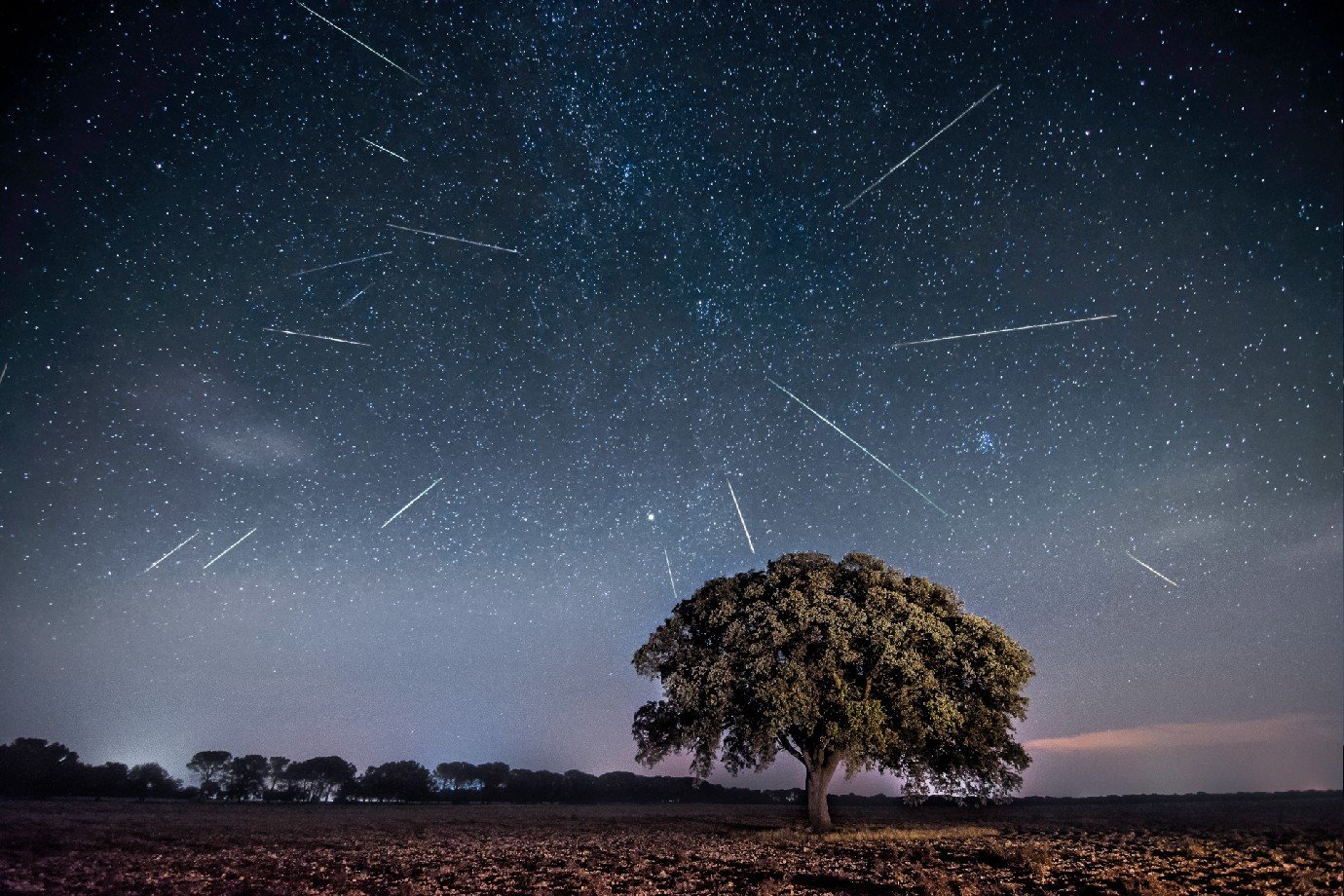
Every April, the night sky offers a brief, luminous reminder of the solar system’s long memory. The Lyrid meteor shower occurs as Earth drifts through a field of debris—a trail of ice and rock left behind by Comet Thatcher. While the resulting streaks of light are a predictable fixture of the spring calendar, the comet itself remains one of our system's most elusive residents.
Comet Thatcher, or C/1861 G1, operates on a timeline that humbles human observation. It completes a single orbit around the Sun every 415 years. Because its last passage through the inner solar system occurred in 1861, before the advent of modern astrophotography, the comet has never been captured on film or by digital sensor. It is a celestial architect known only by the ruins it leaves in its wake.
This annual encounter serves as a bridge between the ephemeral and the deep time of the cosmos. As these particles of dust—some no larger than a grain of sand—incinerate in our atmosphere, they provide a rare tangible connection to a body that won't return to our neighborhood until the 23rd century. In an era of constant surveillance and deep-space imaging, Thatcher remains a phantom, felt but unseen.
With reporting from Exame Inovação.
Source · Exame Inovação