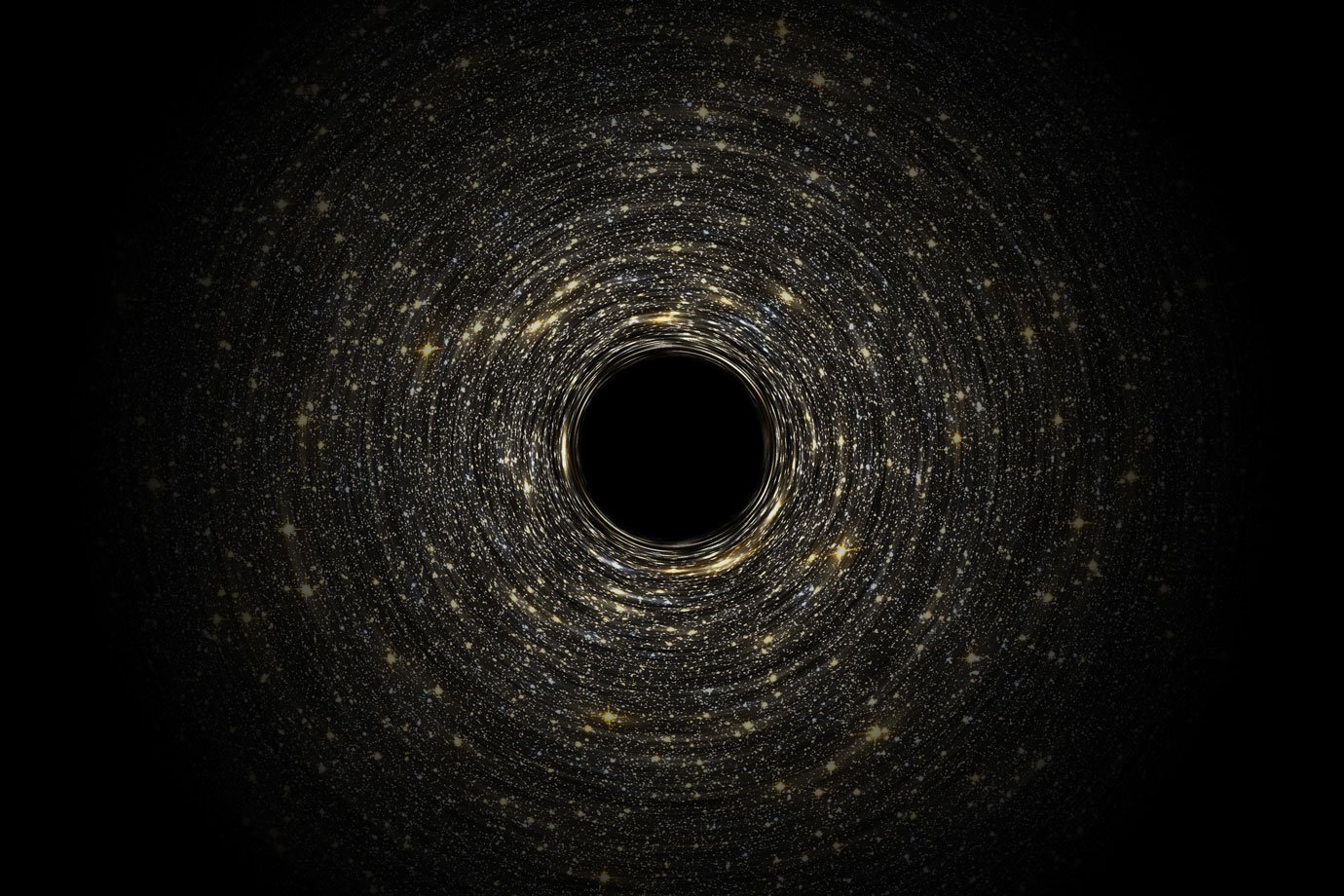
Astronomers have long understood that black holes are more than just cosmic drains; they are also engines. For the first time, researchers have successfully measured the "instantaneous power" of relativistic jets erupting from a black hole, providing a concrete metric for a phenomenon that has historically been difficult to quantify in real-time.
The energy recorded is staggering—equivalent to the output of 10,000 suns. These jets, composed of plasma moving at near-light speeds, act as a primary regulatory mechanism for their host galaxies. By heating the surrounding interstellar gas, they can prevent it from cooling and collapsing into new stars, effectively dictating the growth and structural limits of the galaxy itself.
This measurement marks a significant shift from observing the long-term effects of black holes to quantifying their immediate kinetic impact. Understanding this feedback loop between a central singularity and its stellar neighborhood is crucial for refining our models of cosmic evolution. It suggests that the largest structures in the universe are, in part, the products of high-energy engineering on a grand scale.
With reporting from [Exame Inovação].
Source · Exame Inovação