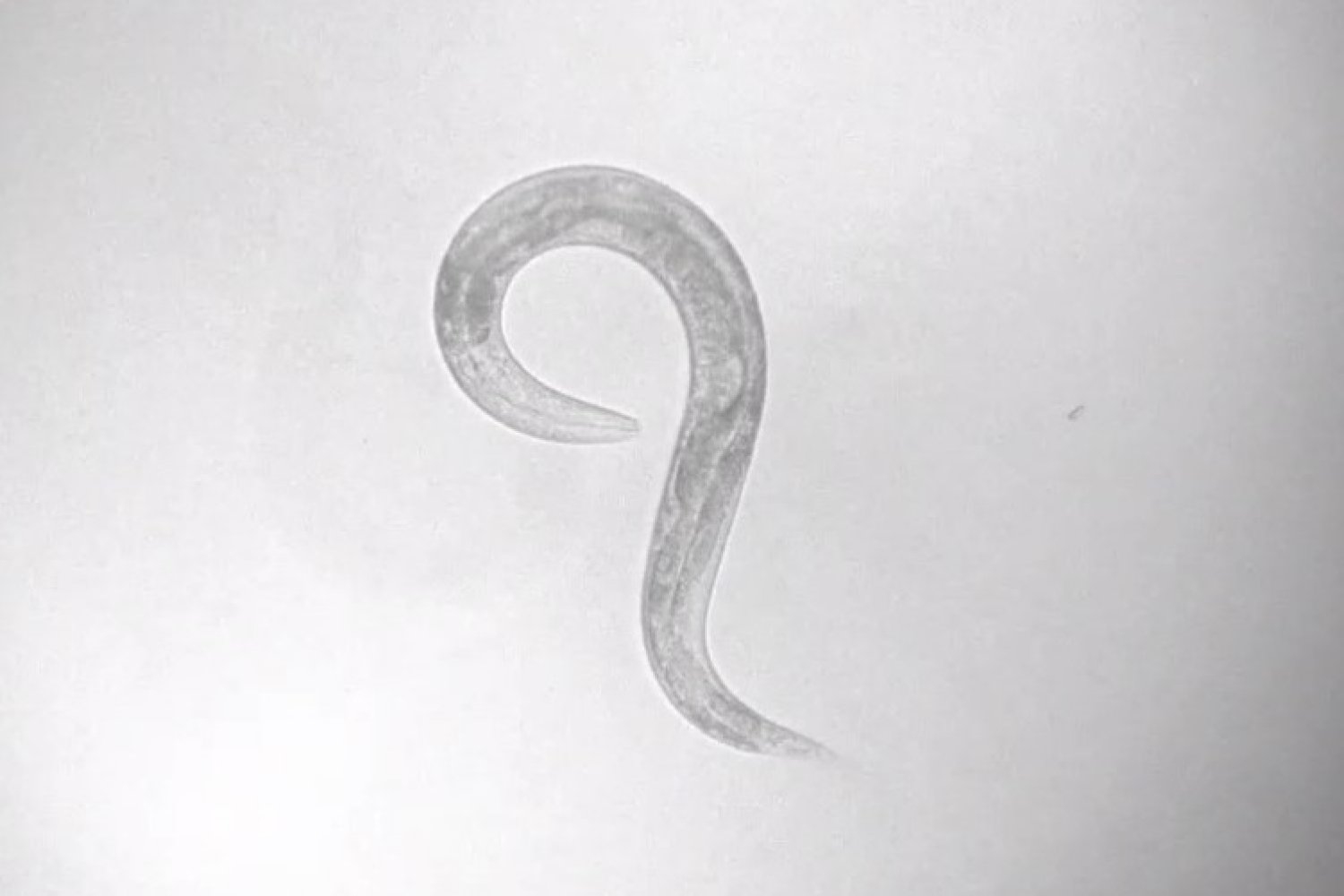
The relationship between an organism’s internal architecture and its outward behavior has long been a black box in neuroscience. While we can observe an animal reacting to its environment, tracing the specific neural path from a sensory stimulus to a physical action is a feat of immense complexity. Now, researchers at MIT’s Picower Institute for Learning and Memory have provided a rare, granular look at this process by mapping the circuitry of the *C. elegans* nematode.
Led by Steven Flavell and Talya Kramer, the study published in *Nature Neuroscience* details how these microscopic worms navigate using olfactory cues. The process is more than a simple reflex; it is a coordinated sequence of sensing, planning, and execution. Because *C. elegans* changes direction by reversing—much like a simple radio-controlled car—the brain must manage a sophisticated handoff between neurons that identify a smell and those that trigger a backward pivot and a subsequent forward lunge.
By identifying the specific neurons responsible for each stage of this navigational choreography, the MIT team has moved closer to a mechanistic understanding of how brains implement behavior. It is a foundational step in decoding the fundamental logic that allows living systems to translate information into intent, and intent into movement.
With reporting from MIT News.
Source · MIT News