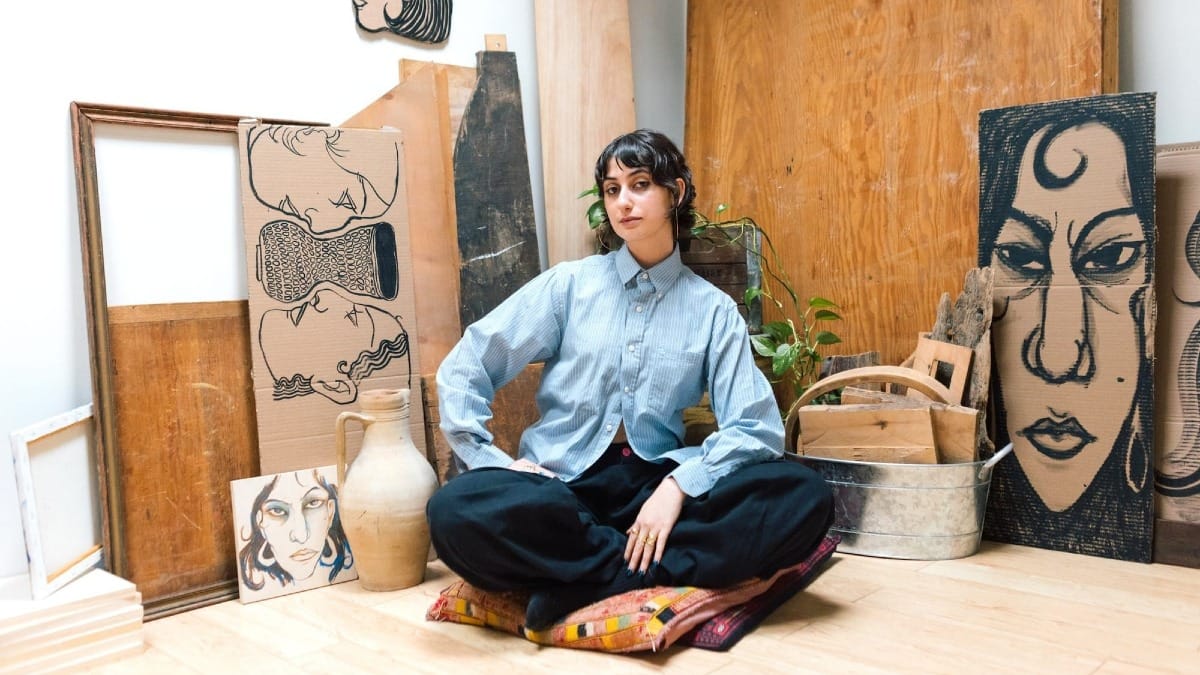
Rama Duwaji’s transition from private artist to New York City’s First Lady has been defined by the peculiar gravity of modern political life. In her first interview since her husband, Zohran Mamdani, took office on January 1, Duwaji presents a figure of deliberate humility. Surrounded by the tactile realities of drawings and ceramics at Gracie Mansion, she remains focused on a practice that predates her sudden proximity to power—even as that power invites a level of scrutiny that can feel both invasive and archaic.
That scrutiny recently manifested in the surfacing of teenage social media posts by far-right outlets, a familiar digital-age tactic intended to destabilize rising public figures. Duwaji’s response—a candid apology—was an attempt to bridge the gap between a private past and a public present. It underscores a recurring tension in contemporary culture: the difficulty of maintaining a personal evolution when the internet preserves every adolescent impulse as a permanent record.
This friction between individual expression and institutional weight is echoing across the broader art world. In Los Angeles, the opening of LACMA’s new building marks the end of a decade-long saga of design pivots and ballooning budgets, reflecting the struggle to reconcile civic ambition with architectural reality. Similarly, in the UK, the "Boycott the Bezos Met Gala" campaign highlights a growing unease with the influence of tech wealth on cultural heritage. For artists like Duwaji, the challenge remains keeping the work central while the systems around them continue to shift.
With reporting from Hyperallergic.
Source · Hyperallergic