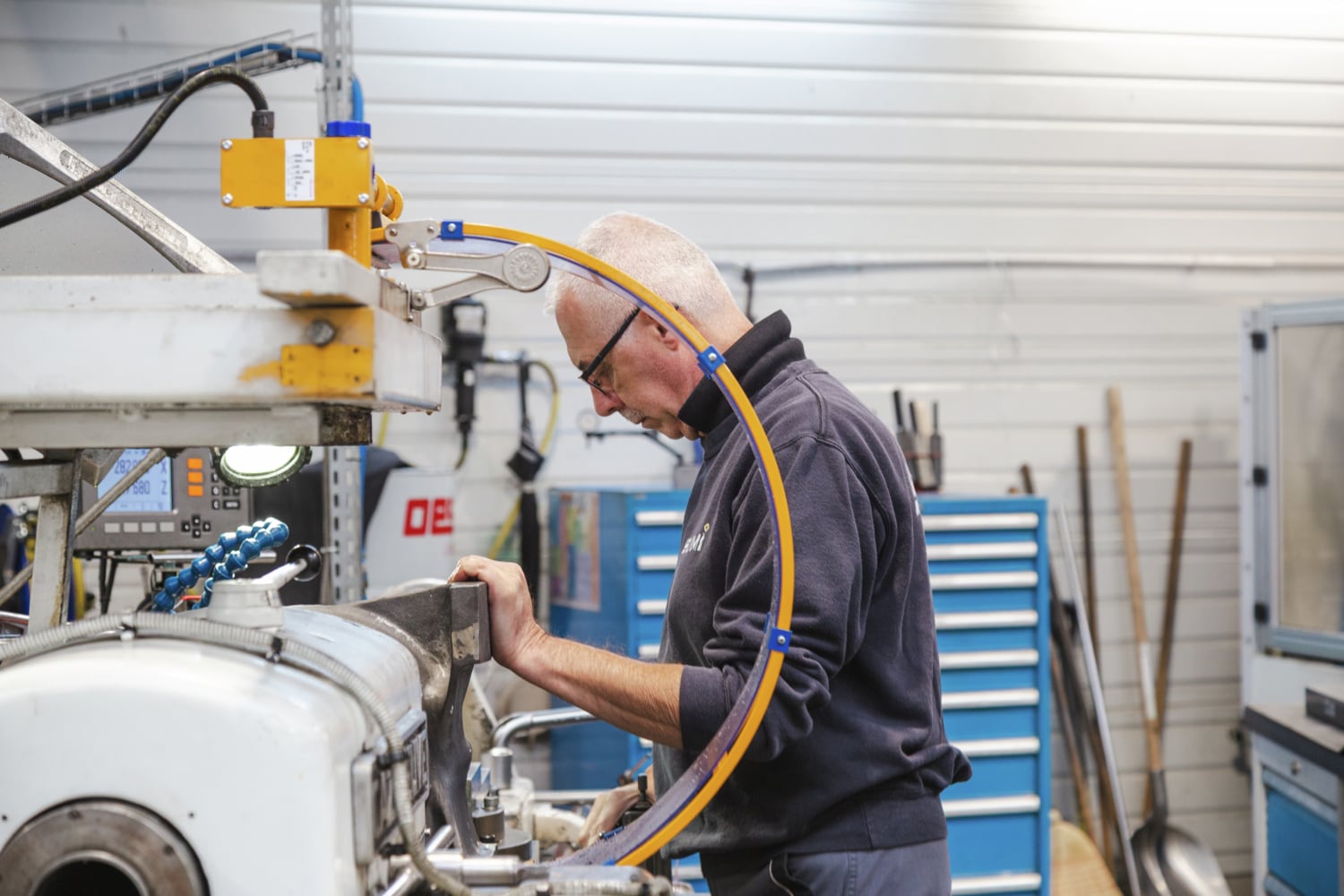
In the quiet industrial zone of Illzach, within France’s Haut-Rhin region, the Franco-Swiss firm Rütschi has operated with little fanfare since 1970. Though its workforce is modest—numbering roughly 70 employees—the company sits at a critical junction of France’s renewed nuclear energy strategy. As the country pivots back toward atomic power to meet its climate and energy sovereignty goals, the specialized components produced here are becoming indispensable.
Rütschi has announced a €3 million investment over the next two years to modernize its existing site. The capital will fund a new testing platform and an expansion of the production area, upgrades designed specifically to meet the rigorous technical demands of the forthcoming EPR2 reactors. For a small-to-medium enterprise, the move represents a significant bet on the longevity and scale of the French nuclear program.
The expansion highlights a broader reality of the energy transition: the reliance on a highly specialized, often overlooked "middle class" of industrial firms. While public discourse often focuses on the massive scale of reactor projects, the actualization of these plans rests on the precision engineering of companies like Rütschi. Their modernization is a quiet but necessary precursor to the larger infrastructure of a decarbonized future.
With reporting from Usine Nouvelle.
Source · Usine Nouvelle