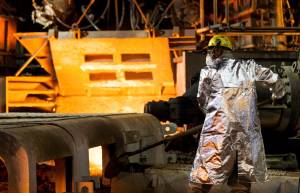
The Brazilian steel industry is currently navigating a period of structural realignment, driven less by a sudden surge in demand and more by the hardening of trade barriers. After a significant 41% rally over the last six months, the steelmaker Usiminas (USIM5) remains, according to analysts at Itaú BBA, an undervalued player in a market that has yet to fully price in the effects of recent anti-dumping measures.
The catalyst for this shift is a series of trade defense initiatives designed to insulate domestic producers from the influx of low-cost Chinese steel. These measures have effectively transformed the competitive landscape, making Chinese imports an increasingly unviable option for local buyers. In the vacuum left by China, alternative global suppliers have stepped in, but they bring with them a higher price floor—a shift that allows domestic giants like Usiminas to reclaim pricing power.
Itaú BBA recently reinforced its "outperform" rating for Usiminas, raising its year-end 2026 price target from R$ 7.0 to R$ 9.0. The bank’s analysts suggest that the market’s current valuation does not yet reflect the "structurally more protected" nature of the Brazilian market. These higher import costs are expected to manifest in significant price adjustments across the supply chain by the third quarter of this year.
This trajectory underscores a broader trend in industrial economics: the return of the domestic moat. For Usiminas, the coming quarters will serve as a test of whether these protectionist tailwinds can translate into sustained margin expansion as the industry adjusts to a world where cheap, globalized steel is no longer the default.
With reporting from InfoMoney.
Source · InfoMoney