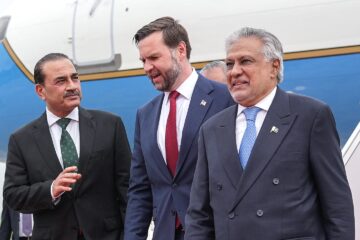
Pakistan’s emergence as an unlikely mediator in the conflict involving Iran and Israel is a study in pragmatic adaptation. Historically, the relationship between Islamabad and Washington has been defined by mutual suspicion; during his first term, President Donald Trump famously accused Pakistan of offering “nothing but lies and deceit.” Yet, through a calculated campaign of public alignment and economic overtures, Pakistan has successfully navigated the shift toward a more transactional American foreign policy.
The strategy relied on what Mushahid Hussain Syed, former chairman of the Pakistani Senate’s Defense Committee, calls the “three Cs”: crypto, critical minerals, and counterterrorism. By identifying the specific economic and security interests that resonate with the Trump administration’s priorities, Pakistan moved beyond traditional diplomatic platitudes. This shift allowed a nation that does not formally recognize Israel—and which developed its own nuclear arsenal in secret—to position itself as an indispensable bridge in a volatile region.
This diplomatic rebranding suggests a broader trend in international relations, where ideological alignment is increasingly secondary to tangible assets. Pakistan’s focus on the digital economy and the supply chains for critical minerals provided the leverage necessary to regain favor. By “reading” the transactional nature of modern power correctly, Islamabad has managed to turn a legacy of friction into a seat at the table for one of the world’s most complex geopolitical negotiations.
With reporting from 3 Quarks Daily.
Source · 3 Quarks Daily