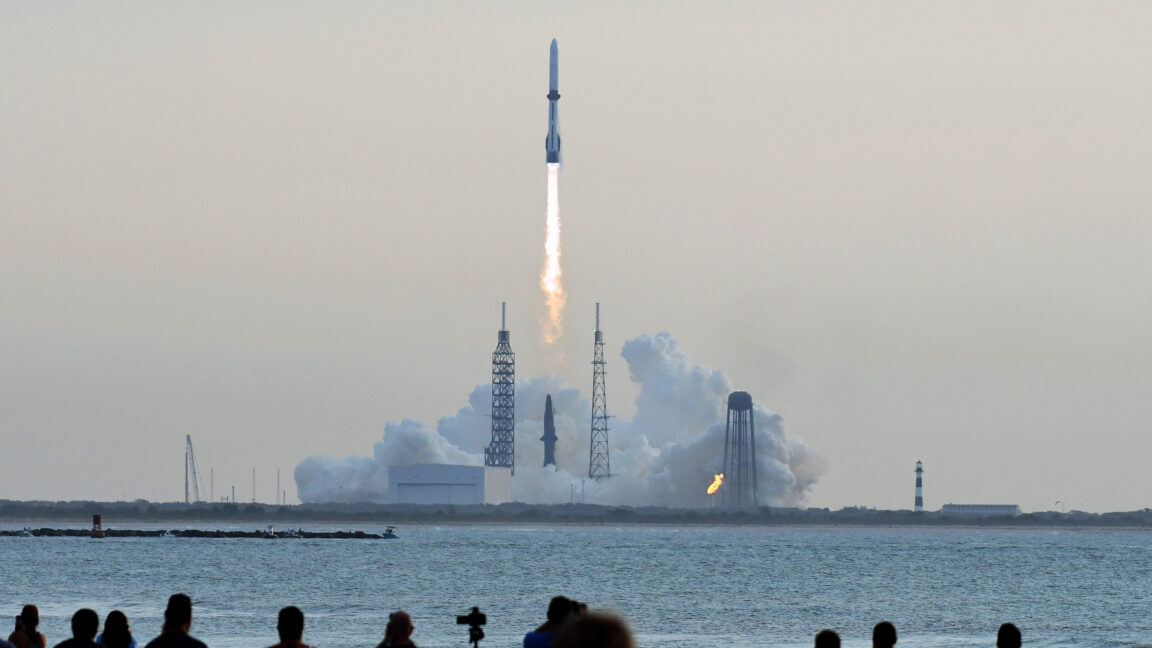
For United Launch Alliance (ULA), the Vulcan Centaur rocket represents the promise of a new era of American space sovereignty, combining cost efficiency with the reliability required for national security missions. However, a recent anomaly in its solid rocket boosters (SRBs) has forced the U.S. Space Force to, quite literally, recalculate its trajectory.
As investigations into the technical incident proceed, military authorities are evaluating the feasibility of launching the Vulcan in "pure" configurations—that is, without its side-mounted engines. This alternative would be applied to low-energy missions that do not require the additional thrust provided by the boosters, thereby preventing the launch schedule from experiencing a domino effect of delays.
This maneuver underscores the design flexibility of the Vulcan, which was engineered for modularity. Nevertheless, the decision carries strategic weight: the Pentagon requires the rocket to be validated for sensitive payloads, and each successful flight, even in reduced configurations, constitutes a crucial step toward full system certification and the reduction of reliance on Russian engines and legacy technologies.
With information from SpaceNews.
Source · SpaceNews