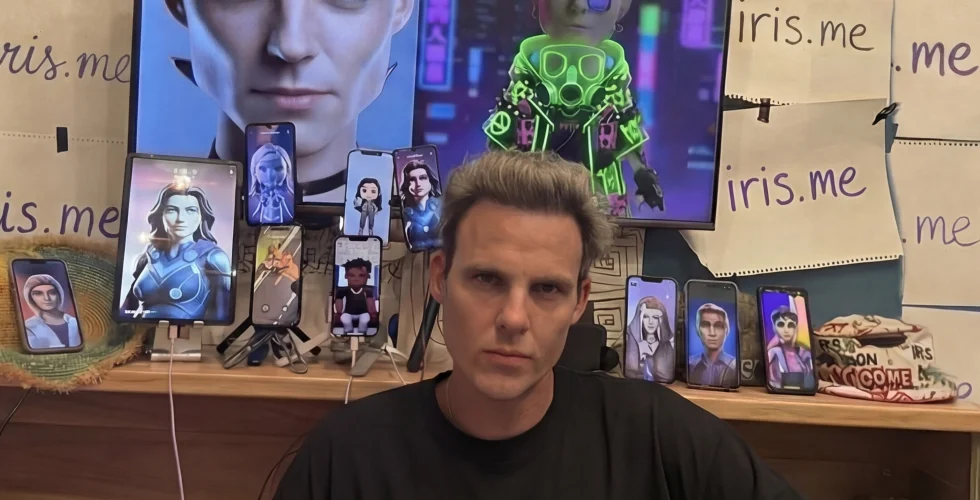
The mathematics of venture capital often dictate a clean exit when a startup's trajectory deviates from a fund's expected timeline. For Princess Momo Arnesson, however, the departure of EQT Ventures from her AI company, Iris, was not a conclusion but a high-stakes consolidation of control. In a move that effectively wipes the cap table of its institutional weight, Arnesson has bought out the venture firm, reducing its stake from nearly 30 percent to a nominal 0.3 percent. The buyout required a total liquidation of Arnesson's past success: to fund the reclamation of Iris, she sold her remaining shares in Forza Football — the company she spent years building into a global sports data platform.
The transaction, reported by Swedish tech publication Breakit, marks one of the more unusual founder-investor separations in the Nordic startup ecosystem. Arnesson described the period as "stressful" due to the lack of immediate liquidity, though the parting with EQT remained professional. Now relocated to a remote Japanese island, the founder has effectively decoupled from the European venture circuit to focus on Iris full-time.
The Logic of Buying Out Your Backers
Founder buyouts of institutional investors are rare for a reason. They require the founder to source capital independently — often at personal financial risk — to purchase shares that the investor acquired at an earlier, lower valuation. The mechanics tend to favor founders only when the investor's internal calculus has shifted: a fund nearing the end of its lifecycle, a portfolio rebalancing, or a strategic disagreement about pace and direction. EQT Ventures, the venture arm of the Swedish private equity firm EQT, operates across multiple fund vintages, and the specific circumstances that led to the sale remain between the parties.
What is clear is the outcome. By reducing EQT's stake from roughly 30 percent to 0.3 percent, Arnesson has reclaimed near-total ownership of Iris. In practical terms, this eliminates the governance dynamics that come with a significant institutional shareholder — board representation expectations, reporting cadences, and the implicit pressure to optimize for a timeline that suits a fund's return horizon rather than a product's development arc. For an AI startup, where research cycles can be long and commercialization uncertain, that freedom is not trivial.
The cost, however, was absolute. Selling her stake in Forza Football — a company with a meaningful user base in the sports data and fan engagement space — meant converting an appreciating, diversified asset into a single concentrated bet. Arnesson's financial exposure to Iris is now total. There is no fallback position.
Solitude as Strategy
Arnesson's relocation to a remote Japanese island adds a layer that is part operational decision, part signal. Founders who physically remove themselves from startup hubs are making a deliberate trade: they sacrifice the ambient network effects of proximity to investors, talent pools, and peer founders in exchange for focus and reduced noise. In the AI sector, where the competitive landscape shifts on the scale of weeks rather than quarters, the bet is that depth of concentration outweighs breadth of connection.
The move also reflects a broader, if still uncommon, pattern among founders who have grown skeptical of the venture-backed growth model. The standard playbook — raise successive rounds, dilute, scale aggressively, exit — works well when market timing cooperates. When it does not, founders can find themselves accountable to capital structures that constrain rather than enable. Arnesson appears to be testing the alternative: retain control, minimize overhead, and build on a longer timeline underwritten entirely by personal conviction.
Whether that conviction is well-placed depends on variables that are difficult to assess from the outside — the technical maturity of Iris, the size of its addressable market, and the founder's ability to recruit and retain talent from a location far removed from any established tech corridor. The AI landscape is crowded, capital-intensive, and increasingly dominated by organizations with resources that no single founder's liquidated portfolio can match.
What Arnesson has purchased, in exchange for everything she previously built, is optionality of a specific kind: the freedom to be wrong on her own terms, and the freedom to be right without sharing the outcome. The question is whether Iris, unencumbered by institutional investors but also unaccompanied by their capital and networks, can find a path that justifies the wager.
With reporting from Breakit.
Source · Breakit