Science

§Signals
§ 02 Recent
Latest arrivals
Quantum Computing and the Collapse of the Silicon Era

The Stratospheric Lens: Cosmic Rays and the Intersection of Particle Physics and Visual Art

The End of Volatility: Can Long-Term Contracts Stabilize the Memory Chip Market?

The Upward Logic of Madrid's Torres Colón: Engineering Constraints as Architectural Innovation

The Mayfly’s Ancient Aerial Strategy: Decoding a 300-Million-Year-Old Evolutionary Persistence

The Erosion of Scientific Autonomy: Assessing the White House and Federal Research Oversight

The Mechanical Shield: How Cardiac Rhythm Challenges Cancer Metastasis

Subsurface Magma Dynamics and the Revaluation of Volcanic Risk Models

A Breakthrough in Pre-eclampsia Treatment: The Potential of Blood Filtration
§ 03 Editor's picks
- 01Science · Quanta Magazine
The Infinite Complexity of Water: Why New Ice Phases Are Redefining Material Science
Recent breakthroughs in ice crystallography challenge our understanding of molecular states, signaling a shift toward a more nuanced era of material physics and high-pressure research.
- 02Science · Project Syndicate
The Productivity Paradox: Why AI May Fail to Match the Digital Revolution
While optimism surrounding artificial intelligence remains high, structural bottlenecks suggest that its impact on output per hour may fall short of historical computing benchmarks.
- 03Science · Bloomberg — Technology
The Quantum Impasse: Why Finance Remains Divided on the Future of Computing
Wall Street is grappling with the disconnect between the long-term potential of quantum computing and the immediate reality of an elusive, capital-intensive breakthrough.
- 04Science · OpenAI Blog
Microsoft and OpenAI: The Maturation of a Strategic Alliance
The latest restructuring of the Microsoft-OpenAI partnership signals a transition from experimental collaboration to a more rigid, long-term operational framework.
- 05Science · The New York Times — Science
The Strategic Deconstruction of Independent Scientific Governance in the United States
The removal of National Science Board members signals a shift toward political centralization in federal research funding, challenging the long-standing autonomy of American scientific institutions.
§ 02 The Big Read
Analysis & context
§ 05 By topic
In focus on this desk
The Neuro-Electrical Pivot: Can Brain Stimulation Reshape Mental Health Treatment?
As the FDA clears at-home stimulation devices, the psychiatric field faces a potential shift away from its long-standing reliance on systemic pharmacological interventions.

The Pentagon’s Psychedelic Turn: Rethinking Military Mental Health
The integration of MDMA-assisted therapy into active-duty care signals a pragmatic shift in how the US military confronts the enduring crisis of combat-related trauma.
The Neuro-Electrical Pivot: Can Brain Stimulation Reshape Mental Health Treatment?
The New York Times — ScienceThe Long Shadow of the Asylum: Psychiatry’s Search for Meaning in the Schizophrenic Mind
Lit HubThe Algorithmic Prognosis: Generative AI in the Clinical Mental Health Frontier
Forbes — Innovation

The AI Lab Consolidation: How Computing Power and Capital Redefine Geopolitical Influence
The race for artificial intelligence supremacy is no longer just a technical endeavor; it is a structural realignment of global capital and industrial capability.
The Multi-Cloud Shift: OpenAI’s Strategic Pivot Beyond Microsoft’s Infrastructure
Financial Times — TechnologyBeyond the Dense Frontier: How Sparsity Could Redefine the Architecture of Artificial Intelligence
IEEE SpectrumBeyond the Giants: How the AI Rally is Reshaping Asia’s Semiconductor Ecosystem
Bloomberg — Technology
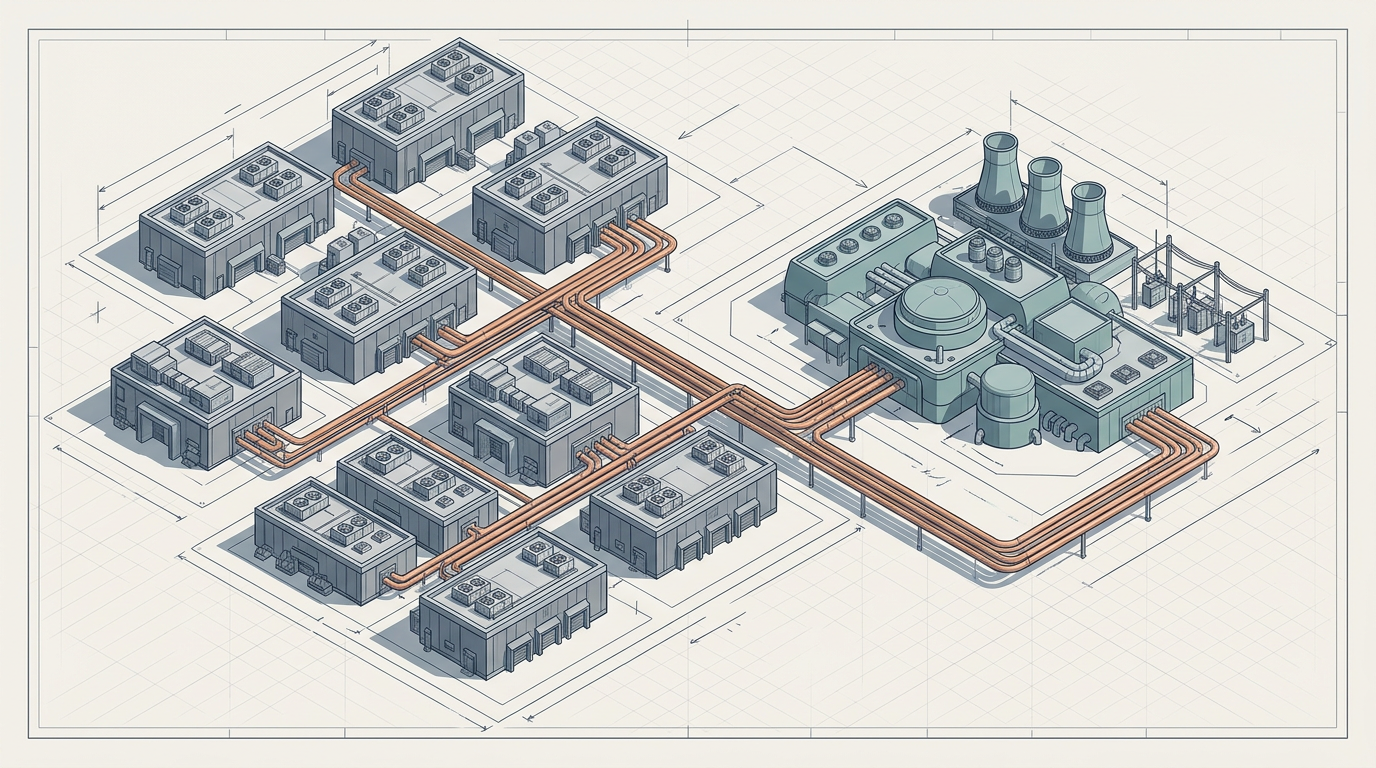
The Compute Covenant: Amazon Injects Another $5 Billion into Anthropic
A new multibillion-dollar investment tethers the Claude developer to Amazon’s proprietary silicon, addressing a critical need for infrastructure as AI demand outpaces supply.

The Institutional Realignment of American Public Health Leadership
The appointment of Dr. Sara Brenner to the CDC signals a departure from traditional consensus-driven health policy toward a more skeptical, politically aligned framework.
Fragile Gains: The Precarious State of U.S. Health Equity Amid Shifting Policy Landscapes
STAT News (Biotech)The Morens Indictment and the Erosion of Institutional Trust in Public Health
The New York Times — ScienceThe Regulatory Path for Microplastics: Beyond the Initial Bipartisan Signal
STAT News (Biotech)

Fragile Gains: The Precarious State of U.S. Health Equity Amid Shifting Policy Landscapes
Recent data reveals measurable progress in health equity, yet the sustainability of these improvements faces significant headwinds under a new federal policy paradigm.
The Empathy Gap: Why Alternative Medicine Gains Ground in a Clinical Era
STAT News (Biotech)The Preventive Gap: Why Medical Education Struggles to Integrate Nutrition
STAT News (Biotech)
§ 06 More stories
12 of 56
The Biological Economy of the Human Mind
The brain did not evolve to produce abstract thought, but to manage the complex physiological ledger of the body.

The Neural Cross-Wiring That Shapes Artistic Vision

Trump's Iran Nuclear Dilemma Is Largely of His Own Making
The president now demands the dismantling of an enrichment stockpile that ballooned after his 2018 withdrawal from the accord he called the worst deal ever.

Beyond 'Fire Together, Wire Together': A New Mechanism for How the Brain Learns
Recent research reveals a form of neuroplasticity that operates on longer timescales, challenging decades of assumptions about how single experiences reshape neural circuits.

Exercise vs. Antidepressants: The Evidence Is Growing, but So Are the Caveats
Large-scale studies suggest physical activity rivals conventional treatments for depression and anxiety. The scientific community remains divided on what that actually means for patients.

Fusion Power May Work — But a New Study Suggests It Won't Be Cheap Anytime Soon
A Nature Energy study estimates fusion's cost curve will lag far behind solar and batteries, raising hard questions about billions in public and private investment.

The Architecture of Awe: T.L. Taylor on the Evolution of Immersion
MIT professor T.L. Taylor joins Stanford’s CASBS to study the evolution of "immersion," from the high-tech spectacles of the Sphere to the foundational design of theme parks.

Bridging the Gap Between Classical and Quantum Realities
MIT researchers have found that a fundamental principle of everyday physics can precisely describe the nonintuitive behavior of the subatomic world.

Bridging Biotechnology and Global Equity: MIT’s Newest Gates Cambridge Scholars
Alumnae Mitali Chowdhury and Christina Kim will head to the University of Cambridge to advance research in CRISPR-based diagnostics and women’s health.

The Ethical Architecture of Economic Growth
A new study of India’s industrial policy suggests that the decisions to welcome or block foreign capital are driven by deep-seated moral beliefs about the legitimacy of business.

The Mortality of a Warming Continent
The latest Lancet Countdown report warns that climate change is no longer a distant threat to Europe, but a present driver of mortality among its most vulnerable populations.

The Convergence of Fusion and Deep Geothermal Energy
High-temperature superconducting magnets, originally designed to bottle the sun, are finding a second life as a tool for drilling through the Earth's hardest crust.