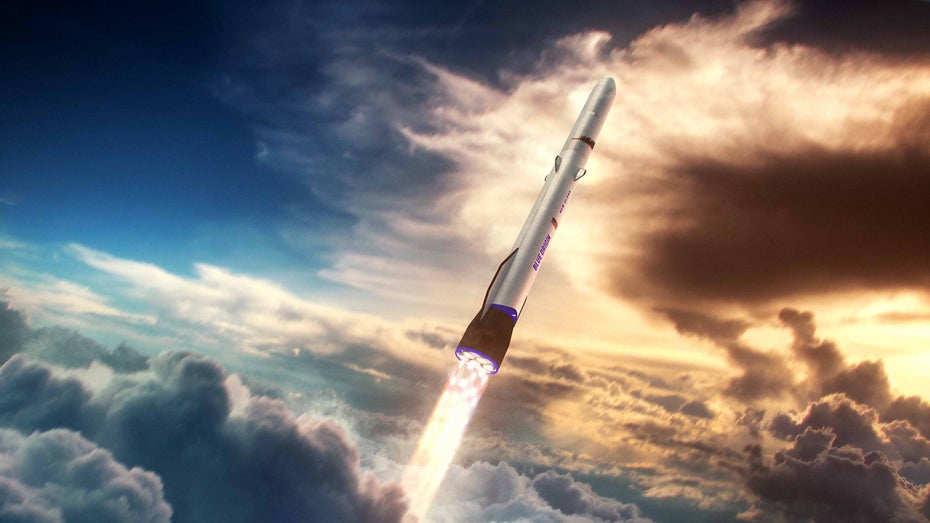
The path to orbit is rarely a linear progression of successes, but rather a series of expensive lessons learned in the vacuum. For Blue Origin, the debut of its heavy-lift New Glenn rocket provided a moment of technical brilliance that was quickly tempered by the harsh realities of mission execution. While the company successfully recovered the rocket’s first-stage booster—a feat that places it in an elite tier of aerospace engineering—the mission ultimately failed to deliver its payload to the intended destination.
The recovery of the booster represents a significant validation of Blue Origin’s long-term strategy. For years, the Jeff Bezos-led firm has worked to mirror the reusability model pioneered by SpaceX, aiming to lower the cost of access to space. Seeing the New Glenn’s massive frame touch down safely was, for a few moments, a final triumph for the engineers in the control center. It signaled that the hardware is capable of surviving the violent stresses of ascent and return.
Yet, as the booster sat safely on the ground, the mission unraveled in the darkness of orbit. The loss of the satellites serves as a reminder that a reusable rocket is merely a delivery vehicle, and its survival does not guarantee the safety of its cargo. In the high-stakes theater of commercial spaceflight, a successful landing is a milestone, but a lost payload remains a failure. Blue Origin has proven it can bring its machines back to Earth; now, it must prove it can reliably leave them in the stars.
With reporting from t3n.
Source · t3n