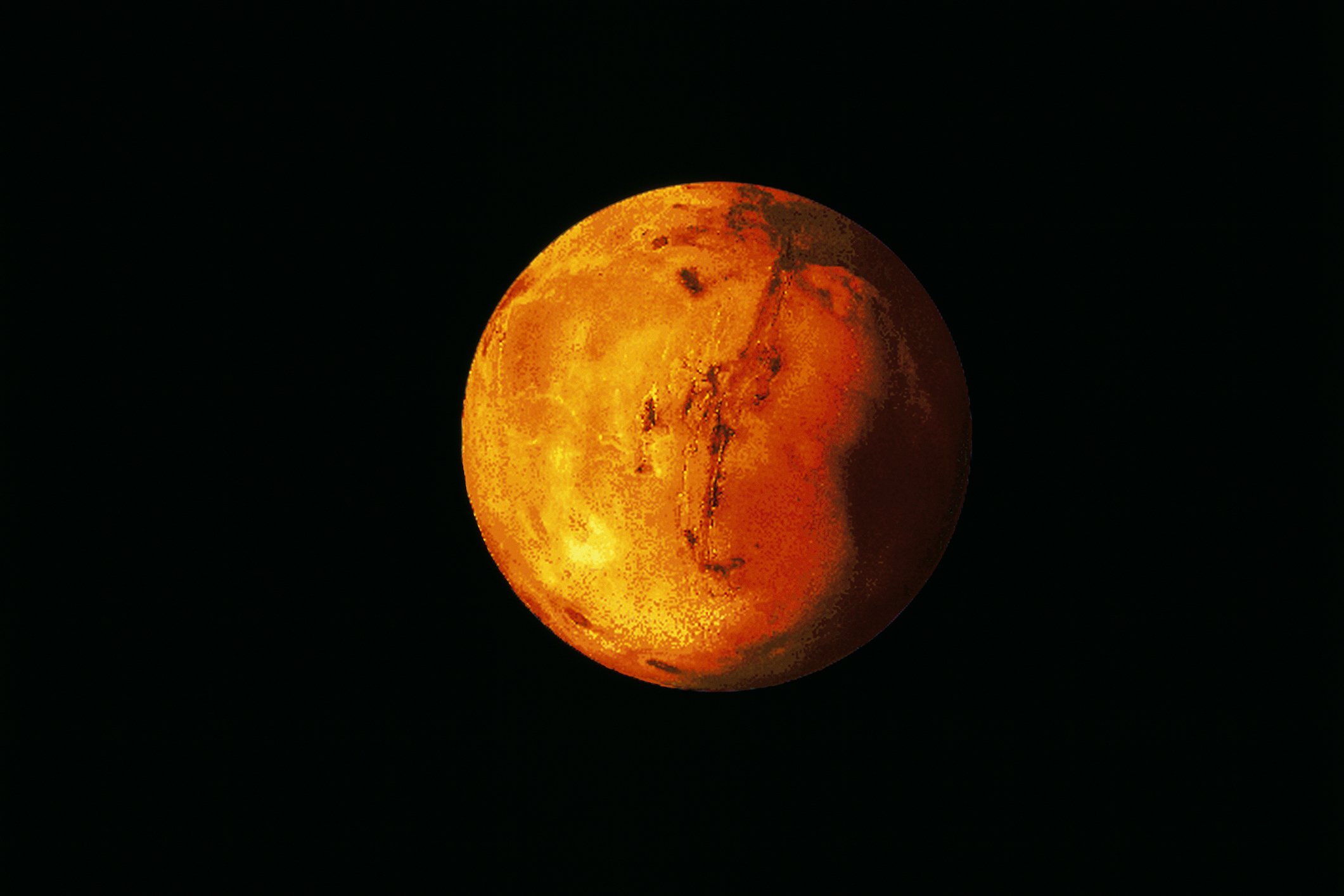
The search for water on Mars has long been a pursuit of subtle signatures—chemical traces in the soil or ice tucked away in polar shadows. However, new geologic evidence suggests that the planet’s watery past may have been written in much larger strokes. Researchers have identified a formation described as a "bathtub ring" along the planet's northern plains, a feature that likely marks the boundary of a massive, ancient ocean.
This topographic signature provides a geographic anchor for the theory that Mars was once a hydrologically active world. The northern lowlands, which cover a significant portion of the planet's hemisphere, appear to have been the basin for a body of water that could have rivaled Earth’s own oceans in scale. The presence of such a defined shoreline suggests a period of prolonged stability in the Martian climate, allowing liquid water to persist long enough to carve its presence into the crust.
While Mars is now a frigid, desiccated desert, these findings shift our understanding of its evolutionary timeline. Determining how long this ocean lasted—and the mechanisms of its eventual disappearance—remains the central challenge for planetary scientists. If Mars once held a vast northern sea, the prospects for ancient habitability move from the realm of the speculative into the probable, framing the Red Planet as a mirror to Earth’s own early history.
With reporting from Exame Inovação.
Source · Exame Inovação