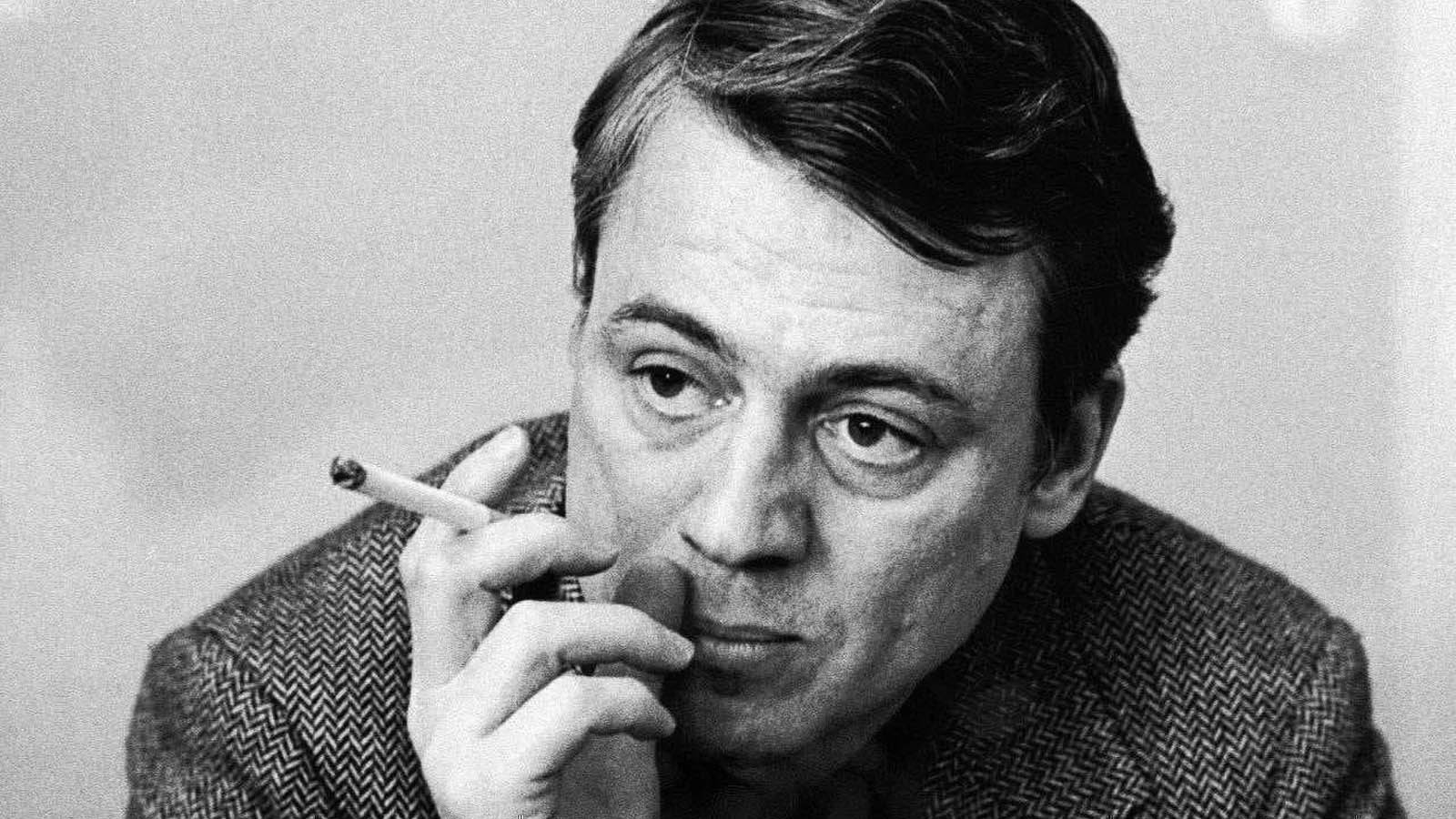
Alexander Kluge, who passed away on Wednesday at the age of 94, was often described as the "Leibniz of the Federal Republic." A polymath whose work spanned law, philosophy, literature, and television, Kluge occupied a singular position in postwar German intellectual life. His death follows closely behind that of his long-time friend and contemporary, Jürgen Habermas, signaling the fading of a generation that rebuilt Germany's cultural foundations from the rubble of the mid-century.
Kluge's entry into cinema was guided by the heavyweights of the Frankfurt School. While serving as a legal consultant for the Institute for Social Research, he was introduced by his mentor, Theodor Adorno, to the legendary director Fritz Lang. Kluge apprenticed under Lang during the production of The Tiger of Eschnapur (1959), a transition that allowed him to apply the critical theory of his academic background to the visual language of the moving image. That apprenticeship was not incidental. Lang himself had fled Nazi Germany for Hollywood, and the encounter between the young legal scholar and the exiled master of expressionist cinema carried a kind of historical symmetry — two generations of Germans reckoning with the same national catastrophe through different instruments.
Cinema as Critical Theory
His directorial debut, the 1960 short Brutality in Stone, remains a definitive study of the relationship between ideology and the built environment. Co-directed with Peter Schamoni, the film examines the ruins of the Albert Speer–designed Nazi party rally grounds in Nuremberg. By juxtaposing the decaying "thousand-year" architecture with the catastrophic reality of its failure, Kluge established a signature style: a dry, analytical observation of how history imprints itself upon physical structures. The film contained no interviews, no dramatic reenactments — only stone, narration, and the weight of what the structures were designed to communicate.
This approach placed Kluge at the center of what would become the Oberhausen Manifesto of 1962, in which a group of young German filmmakers declared the death of the old commercial cinema and called for a new, intellectually serious national film culture. The manifesto is widely regarded as the founding document of New German Cinema, the movement that would later produce figures such as Werner Herzog, Wim Wenders, and Rainer Werner Fassbinder. Kluge was among its principal architects, and in many ways the most programmatic: where his younger peers pursued visceral, often autobiographical filmmaking, Kluge treated the medium as an extension of the seminar room, a space for dialectical inquiry rather than narrative catharsis.
For Kluge, film was never mere entertainment; it was a tool for social and historical dissection. Having narrowly survived the Allied bombing of his hometown, Halberstadt, at thirteen, he spent the rest of his life interrogating the systems and structures that lead to such collapses. That biographical detail is essential context. The bombing of Halberstadt — a medieval town of modest strategic value — became for Kluge a case study in the logic of total war, a subject he returned to repeatedly in both film and prose.
The Television Experiment and the Question of Public Discourse
In the 1980s, Kluge made a move that puzzled many of his contemporaries: he shifted much of his energy to television. Rather than viewing the medium as cinema's lesser cousin, he saw in it an opportunity to reach a broader public with the same analytical rigor. His cultural magazine programs, broadcast on private German channels, mixed interviews, archival footage, opera, and philosophical commentary in formats that defied conventional programming logic. The experiment was rooted in a conviction that public discourse required spaces resistant to the pressures of commercial entertainment — a concern that has only grown more relevant in the age of algorithmic content distribution.
Kluge's literary output was equally substantial. His prose works, often produced in collaboration with the sociologist Oskar Negt, explored the concept of the "public sphere" — a term closely associated with Habermas but which Kluge and Negt pushed in a more materialist direction, arguing that experience itself is a contested political terrain.
The loss of Kluge, arriving so soon after Habermas, leaves a conspicuous vacancy in German intellectual life. Both belonged to a cohort for whom the reconstruction of democratic culture was not an abstraction but a biographical imperative — shaped by direct exposure to the collapse of the Weimar Republic and the destruction of the Second World War. Whether the institutions they helped build, from critical film culture to public broadcasting to the philosophical infrastructure of the Federal Republic, can sustain themselves without their founding generation is a question that now belongs to their successors.
With reporting from Criterion Daily.
Source · Criterion Daily