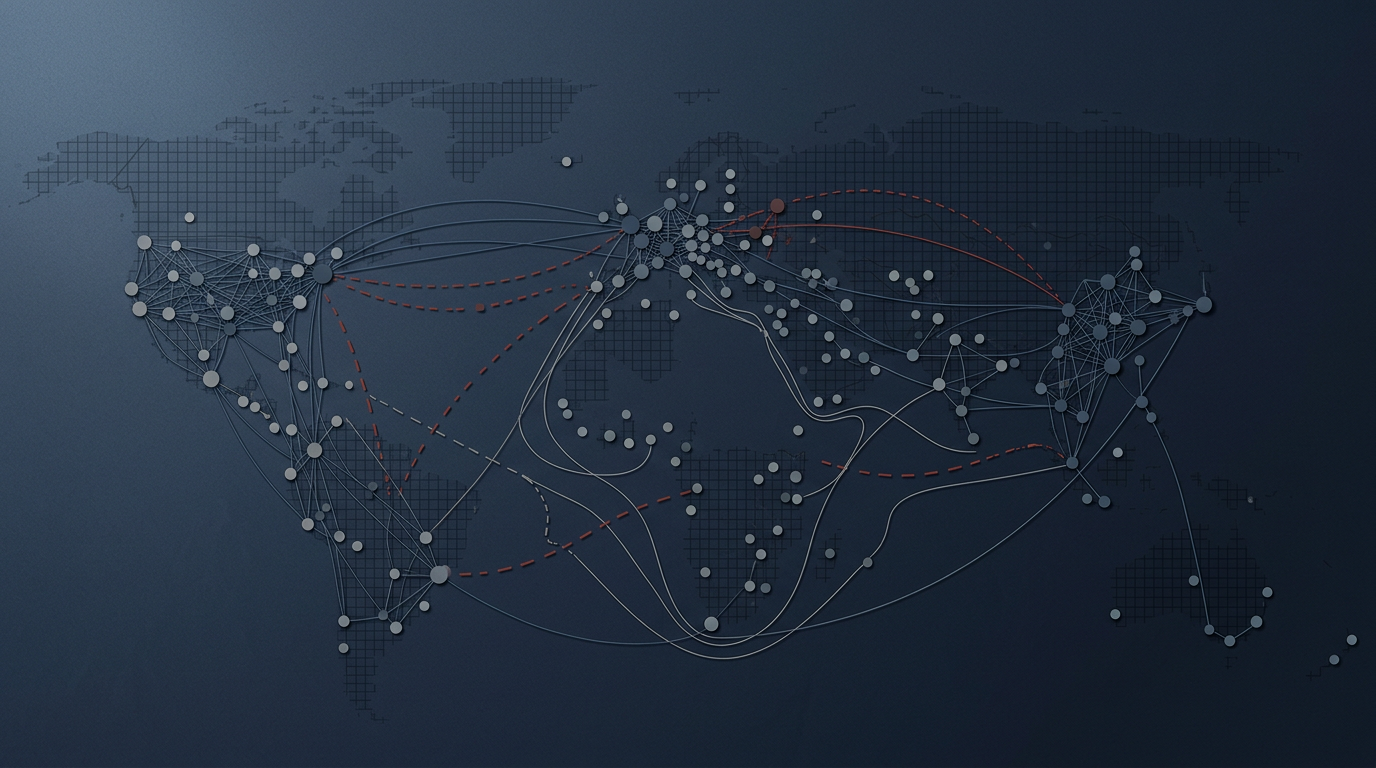
The Chinese government has formally blocked Meta Platforms Inc.’s proposed $2 billion acquisition of Manus, an agentic AI startup, in a move that underscores the growing volatility of cross-border technology transactions. This regulatory intervention, confirmed according to Bloomberg reporting, effectively halts Meta’s attempt to integrate Manus’s proprietary AI architecture into its broader ecosystem, citing concerns over technology leakage and national security imperatives.
The decision arrives at a moment of heightened tension regarding the global flow of artificial intelligence talent and intellectual property. By unwinding a deal that had already entered the public discourse, Beijing is signaling that the era of unfettered, market-led M&A in the AI sector is effectively over. The thesis here is not merely one of protectionism, but a fundamental shift in how sovereign states view AI as a strategic asset that must remain within domestic control, regardless of the valuation or the multinational status of the acquiring entity.
The Strategic Pivot to Sovereign AI Control
Historically, the global technology sector operated on the assumption that capital, talent, and intellectual property could move across borders with minimal friction, provided regulatory compliance was maintained. For years, major Western conglomerates like Meta, Microsoft, and Google utilized acquisitions as a primary mechanism to absorb innovation, effectively functioning as the venture capital engines for the global startup ecosystem. However, the emergence of agentic AI—autonomous systems capable of executing complex workflows—has fundamentally altered the calculus for regulators in Beijing.
China’s decision to block the Manus deal reflects a structural pivot toward "technological sovereignty." Unlike traditional software or consumer hardware, agentic AI is viewed as a dual-use technology with significant implications for defense, industrial efficiency, and economic planning. The regulatory framework in China has evolved from mere antitrust oversight to a comprehensive security apparatus that scrutinizes the long-term strategic value of the assets being sold. By intervening, Beijing is effectively declaring that the domestic development of AI agents is a national priority that cannot be sacrificed for the short-term capital gains of local founders or the expansionist ambitions of Silicon Valley.
This shift suggests that the days of companies like Meta treating the global startup market as an extension of their own R&D departments are coming to an end. The Manus case demonstrates that Chinese regulators are increasingly willing to incur the reputational cost of blocking high-profile deals to ensure that the foundational models and agentic architectures developed within their borders remain subject to local oversight and influence. This is not a reactive policy; it is a proactive strategy to prevent the erosion of the domestic AI industrial base.
Mechanisms of Regulatory Intervention
To understand why this block occurred, one must look at the specific mechanisms of modern export control and the definition of "critical infrastructure." In previous years, regulatory bodies focused on market competition, ensuring that no single entity gained an insurmountable advantage. Today, the focus has migrated toward the protection of "strategic intellectual property." In the context of Manus, the concern is not merely that Meta would own the company, but that the underlying data pipelines, training methodologies, and agentic workflows would be integrated into a platform that operates outside the reach of Chinese regulatory authority.
This dynamic creates a significant incentive problem for startups. Founders in China now face a binary choice: build a product that is globally scalable but risks being blocked from international acquisition, or focus on a domestic market that is heavily regulated but offers a clearer path to local integration. The Meta-Manus deal was likely seen as a bridge between these two worlds, but the intervention confirms that such bridges are increasingly fragile. When a regulator blocks a $2 billion acquisition, they are not just stopping a transaction; they are setting a price on the perceived future strategic value of the technology, which, in the eyes of Beijing, far exceeds the immediate cash offer.
The mechanism of this intervention also serves as a warning to other multinational corporations. By acting decisively, the Chinese state has introduced a new variable into the valuation of any AI firm with a significant footprint in the country. Investors must now discount the probability of a successful exit to a Western buyer, which will likely lead to a cooling effect on venture capital investment in Chinese AI startups. This in turn forces companies to rely more heavily on domestic funding sources, further tethering their development cycles to the priorities of the Chinese state.
Implications for Global Stakeholders
For Meta, the implications are primarily strategic. The loss of Manus limits the company's ability to accelerate its agentic AI roadmap, forcing it to pivot back to internal development or seek alternative, less politically sensitive partnerships. For the broader industry, this creates a fragmented landscape where the development of advanced AI models is increasingly siloed. Competitors in the US and Europe may find themselves in a race to replicate the specific capabilities that Manus offered, while the Chinese market continues to develop its own parallel ecosystem of agentic systems.
Regulators globally will be watching this case closely as they refine their own approaches to AI oversight. While the US and the EU have their own antitrust and national security tools, the Chinese approach to blocking acquisitions is arguably more direct and less concerned with the traditional legal standards of consumer harm. This divergence in regulatory philosophy suggests that the global tech environment is moving toward a "bifurcated innovation model," where firms must design their products and corporate structures to be compatible with a specific, and increasingly restricted, set of geopolitical boundaries.
The Outlook for Cross-Border Innovation
What remains uncertain is how this block will influence the behavior of other AI startups currently negotiating exit strategies. The chilling effect on M&A activity is likely to be substantial, as the risk of regulatory rejection becomes a central part of every term sheet. We may see a rise in joint ventures or licensing agreements as companies attempt to circumvent the need for full acquisition, though even these structures will likely face intense scrutiny from regulators who are increasingly wary of "shadow" technology transfers.
Looking ahead, the question of whether this trend will lead to a more robust, albeit insular, domestic AI industry in China remains open. If Beijing can successfully foster a self-sustaining ecosystem of agentic AI, the loss of Western capital may be viewed as a necessary sacrifice. However, if the lack of global integration leads to a stagnation in innovation, the long-term impact on China’s competitive standing could be significant. For now, the global AI landscape has become a theater where the movement of capital is secondary to the preservation of strategic technological control.
The collapse of the Manus acquisition is a stark reminder that in the current geopolitical climate, the logic of the market is frequently subordinate to the logic of the state. As Meta and other major players continue to navigate a world of shifting regulatory boundaries, the ability to build and scale technology across borders will depend less on the quality of the product and more on the political viability of the partnership itself.
With reporting from Bloomberg
Source · Bloomberg — Technology