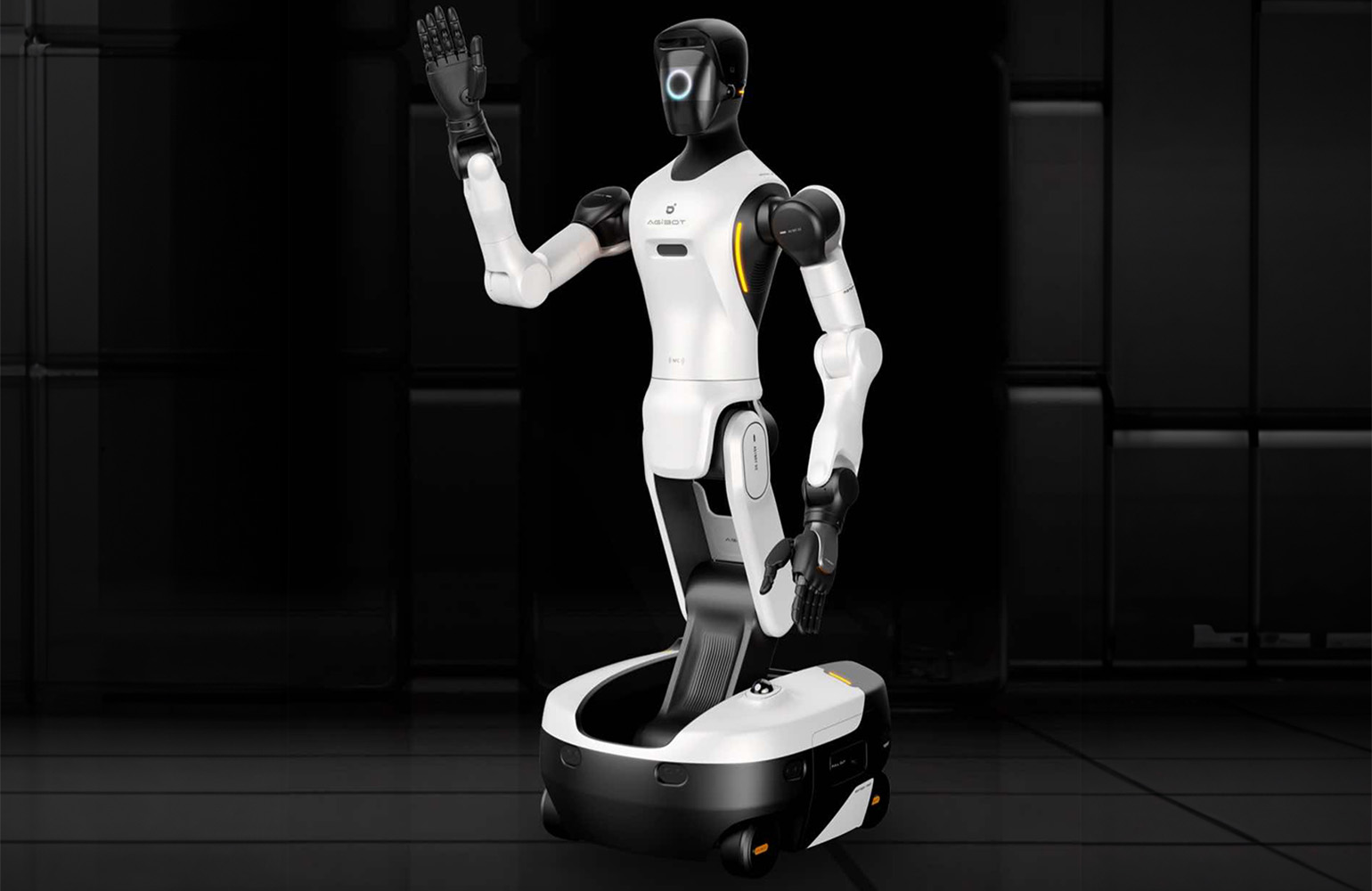
The transition of embodied AI from the controlled chaos of the laboratory to the rigid demands of the factory floor has long been a matter of "when," not "if." This week, Chinese robotics firm AGIBOT moved that timeline forward by deploying its G2 semi-humanoid robots into the tablet production lines of Longcheer Technology. Unlike the viral videos of backflipping prototypes that have defined the public imagination of humanoid robotics, these units are designed for the monotony and precision of consumer electronics assembly — a domain where reliability matters far more than agility.
Built with automotive-grade components and IP42 protection, the G2 represents a deliberate pivot toward durability over spectacle. In the Longcheer facility, the robots work alongside human operators, tasked with navigating the structural challenges of modern electronics manufacturing: short product lifecycles, frequent SKU changes, and the need for rapid reconfiguration between production runs. The deployment serves as a live test of how well "embodied intelligence" can handle the "multi-model, small-batch" reality that now defines consumer demand.
From Fixed Automation to Adaptive Labor
The significance of the AGIBOT deployment lies less in the robot itself than in the problem it is being asked to solve. Consumer electronics manufacturing has long relied on a combination of fixed automation — purpose-built machines optimized for a single task at high volume — and manual labor for everything that falls outside those narrow parameters. The economics of this arrangement have grown increasingly strained. Product cycles in tablets, smartphones, and wearables have compressed to the point where a production line may need reconfiguration multiple times per year. Each changeover carries cost: retooling, reprogramming, retraining.
Humanoid and semi-humanoid robots promise a different model. Because they are designed to operate in environments built for human workers — using similar workstations, tools, and spatial layouts — they can theoretically be redeployed across tasks through software updates rather than physical retrofitting. This is the core proposition behind what the industry calls "embodied AI": intelligence that inhabits a physical form capable of general-purpose manipulation. Whether that proposition holds under the unforgiving conditions of real production is precisely what the Longcheer deployment is meant to test.
The approach echoes a broader pattern in industrial automation. Collaborative robots, or cobots, followed a similar trajectory over the past decade — moving from laboratory curiosities to standard fixtures in automotive, logistics, and light manufacturing. The difference is that cobots are typically arm-based systems bolted to a workstation. Semi-humanoid platforms like the G2 introduce mobility and a wider manipulation envelope, which in principle allows them to cover more of the tasks currently performed by human hands.
The 2026 Threshold and What It Requires
AGIBOT's leadership has pointed to 2026 as a likely tipping point for large-scale adoption of humanoid systems in industrial settings. That framing is ambitious but not without basis. Several converging forces are creating favorable conditions: advances in large-scale imitation learning and sim-to-real transfer have improved robot dexterity; component costs for actuators and sensors continue to decline along curves familiar from the automotive supply chain; and labor shortages in key manufacturing regions — particularly in China's coastal factory belt — have made the economic case for automation more compelling.
But significant friction remains. Electronics assembly demands sub-millimeter precision in handling fragile components — flex cables, glass panels, micro-connectors — where even small errors cascade into costly yield losses. The gap between a robot that can perform a task in a controlled demo and one that can sustain six-sigma quality over thousands of cycles in a production environment is substantial. Thermal management, dust control, and electromagnetic interference in factory settings add layers of complexity that laboratory conditions rarely replicate.
There is also the question of integration. Deploying a humanoid robot is not simply a matter of placing it on a line. It requires rethinking workflow design, safety protocols, and the software infrastructure that connects the robot's perception and decision-making systems to the factory's broader manufacturing execution system. The Longcheer project, by embedding G2 units into core production workflows rather than peripheral tasks, appears to be confronting these integration challenges directly.
What remains to be seen is whether the economics close at scale. A humanoid robot that can handle three tasks on a tablet line is a compelling technology demonstration. One that can be redeployed across product generations and factory sites without extensive re-engineering begins to look like a different category of capital investment — one that competes not with fixed automation but with the flexibility of human labor itself. The distance between those two propositions is where the real test lies.
With reporting from The Robot Report.
Source · The Robot Report