Architecture is traditionally defined by the act of enclosure. Walls, roofs, and foundations serve to delineate the interior from the exterior, creating a controlled environment that shields occupants from the unpredictable elements of the outside world. However, contemporary architectural discourse in Latin America is increasingly challenging this binary. According to reporting from ArchDaily, a significant number of projects across the region are moving away from the concept of the building as a closed object, opting instead for structures that remain fundamentally porous, allowing air, light, and human movement to flow through them as a matter of course.
This trend is not merely a stylistic preference but a structural response to the specific environmental and social conditions of the region. In many Latin American contexts, the traditional Western model of a fully sealed, climate-controlled interior is often inefficient or culturally incongruous. Instead, architects are leveraging intermediate zones—spaces that regulate rather than isolate—to foster a more direct engagement with the environment. By prioritizing ventilation and shade over the rigid separation of spaces, these designs offer a compelling alternative to globalized architectural norms that often ignore local ecological realities.
The Environmental Logic of Permeability
At the core of this shift lies the necessity of climate adaptation. Much of Latin America is characterized by high levels of solar exposure, persistent humidity, and intense seasonal rainfall. In such environments, the primary architectural challenge is not the retention of heat, as is often the case in northern latitudes, but the mitigation of it. A building that acts as a sealed box in a tropical or subtropical climate often requires significant energy expenditure for mechanical cooling, a solution that is increasingly viewed as both economically and environmentally unsustainable.
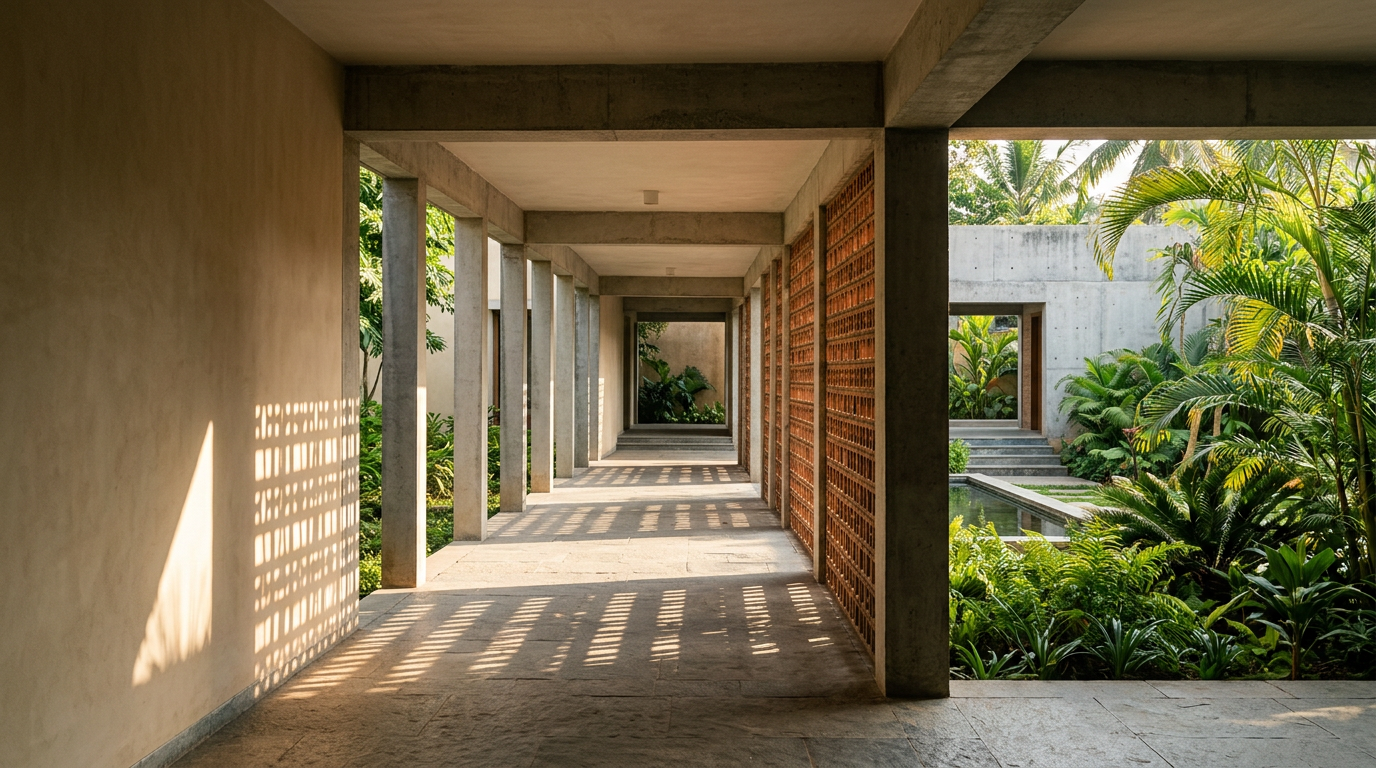
Permeable architecture addresses these challenges by facilitating passive cooling. By designing structures that allow for cross-ventilation and the strategic movement of air, architects can maintain thermal comfort without relying on artificial climate control. This approach treats the building envelope as a filter rather than a barrier. The use of perforated facades, open courtyards, and transitional spaces effectively breaks down the intensity of the sun while maintaining a constant connection to the cooling breezes of the local microclimate. This is a return to a more primitive, yet highly sophisticated, understanding of how buildings function as regulators of the natural environment.
Furthermore, this permeability is deeply rooted in local building cultures that have historically favored adaptation over imposition. The reliance on locally available materials and techniques that allow for natural airflow has long been a staple of vernacular construction in the region. By integrating these historical lessons with modern engineering, contemporary architects are creating buildings that feel native to their landscapes. This synthesis suggests that the most effective response to the climate crisis may not lie in high-tech insulation, but in the intelligent design of space that works in tandem with, rather than against, the natural world.
Social Dynamics and the Collective Use of Space
Beyond environmental regulation, permeability serves a vital social function. In many Latin American communities, the distinction between private and public space is far more fluid than in more individualistic urban environments. Architecture, in this sense, becomes a tool for facilitating collective use. When a building is permeable, it ceases to be an exclusive fortress and instead becomes an extension of the public realm. This is particularly evident in educational, civic, and cultural institutions where the goal is to foster interaction and community engagement.
This approach to design acknowledges that architecture is a social endeavor. By creating intermediate zones—porches, galleries, and open-air corridors—architects provide spaces that are neither strictly private nor entirely public. These zones encourage social friction, allowing for spontaneous encounters and communal activities that would be impossible in a more compartmentalized structure. The building becomes a stage for the community, a porous framework that invites participation rather than demanding exclusion. This reflects a broader shift toward inclusive design, where the building itself serves as a connector between the individual and the collective.
Moreover, the process of constructing these buildings often mirrors their final form. The emphasis on collective labor and community involvement in the building process ensures that the resulting architecture is attuned to the actual needs of the people who will use it. This collaborative approach leads to a more nuanced understanding of space, where the design is refined through the lived experience of the community. In this context, permeability is not just a spatial quality; it is a manifestation of a social contract that values accessibility and communal well-being over the rigid boundaries of private property.
Implications for Global Architectural Standards
The implications of this regional shift are significant for global architectural practice, particularly as the industry grapples with the need for more sustainable building methods. The Latin American model of permeability challenges the dominance of the 'glass box' aesthetic, which has been exported globally regardless of its environmental impact. By demonstrating that high-quality, comfortable, and aesthetically compelling architecture can be achieved through passive design and porous structures, Latin American architects are providing a blueprint for a more resilient future.
For regulators and urban planners, this shift highlights the need to reconsider building codes and zoning regulations that often mandate enclosure for the sake of fire safety or climate control, often to the detriment of natural ventilation. There is a clear tension between the desire for standardized, 'safe' construction and the need for flexible, environmentally responsive design. As cities become hotter and more densely populated, the ability of buildings to regulate their own environments through passive means will become increasingly critical. The Latin American experience suggests that the path forward lies in relaxing the rigid boundaries of enclosure to allow for a more breathable, integrated urban landscape.
The Outlook for Porous Urbanism
What remains uncertain is whether this regional approach can be successfully scaled and adapted to the rapid, often chaotic urbanization seen in other parts of the world. While the principles of permeability are conceptually sound, their application in high-density, high-rise urban environments presents unique challenges. Can the same level of openness be achieved in a skyscraper without compromising structural integrity or occupant security? This is the next frontier for architects working within this framework.
Furthermore, as the climate continues to change, the definition of what constitutes a 'comfortable' environment will also evolve. Architects will need to find new ways to balance the desire for open, permeable spaces with the need to protect against increasingly extreme weather events. The question is not whether permeability is a viable design strategy, but how to evolve it in a way that remains responsive to the shifting realities of the 21st century. The ongoing dialogue between local tradition and global innovation will likely continue to shape the trajectory of this movement.
As architects continue to experiment with the boundaries of the built environment, the tension between the desire for security through enclosure and the need for engagement through permeability will remain a central theme in design. Whether this approach becomes a dominant global standard or remains a localized response to specific conditions will depend on the ability of the profession to reconcile these competing needs. The evolution of this architectural language will be a key indicator of how we choose to inhabit our changing world.
With reporting from ArchDaily
Source · ArchDaily