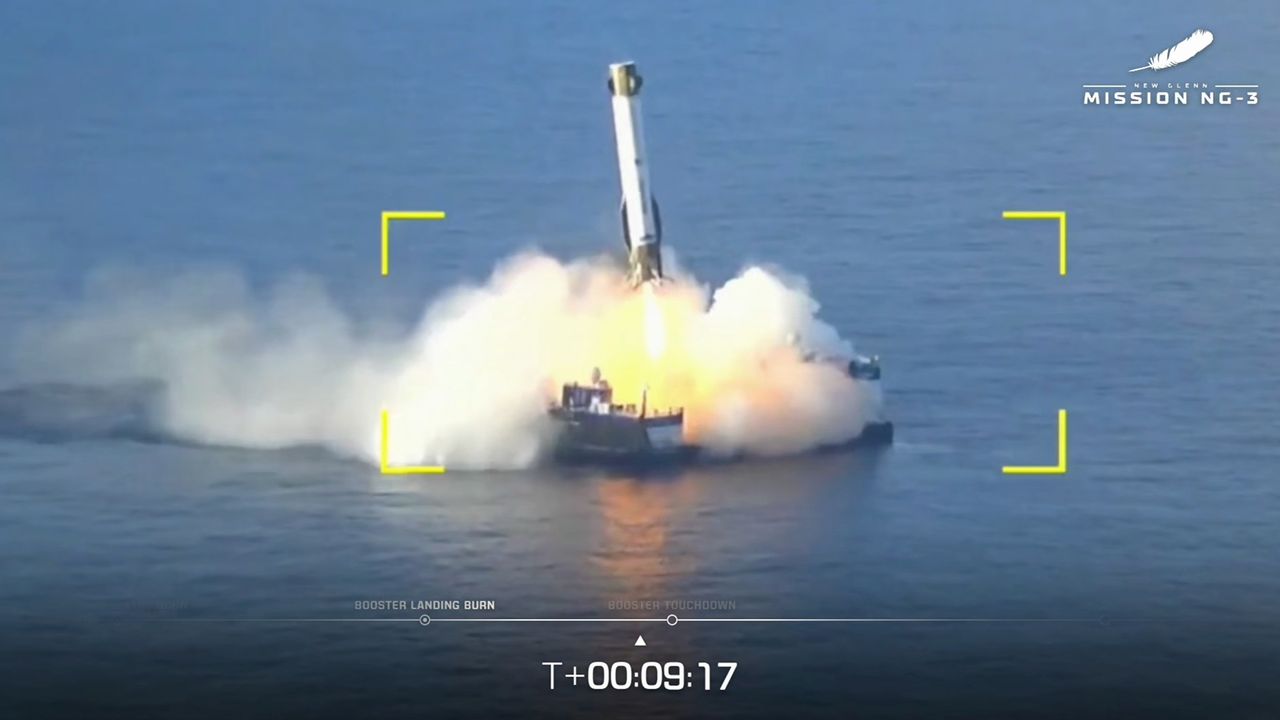
On Sunday morning, Blue Origin’s New Glenn rocket lifted off for its third mission, marking a pivotal transition for Jeff Bezos’s aerospace venture. For the first time, the massive heavy-lift vehicle was powered by a previously flown booster, a milestone in the company’s efforts to achieve the kind of rapid reusability that has defined the modern era of spaceflight.
The mission’s first stage performed as intended, separating from the upper stage and descending to a successful landing on a recovery vessel at sea. This recovery validates the structural integrity of the New Glenn's design, which is intended to be used for up to 25 flights. For Blue Origin, demonstrating that it can reliably return and recycle its hardware is a necessary step toward competing with the high-frequency launch cadence of SpaceX.
However, the success of the booster recovery was tempered by a failure in the mission’s final phase. While the rocket reached space, the upper stage deployed its satellite payload into the wrong orbit. The orbital discrepancy serves as a reminder that in the business of launch, the recovery of the vehicle is only half the battle; the precision of the delivery remains the ultimate metric of mission success.
With reporting from Space.com.
Source · Space.com