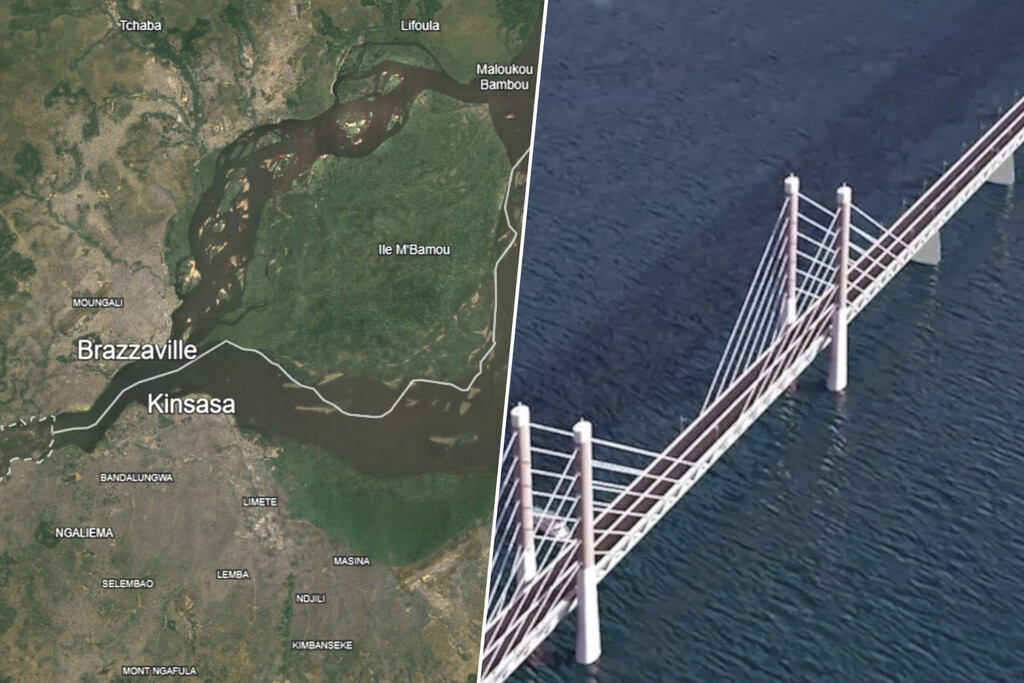
Kinshasa and Brazzaville sit on opposite banks of the Congo River, staring at each other across an expanse of water that spans barely two miles at its narrowest point. They are the closest capital cities in the world—excluding the unique case of the Vatican and Rome—yet for decades, they have functioned as two separate worlds. Despite their geographic intimacy, the logistical reality of moving between the Democratic Republic of the Congo and the Republic of the Congo remains a study in inefficiency.
Currently, the journey across the river requires a slow ferry ride or, more absurdly, a flight that lasts roughly as long as it takes to read a morning newspaper. This disconnect is the legacy of decades of political volatility and colonial structures that prioritized external extraction over regional integration. The Congo River, while a vital artery for the continent, has served as a formidable moat, reinforcing a state of mutual isolation that has stifled economic and social exchange between these two neighboring metropolises.
That inertia is finally beginning to shift. New infrastructure initiatives are poised to bridge the gap, literally and figuratively, with plans for a permanent link that would transform the two cities into a singular, sprawling trans-border hub. For the millions who call these cities home, the project represents more than just a logistical convenience; it is a long-overdue recognition that the shortest distance between two points should not be the hardest to travel.
With reporting from Xataka.
Source · Xataka


