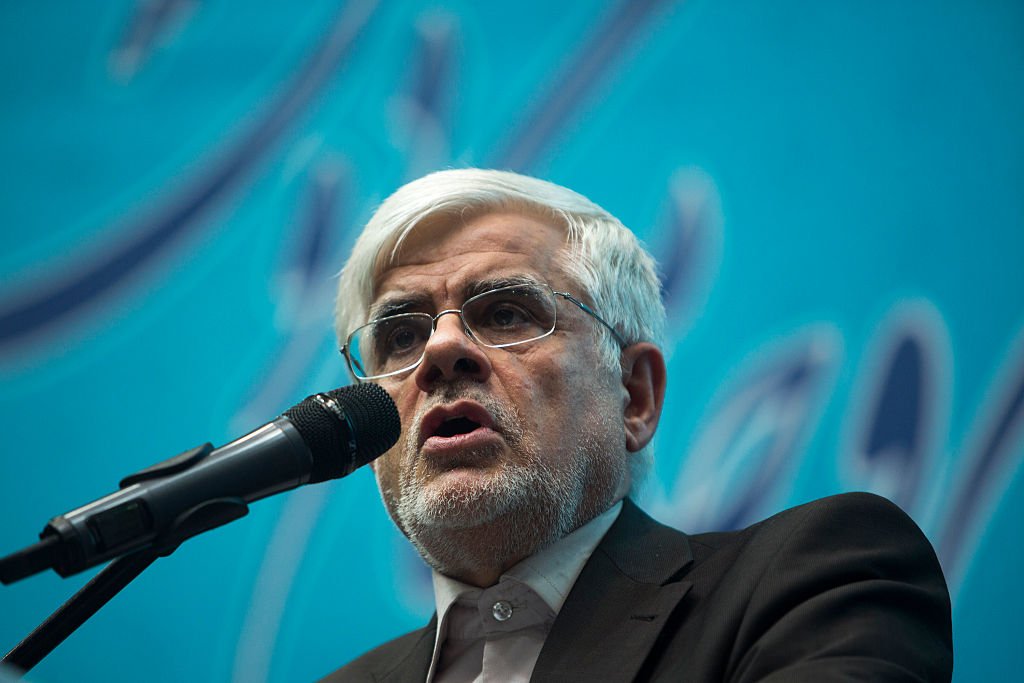
The geopolitical landscape of the Middle East has entered another phase of rhetorical escalation. Mohammad Reza Aref, Iran's First Vice President, stated last Sunday that the United States government had "begged" for a ceasefire in the conflict involving the two nations. According to Aref, following the alleged plea, Washington adopted a stance he characterized as "childish and contradictory" during the negotiation process. The remarks landed just days before the expiration of a temporary non-aggression agreement, injecting fresh volatility into an already fragile diplomatic corridor.
Tehran's shift in tone is notable less for its substance — sharp rhetoric between Washington and Tehran is a fixture, not an anomaly — than for its timing. With a temporary agreement set to lapse, the public framing of the other side as unreliable serves a dual function: it prepares domestic audiences for a possible breakdown in talks and positions the speaker as the aggrieved party should negotiations collapse.
The Logic of Rhetorical Escalation
Public accusations of this kind between Iran and the United States follow a well-documented pattern. Historically, both governments have used press conferences and state media appearances to set the terms of negotiation before returning to the table. During the protracted talks that led to the 2015 Joint Comprehensive Plan of Action (JCPOA) — the multilateral nuclear agreement — both sides engaged in cycles of public denunciation followed by quiet re-engagement. The language Aref deployed echoes that pattern: strong enough to signal displeasure, calibrated enough to leave the door ajar.
The choice of the word "begged" is itself instructive. In Iranian domestic politics, projecting an image of strength relative to Washington carries significant weight. Framing the United States as the supplicant inverts the conventional power asymmetry and reinforces a narrative of national resilience that has been central to Iranian political discourse since 1979. For Aref, a figure whose political identity leans technocratic rather than ideological, the adoption of combative language suggests either personal conviction or — more likely — alignment with a broader messaging strategy coordinated across Iran's layered power structure.
Washington, for its part, has not issued a detailed public rebuttal to Aref's specific claims as of the article's publication. The absence of a direct response may reflect a deliberate choice to avoid amplifying the rhetoric, or it may indicate that back-channel communications remain active even as public statements grow sharper.
What the Expiration of the Agreement Means
The approaching deadline of the temporary non-aggression agreement introduces a concrete variable into what might otherwise remain a war of words. Temporary agreements of this nature typically function as confidence-building measures — short-duration frameworks designed to create space for broader negotiations. Their expiration does not automatically trigger hostilities, but it does remove a formal constraint on escalation.
The stakes extend well beyond the bilateral relationship. Gulf states, whose security calculations are tightly linked to the U.S.-Iran dynamic, watch these developments with particular attention. Energy markets, already sensitive to supply disruptions originating in the Persian Gulf, tend to price in geopolitical risk at moments like these. And for other actors with interests in the region — from European governments invested in diplomatic channels to Russia and China, both of which maintain their own relationships with Tehran — the trajectory of U.S.-Iran talks shapes a wider set of strategic considerations.
The question now is whether the rhetorical escalation reflects a genuine hardening of positions or a negotiating tactic designed to extract concessions before a renewed agreement. The two possibilities are not mutually exclusive. Governments routinely escalate in public while negotiating in private, and the line between posturing and policy can shift rapidly depending on domestic political pressures, third-party interventions, or unforeseen events on the ground. What remains observable is the tension between two forces: Tehran's need to project strength and Washington's apparent preference, at least for the moment, for restraint in its public response. How those forces resolve — or fail to — will determine whether the next phase is one of renewed diplomacy or deepened confrontation.
With reporting from Exame Inovação.
Source · Exame Inovação