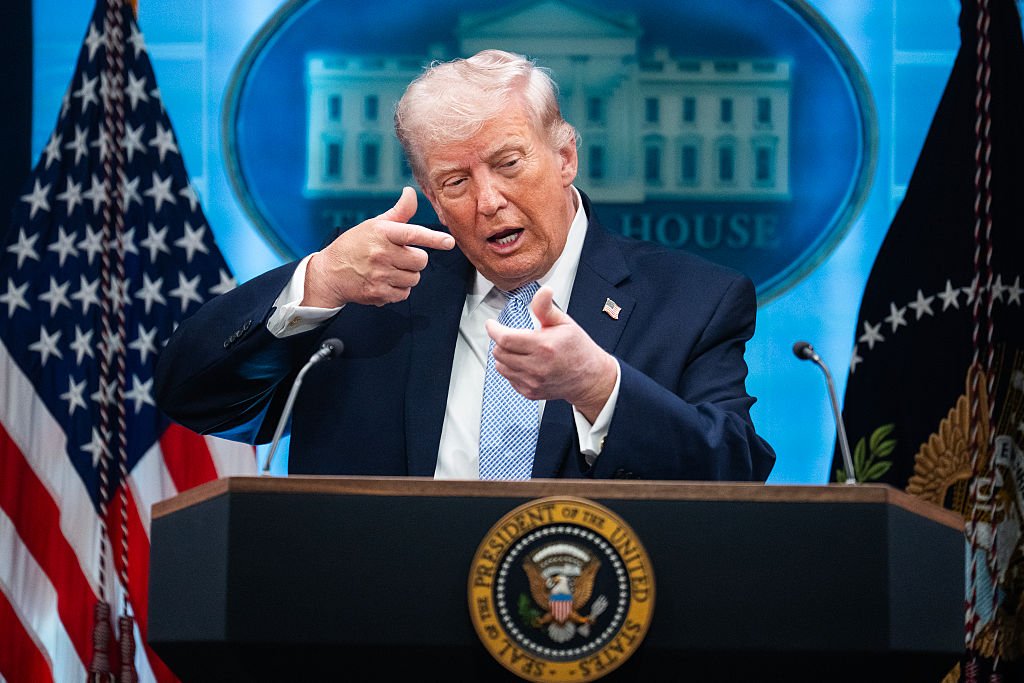
The global geopolitical landscape has once again been strained by direct rhetoric of force. U.S. President Donald Trump has escalated his posture against the government in Tehran by threatening the destruction of Iran's basic infrastructure. In a recent statement, Trump asserted that "every single power plant and every single bridge" in the country would be targeted should a new agreement proposed by Washington not be accepted. The threat, framed as a conditional ultimatum, represents one of the most explicit articulations of infrastructure-targeted coercion by a sitting U.S. president in recent memory.
Trump's strategy, predicated on maximum pressure, seeks to compel Iran to the negotiating table under terms he describes as "very fair and reasonable." The approach is not entirely without precedent in his political career. During his first term, Trump withdrew the United States from the 2015 Joint Comprehensive Plan of Action — the multilateral nuclear deal negotiated under the Obama administration — and reimposed sweeping economic sanctions on Tehran. That earlier campaign of maximum pressure sought to choke Iran's oil exports and financial system, but it stopped short of explicit threats to demolish civilian infrastructure.
Infrastructure as Leverage
The specific mention of power plants and bridges is analytically significant. In the grammar of modern statecraft, infrastructure has become both a strategic asset and a pressure point. Targeting energy generation and transportation networks does not merely degrade military capability — it paralyzes an economy, disrupts civilian life, and undermines the governing legitimacy of any regime that fails to keep the lights on and the roads open.
This logic has been observed in other theaters. The extensive targeting of Ukraine's energy grid during the ongoing conflict with Russia demonstrated how infrastructure strikes can be wielded as a tool of attrition, imposing costs on civilian populations in the hope of eroding political will. The rhetorical invocation of a similar playbook against Iran — even if it remains, for now, rhetorical — signals that Washington views infrastructure vulnerability as a credible point of leverage.
Yet the practical consequences of such an approach extend well beyond Iran's borders. Iran remains a significant player in global energy markets, and any disruption to its productive capacity — or even the credible threat of such disruption — introduces volatility into oil pricing and shipping routes through the Strait of Hormuz, one of the world's most critical maritime chokepoints. Energy traders, insurers, and logistics operators across the Persian Gulf region are forced to price in risk every time such language is deployed at the presidential level.
The Limits of Ultimatum Diplomacy
Historically, ultimatum-based diplomacy has produced mixed results. Coercive threats can accelerate negotiations when the target state perceives the cost of refusal as unbearable and the terms as survivable. But they can also harden resistance, particularly in states where nationalist sentiment and institutional pride make capitulation politically untenable for the ruling establishment. Iran's political structure — with power distributed across elected officials, the clerical establishment, and the Islamic Revolutionary Guard Corps — complicates any assumption that a single external threat will produce a unified concession.
There is also the question of international reception. Explicit threats against civilian infrastructure sit uneasily within the framework of international humanitarian law, which draws distinctions between military objectives and objects indispensable to the survival of civilian populations. Whether or not such threats are acted upon, their articulation reshapes how other governments — allies and adversaries alike — calibrate their own diplomatic and defense postures relative to Washington.
The tension, then, is structural: maximum pressure assumes that escalation dominance will eventually yield compliance, while the target state's incentive is to demonstrate that it cannot be broken by threats alone. Whether this latest escalation moves the two sides closer to a negotiating framework or further entrenches mutual hostility depends on variables that neither capital fully controls — including the reactions of Gulf states, European governments, and energy markets operating on their own logic.
With reporting from Exame Inovação.
Source · Exame Inovação