The 2026 True/False Film Festival, held in Columbia, Missouri, arrived at a moment of pronounced ontological instability. As generative AI continues to blur the boundaries between the captured and the computed, the festival's programming turned inward, centering on the subjective human experience of time, memory, and the legacies people leave behind. The films presented were less about rigid documentation and more about how individuals perceive their own histories in an era where the past is increasingly malleable — and where the present is contested on multiple fronts.
True/False has long occupied a distinctive position among North American documentary festivals. Since its founding in 2004, the event has cultivated a reputation for programming that resists easy categorization, favoring work that interrogates the form itself rather than merely deploying it. That curatorial instinct has always carried an implicit argument: that nonfiction cinema is not a neutral vessel for facts but a constructed, authored experience. In 2026, that argument appears to have taken on fresh urgency.
The Dual Threat to the Real
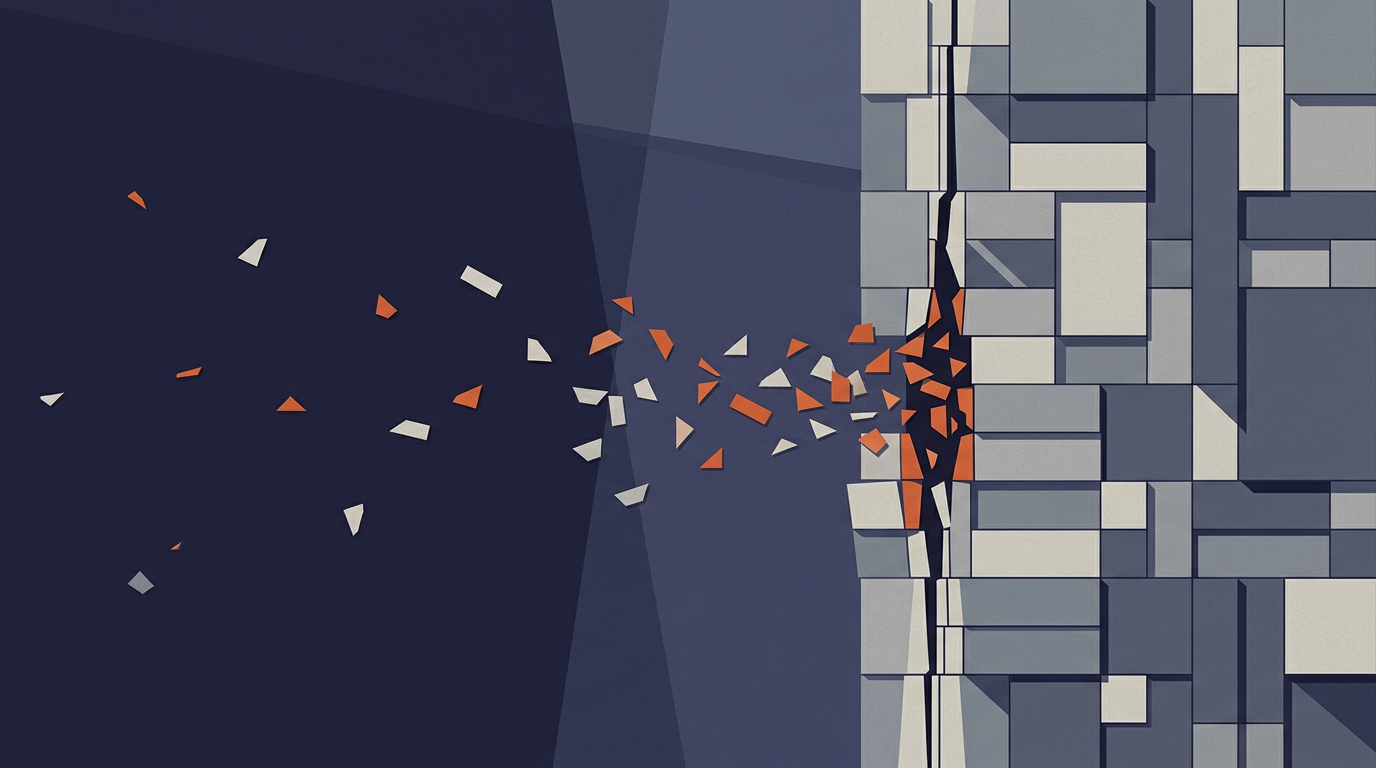
This year's slate suggests that the traditional documentary mission — to represent the "real" — has been complicated by a convergence of pressures. On one side, the rise of authoritarian rhetoric across multiple democracies has made the political present harder to narrate with confidence. On the other, the ubiquity of synthetic media has introduced a new epistemological problem: when any image, voice, or video can be generated from a text prompt, the evidentiary weight of recorded footage diminishes. The documentary, historically valued for its indexical relationship to reality — the camera was there, the light hit the sensor — finds that relationship under strain.
The concept of AI "hallucination," in which large language models produce plausible but fabricated outputs, offers a useful parallel. Political narratives that warp the present and generative systems that fabricate the past create overlapping zones of unreliability. For documentary filmmakers, the question is no longer simply what to record but how to make the act of recording legible as something distinct from simulation. The filmmakers at True/False appear to have responded not by doubling down on forensic objectivity but by embracing what might be called "imaginative truth" — work that foregrounds subjective experience, emotional texture, and the irreducibly human act of remembering.
This is not an entirely new impulse. The history of nonfiction cinema is rich with practitioners who understood that strict observational neutrality was itself a kind of fiction. From the staged reconstructions of Robert Flaherty to the essayistic digressions of Chris Marker, documentary has always negotiated the tension between evidence and interpretation. What distinguishes the current moment is the scale of the external threat to credibility. The challenge is no longer internal to the form; it comes from an information environment that can mass-produce plausible falsehoods at negligible cost.
Legacy as Narrative, Not Data
Several of the festival's selections reportedly explored legacy — not as a fixed archive of accomplishments but as a narrative shaped by consciousness, subject to revision, loss, and the limits of human attention. In an environment saturated with synthetic content, this framing carries strategic weight. If legacy is understood as a collection of data points, it becomes vulnerable to manipulation: records can be altered, images fabricated, timelines rewritten. If legacy is understood as a lived narrative — something carried in the body, in relationships, in the texture of memory — it retains a form of authenticity that resists easy counterfeiting.
The distinction matters beyond cinema. Institutions from journalism to the judiciary depend on shared assumptions about what constitutes evidence. As those assumptions erode, the documentary's insistence on anchoring stories in embodied, temporal experience becomes less an aesthetic choice and more a civic one.
True/False 2026, then, poses a question it does not fully resolve — and perhaps should not. If the value of nonfiction filmmaking once rested on its proximity to verifiable fact, and that proximity is now contested, where does documentary authority migrate? Toward the personal and the poetic, as this year's programming implies? Or does that migration risk ceding the evidentiary ground entirely, leaving the terrain of "proof" to those with the computational resources to fabricate it? The tension between these possibilities is unlikely to settle soon. It may, in fact, define the next decade of the form.
With reporting from Bright Wall Dark Room.
Source · Bright Wall Dark Room