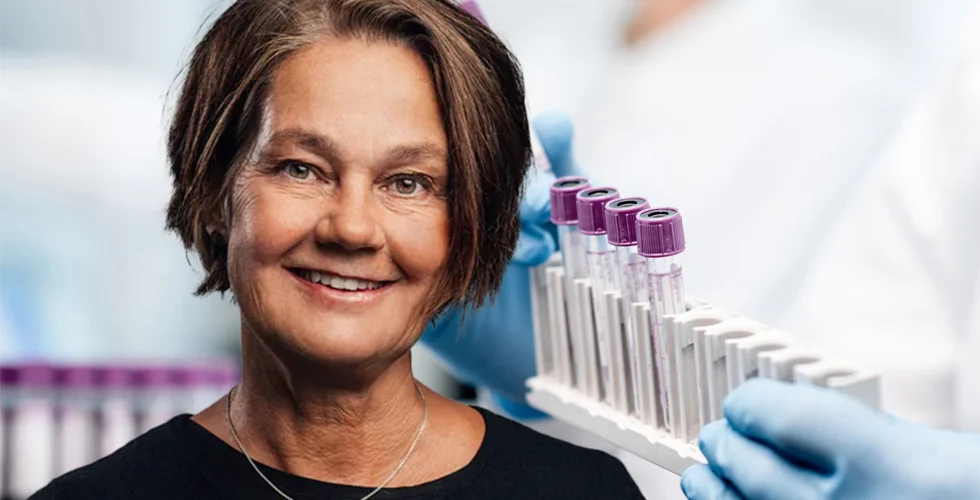
In 2021, Dynamic Code stood as a testament to the diagnostic gold rush. The Swedish health-testing company posted an operating profit of 100 million SEK (roughly $9.5 million), fueled by a global urgency for testing and a surge in consumer interest in personalized health data. But the peak was short-lived. Within four years, the company transitioned from a pandemic-era success story to bankruptcy.
Less than a year after that collapse, founder Anne Kihlgren is orchestrating a comeback. Reacquiring the brand she built, Kihlgren is relaunching Dynamic Code alongside a new partner and, crucially, a revised business model. The pivot suggests that while the company's previous corporate structure may have buckled under post-pandemic shifts, the underlying demand for home-based diagnostics remains a viable frontier.
The arc from boom to bankruptcy
Dynamic Code's trajectory mirrors a pattern familiar across the pandemic-era health sector. Companies that scaled rapidly to meet extraordinary demand for COVID-19 testing often found themselves overextended once that demand evaporated. Revenue cliffs arrived faster than cost structures could be adjusted. Firms that had invested in capacity, headcount, and infrastructure sized for crisis-level throughput suddenly faced a market that no longer needed them at that scale.
The broader diagnostic testing industry experienced this contraction in waves. Publicly traded testing companies saw their valuations collapse from 2022 onward as governments wound down mass testing programs and consumers returned to pre-pandemic healthcare routines. For smaller, privately held firms like Dynamic Code, the correction was often more existential. Without the capital buffers or diversified revenue streams of larger players, a sharp revenue decline could quickly become a liquidity crisis.
What makes Dynamic Code's case notable is not the bankruptcy itself — that story played out across dozens of diagnostic firms in Europe and North America — but the founder's decision to reacquire the brand and attempt a second iteration. Founder-led restarts after insolvency are uncommon in the Nordic health-tech landscape, where failed ventures tend to be absorbed by competitors or quietly dissolved.
A leaner model and the bet on the proactive patient
The new iteration of Dynamic Code aims to be structurally different from its predecessor. Kihlgren's strategy involves leveraging a network of strong partners to reach consumers, rather than building out the full operational stack in-house. The approach reduces fixed costs and capital requirements — the very liabilities that made the first version of the company fragile when revenues contracted.
This partner-driven model reflects a broader shift in how health-tech startups are being built in the mid-2020s. Rather than vertically integrating laboratory capacity, logistics, and consumer platforms under a single entity, newer entrants increasingly operate as orchestration layers, coordinating between certified labs, digital health platforms, and distribution channels. The trade-off is lower margins per test in exchange for a cost base that flexes with demand.
Kihlgren's bet rests on a demographic that existed before the pandemic and has only expanded since: the proactive patient. Consumers who grew accustomed to managing aspects of their health via digital platforms and at-home kits during the pandemic have not entirely reverted to old habits. The market for consumer-initiated diagnostics — covering areas such as allergy testing, hormonal panels, and gut health — predates COVID-19 and has continued to grow, even as pandemic-specific testing volumes collapsed.
The question is whether a revived brand carrying the memory of bankruptcy can rebuild trust with both consumers and potential partners. Brand equity in health diagnostics depends heavily on perceived reliability, and a corporate failure — however well-explained by macroeconomic forces — introduces friction. Kihlgren's track record as the original founder provides some continuity, but the commercial environment has shifted. Competition in the Nordic home-testing market has intensified, with established pharmacy chains and digital health platforms expanding their own diagnostic offerings.
Dynamic Code's second act, then, is less a story about one company's resilience and more a test case for a structural question facing the post-pandemic health-tech sector: whether the consumer behaviors catalyzed by the crisis represent a durable market, and whether lean, partnership-based models can capture that market without repeating the overextension that defined the first wave.
With reporting from Breakit.
Source · Breakit