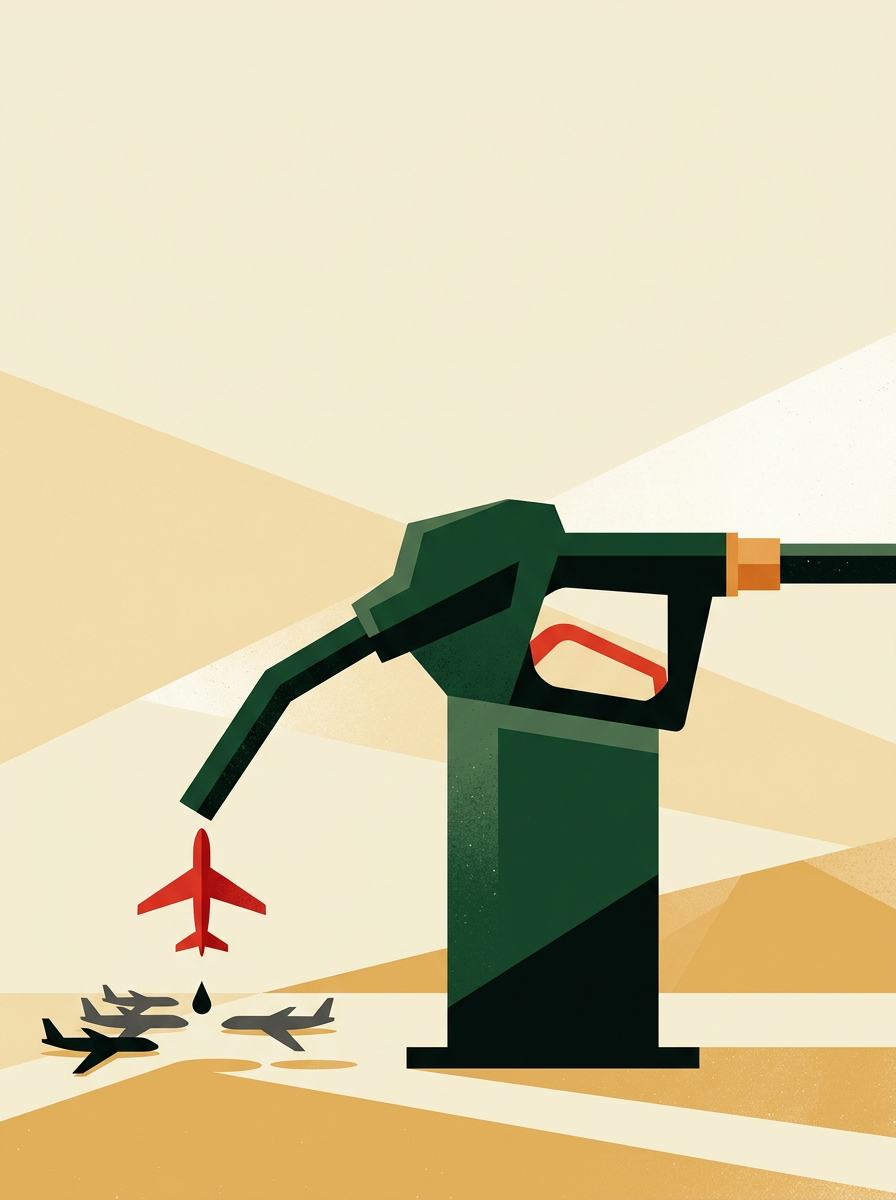
The head of the International Energy Agency, Fatih Birol, has warned that European airlines could run out of jet fuel within six weeks, a timeline that would place the crunch squarely in the early stages of the continent's peak summer travel season. The supply disruption is expected to force carriers to cut flight schedules and raise ticket prices, compounding pressure on an aviation sector still navigating post-pandemic recovery economics.
The warning arrives against a backdrop of broader energy market stress in Europe, where officials have simultaneously urged governments to ensure that Russia's economy does not benefit from the current shock — a clear signal that the war in Ukraine remains a central variable in the continent's energy calculus.
A supply chain under structural pressure
Jet fuel, a refined kerosene product known in the industry as Jet A-1, sits at a particular point of vulnerability in the petroleum supply chain. It competes for refining capacity with diesel and heating oil, and European refining margins have been under strain since the continent began redirecting crude and product flows away from Russian sources following the invasion of Ukraine in early 2022. The closure and conversion of several European refineries over the past decade — driven by decarbonization targets and shifting demand patterns — has further tightened domestic production capacity, making the region more dependent on imports of finished products.
A six-week horizon for potential shortages suggests that inventories are already running below seasonal norms. Historically, European fuel distributors build stocks ahead of the summer travel peak, when air traffic across the continent surges with holiday demand. If those buffers are insufficient, the consequences cascade quickly: airlines cannot simply substitute fuel sources on short notice, and airport fuel infrastructure operates on tightly scheduled delivery logistics.
Several carriers have reportedly begun trimming their summer schedules in anticipation. For airlines operating on thin post-pandemic margins, the calculus is straightforward — flying unprofitable routes with expensive fuel is worse than not flying at all. The result for passengers is a familiar pattern: fewer seats, higher fares, and reduced flexibility.
The geopolitical dimension
The IEA's warning cannot be separated from the geopolitical context that shapes European energy markets. Since 2022, the European Union has imposed successive rounds of sanctions on Russian oil and petroleum products, including a ban on seaborne imports of refined fuels that took effect in February 2023. These measures successfully reduced direct European dependence on Russian energy, but they also restructured global fuel trade flows in ways that introduced new fragilities.
Europe now sources a larger share of its refined products from the Middle East, India, and the United States — supply routes that are longer, more expensive, and more exposed to shipping disruptions. Any tightening in global refining capacity or spike in demand from other regions compresses the available supply for European buyers.
The explicit call from European officials to prevent Russia from benefiting from the energy shock underscores a tension that has defined the continent's energy policy for over three years: the desire to punish Moscow economically while maintaining sufficient supply for domestic needs. Each new supply disruption tests the durability of that balance.
For the aviation sector specifically, the situation raises questions that extend beyond the immediate crisis. Airlines have limited hedging options when physical supply — not just price — becomes the constraint. Airport operators, fuel distributors, and national governments may face difficult allocation decisions if shortages materialize. And for passengers, the prospect of a summer with fewer and more expensive flights adds to a growing sense that the energy consequences of geopolitical conflict are far from resolved.
The coming weeks will reveal whether the IEA's timeline proves accurate or whether emergency measures — strategic reserve releases, accelerated imports, or diplomatic interventions — can avert the worst outcomes. What remains clear is that European aviation sits at the intersection of structural refining constraints and geopolitical risk, with limited room to absorb further shocks.
With reporting from France24 Business Tech.
Source · France24 Business Tech