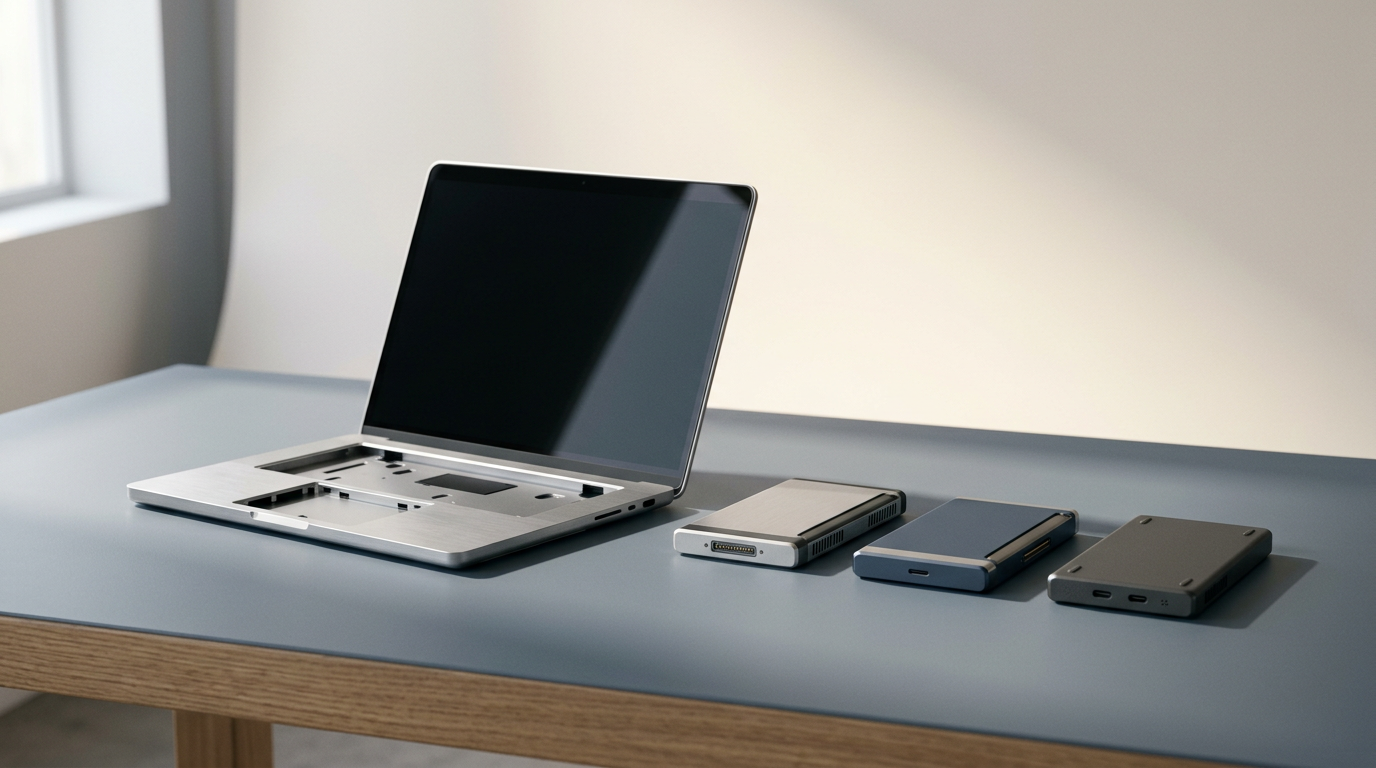
Since its founding, Framework has operated as something between a hardware startup and a philosophical statement. The company's core premise — that laptops should be repairable, upgradeable, and modular by default — positioned it as a direct counterpoint to the prevailing design orthodoxy of sealed batteries, soldered RAM, and proprietary components. With the announcement of the Laptop 13 Pro, Framework is now making its most deliberate bid to move beyond the enthusiast niche and into the professional mainstream.
The new machine, which Framework has described as a "MacBook Pro for Linux users," targets a segment that has long been underserved: professionals who want premium build quality and reliable daily performance but are unwilling to accept the trade-off of a device designed to be discarded rather than repaired. Previous Framework models earned respect for their modularity but drew consistent criticism for chassis rigidity and battery life that lagged behind competitors from Apple, Lenovo, and Dell. The Laptop 13 Pro appears designed to close that gap.
The Modular Paradox in Professional Hardware
The challenge Framework faces is not merely engineering but perceptual. In the professional laptop market, "premium" has become synonymous with integration. Apple's unibody aluminum MacBooks, for instance, achieve their rigidity and thinness in part because nearly every component is fixed in place — a design philosophy that optimizes for the out-of-box experience at the expense of long-term serviceability. The same logic pervades most high-end Windows machines. Modularity, by contrast, introduces seams, connectors, and tolerances that can undermine the sense of solidity consumers associate with expensive hardware.
This is the modular paradox: the very features that make a device repairable tend to make it feel less refined. Framework's earlier laptops illustrated the problem clearly. The expansion card system — which allows users to swap ports on the fly — was genuinely innovative, but the overall package sometimes felt utilitarian rather than polished. For a buyer spending in the professional price range, that distinction matters.
The Laptop 13 Pro represents Framework's attempt to resolve this tension without abandoning its founding principles. The positioning as a Linux-first professional machine is itself notable. Linux users have historically been forced to choose between consumer-grade hardware with uneven driver support and enterprise machines that are expensive and locked down. A purpose-built option with first-class Linux compatibility, modular internals, and a chassis designed to compete aesthetically with closed-ecosystem rivals would occupy genuinely new territory.
Right to Repair Meets Market Reality
Framework's timing aligns with a broader regulatory and cultural shift around repairability. The European Union's evolving ecodesign requirements are pushing manufacturers toward longer product lifespans and easier component replacement. In the United States, right-to-repair legislation has gained traction in several states. Apple itself has introduced a self-service repair program, however limited in scope. The direction of travel across the industry is toward greater repairability — but most incumbents are moving reluctantly, treating it as a compliance exercise rather than a design principle.
Framework's advantage is that repairability is not a retrofit but the foundation. The question is whether that foundation can support a product that competes on the dimensions professionals actually evaluate: keyboard feel, display quality, trackpad precision, thermal management, and battery endurance. Enthusiasts will tolerate trade-offs for the sake of principle; professionals, by and large, will not.
The broader significance of the Laptop 13 Pro may depend less on its spec sheet than on what it signals about the viability of modular design at the premium tier. If Framework can deliver a machine that professionals choose on merit — not merely on ideology — it would demonstrate that sustainable hardware design and commercial competitiveness are not mutually exclusive propositions. If the build quality still falls short, it risks confirming the skeptic's view that modularity is inherently a compromise.
The market will render its verdict in the usual way. But the forces at play — tightening regulation, growing consumer awareness of electronic waste, and the persistent demand for professional-grade tools — suggest that the space Framework is trying to occupy is real, even if occupying it successfully remains an open question.
With reporting from The Verge.
Source · The Verge