The Islamic Republic of Iran is projecting two contradictory positions on one of the world's most consequential chokepoints. After Foreign Minister Abbas Araghchi declared the Strait of Hormuz open on Friday, the Islamic Revolutionary Guard Corps (IRGC) moved within hours to reassert its blockade of the waterway, publicly contradicting the diplomatic signal. The episode has laid bare a factional rupture inside Tehran that carries direct implications for global energy markets and regional security.
IRGC-linked media outlets criticized the Foreign Ministry for what they called a "lack of tact," a pointed rebuke that would have been difficult to imagine under more consolidated leadership. The friction follows the deaths of Supreme Leader Ali Khamenei and other senior officials during the ongoing conflict with the United States and Israel — a leadership vacuum that has evidently shifted the internal balance of power toward the IRGC and away from the civilian diplomatic apparatus.
A chokepoint with global consequences
The Strait of Hormuz, a narrow passage between Iran and Oman roughly 33 kilometers wide at its narrowest navigable point, has long been the single most important transit route for seaborne oil. In normal conditions, a substantial share of the world's crude shipments passes through it daily. Any sustained disruption to traffic through the strait reverberates immediately across commodity markets, shipping insurance premiums, and the strategic calculations of every major oil-importing economy.
Iran has threatened to close the strait at various points over the past several decades, most notably during periods of heightened tension with the United States over its nuclear program and during the "tanker wars" of the 1980s. But those episodes remained largely rhetorical or limited in scope. An actual, sustained blockade represents a qualitatively different scenario — one that transforms the strait from a latent risk factor into an active disruption.
The IRGC's insistence on maintaining the blockade, even as the Foreign Ministry attempted to signal de-escalation, suggests that the military wing views control of the strait as both a strategic lever and a domestic power consolidation tool. In the absence of a functioning supreme leadership structure, command over Iran's most potent geopolitical asset confers authority that no diplomatic title can match.
The IRGC's expanding grip
The Revolutionary Guard Corps has operated as a state within a state for decades, controlling significant economic assets, military infrastructure, and intelligence networks. Its political influence has grown steadily since the early 2000s, with former IRGC commanders occupying an increasing number of parliamentary seats, governorships, and ministerial positions. The current crisis appears to have accelerated that trajectory.
The public humiliation of the Foreign Ministry — broadcast through IRGC-aligned media channels — signals more than a policy disagreement. It reflects a structural shift in which the diplomatic corps has been functionally subordinated. For external actors attempting to negotiate or de-escalate, this creates a fundamental problem of interlocutor reliability: statements from Iran's diplomatic establishment may no longer carry the weight of the institutions that control military action.
Historical parallels exist in other dual-power structures. Pakistan's military and civilian governments have frequently issued contradictory signals on security matters, complicating diplomatic engagement for decades. But Iran's case is arguably more acute, given that the factional split is playing out over a chokepoint with immediate global economic consequences.
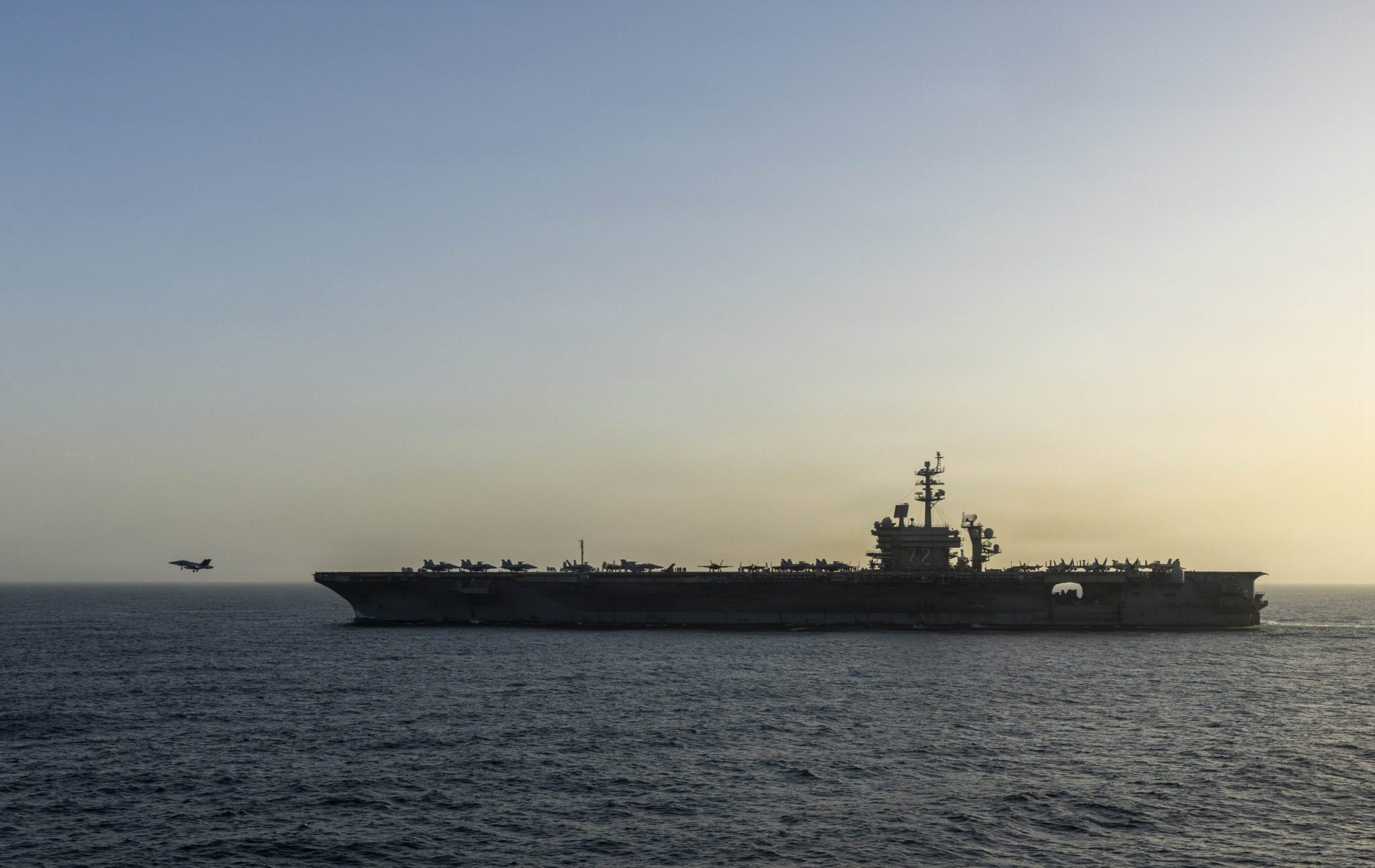
The question facing energy markets, regional governments, and the U.S.-led naval presence in the Persian Gulf is not simply whether the strait will reopen, but whether any diplomatic channel currently exists that can credibly commit to an outcome. If the IRGC has effectively sidelined the Foreign Ministry, then negotiations with Araghchi or his staff amount to conversations with an institution that lacks the authority to deliver. If, on the other hand, the IRGC's dominance provokes a counter-reaction from other regime factions — clerical, parliamentary, or economic — the internal contest could produce unpredictable oscillations in policy.
Neither scenario offers the kind of stability that markets or military planners prefer. The strait remains blocked, the regime remains fractured, and the distance between what Tehran's diplomats say and what its military does continues to widen.
With reporting from Fortune.
Source · Fortune