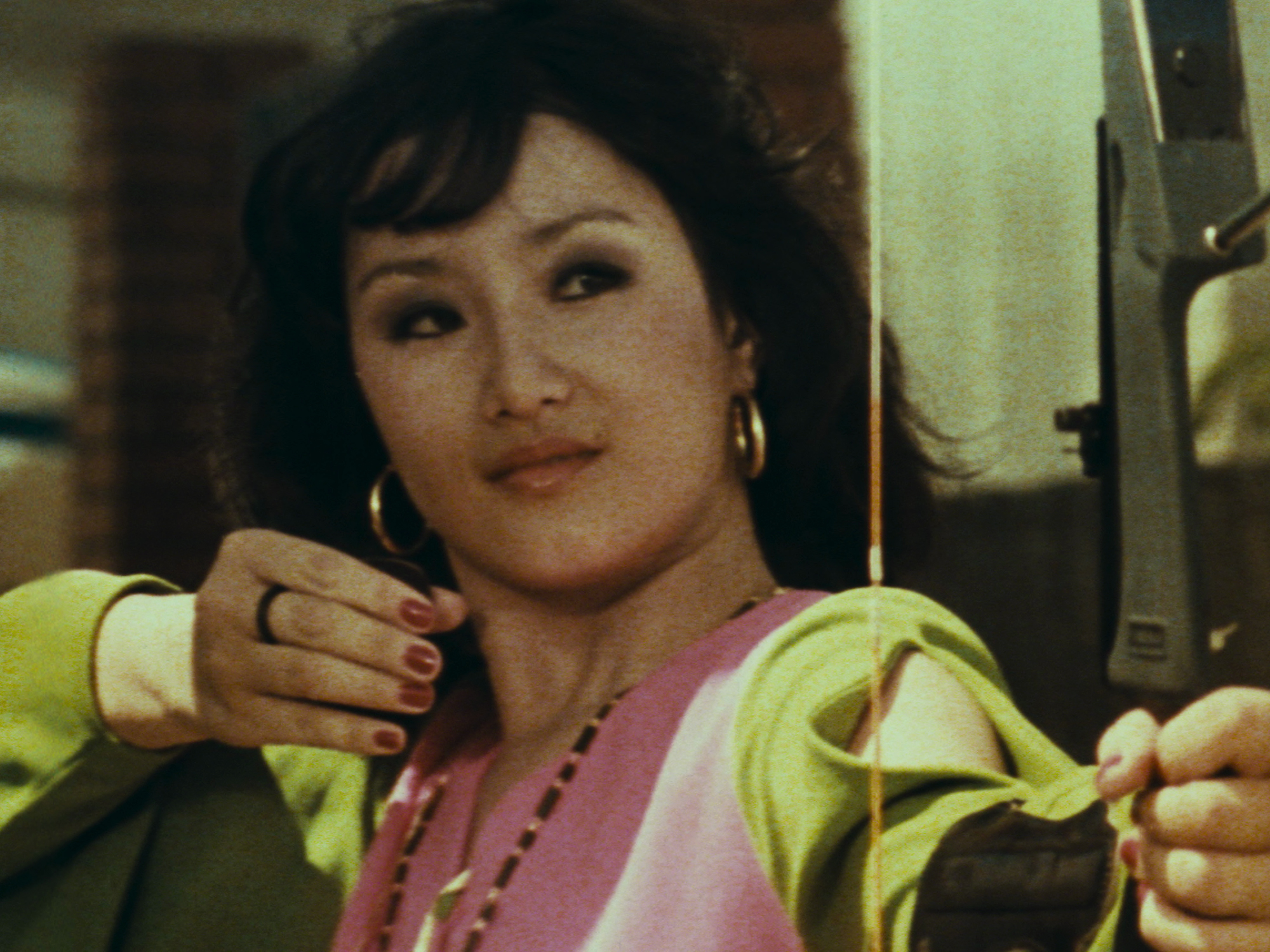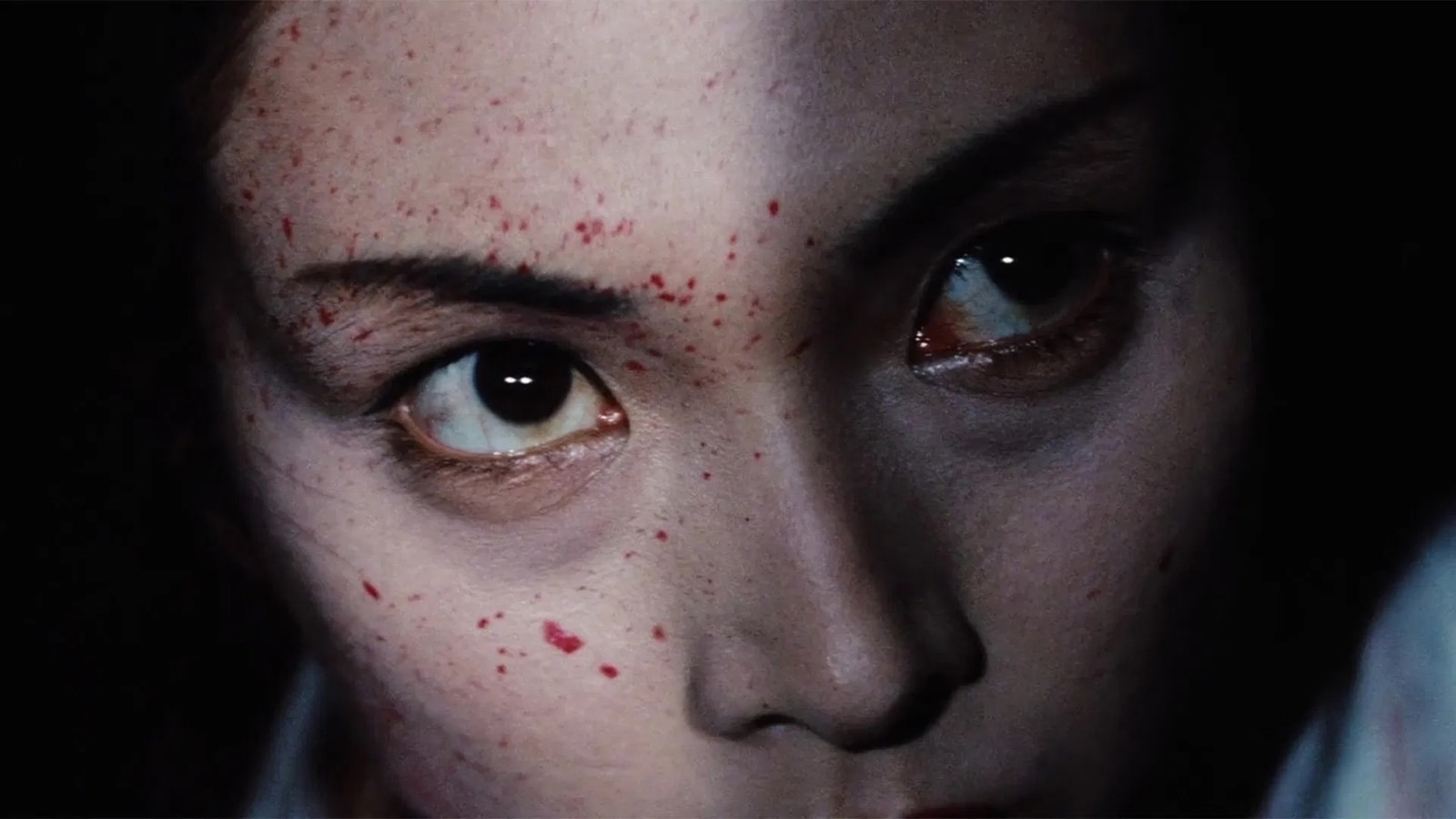
For the first time in over forty years, Meiko Kaji returns to New York this week to open a career retrospective at the Japan Society. The series begins with Lady Snowblood (1973), the Toshiya Fujita-directed classic that remains the definitive expression of Kaji's icy, lethal screen presence. Adapted from the manga by Kazuo Koike and Kazuo Kamimura, the film follows Yuki, a woman born in prison for the sole purpose of avenging her family during the tumultuous Meiji era. The retrospective runs through April 4 and marks a rare institutional spotlight on an actress whose influence has far exceeded the cult circuits where her films first circulated in the West.
Kaji's performance in Lady Snowblood is often defined by the intensity of her stare — a gaze that critic Howard Hampton once noted was sharper than any blade. Her career, which began under her birth name Masako Ota before her breakthrough in Teruo Ishii's Blind Woman's Curse (1970), helped redefine the role of the female lead in Japanese genre cinema. By blending the stoicism of the yakuza film with a supernatural, almost gothic atmosphere, Kaji established a screen persona that made the female gaze a formidable, often fatal, force.
The architecture of a genre icon
Kaji's rise through the Japanese studio system of the late 1960s and early 1970s coincided with a period of aggressive experimentation at studios like Nikkatsu and Toei. The era's exploitation output — encompassing the pinky violence subgenre, the ninkyo eiga (chivalry films), and increasingly stylized revenge narratives — provided a paradoxical space: films made primarily for male audiences that nonetheless required commanding female leads. Kaji navigated this terrain with a discipline rooted in restraint. Where contemporaries leaned into melodrama, she withheld. The result was a screen presence defined less by what it expressed than by what it contained.
Her work in the Female Prisoner Scorpion series, beginning with Female Prisoner #701: Scorpion (1972), demonstrated this economy. The character of Nami Matsushima speaks remarkably little across the franchise, yet dominates every frame. The films drew on the visual grammar of European art cinema as much as on the conventions of the women-in-prison genre, and Kaji's stillness became the axis around which their tonal contradictions resolved. It was a model of performance that treated silence not as absence but as concentrated intent.
Influence in plain sight
The global afterlife of Kaji's work is by now well documented. Quentin Tarantino drew explicitly on Lady Snowblood for the structure and visual palette of Kill Bill (2003), and Kaji's recording of "Shura no Hana" — the ballad that accompanies the film's most iconic sequences — appeared directly on the soundtrack. That borrowing brought Kaji's name to a wider Western audience, though often in a flattened form: the cool image, the sword, the snow turning red. The Japan Society retrospective offers a corrective by presenting the breadth of a career that cannot be reduced to a single film or a single borrowed aesthetic.
What makes Kaji's body of work endure is not merely its visual power but its structural position within a larger shift in genre filmmaking. The 1970s revenge narrative, in Japan and elsewhere, was undergoing a transformation in which the protagonist's moral authority became increasingly ambiguous and the line between justice and obsession deliberately blurred. Kaji's characters occupied that line with unusual precision. They were not heroines in any conventional sense, nor antiheroes performing transgression for its own sake. They were instruments of consequence — figures whose violence carried the weight of systemic failure.
The retrospective arrives at a moment when repertory programming and institutional retrospectives have become important sites for reframing film history beyond canonical hierarchies. Placing Kaji's work inside the Japan Society — an institution oriented toward cultural diplomacy and cross-cultural understanding — rather than in a genre-focused midnight screening series signals a shift in how these films are received. Whether that reframing alters the critical standing of 1970s Japanese genre cinema more broadly, or whether it remains a contained act of recognition for a single performer, depends in part on what audiences and programmers choose to do with the context the series provides.
With reporting from Criterion Daily.
Source · Criterion Daily