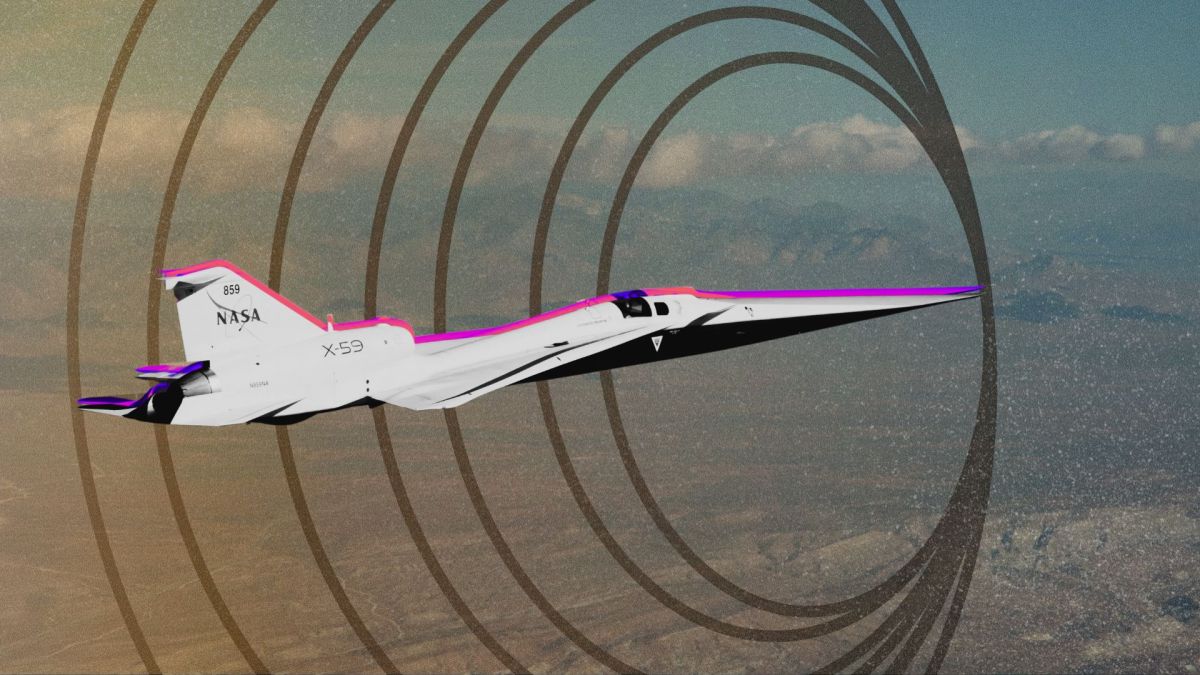
For decades, the promise of supersonic travel has been grounded by a single, violent acoustic phenomenon: the sonic boom. NASA’s X-59, an experimental aircraft designed to reshape the physics of breaking the sound barrier, is now hovering on the edge of solving it. In recent flight tests over the California desert, the jet reached a speed of Mach 0.95 and an altitude of 43,000 feet, effectively knocking on the door of the sound barrier.
The X-59 is the centerpiece of the Quesst mission, a project aimed at replacing the window-rattling boom of traditional supersonic flight with a muted "thump." Its elongated, needle-like nose and carefully sculpted airframe are engineered to prevent shockwaves from coalescing into the explosive sound that led to the 1973 ban on commercial supersonic flight over land. By spreading these waves out, the aircraft attempts to bypass the regulatory and social hurdles that ended the era of the Concorde.
With these successful near-sonic trials, NASA is preparing for the definitive transition into supersonic speeds in the coming days. If the X-59 can prove that high-speed travel can be conducted without disturbing the communities below, it could provide the data necessary for regulators to lift decades-old restrictions, potentially halving flight times and fundamentally altering global logistics.
With reporting from Numerama.
Source · Numerama


