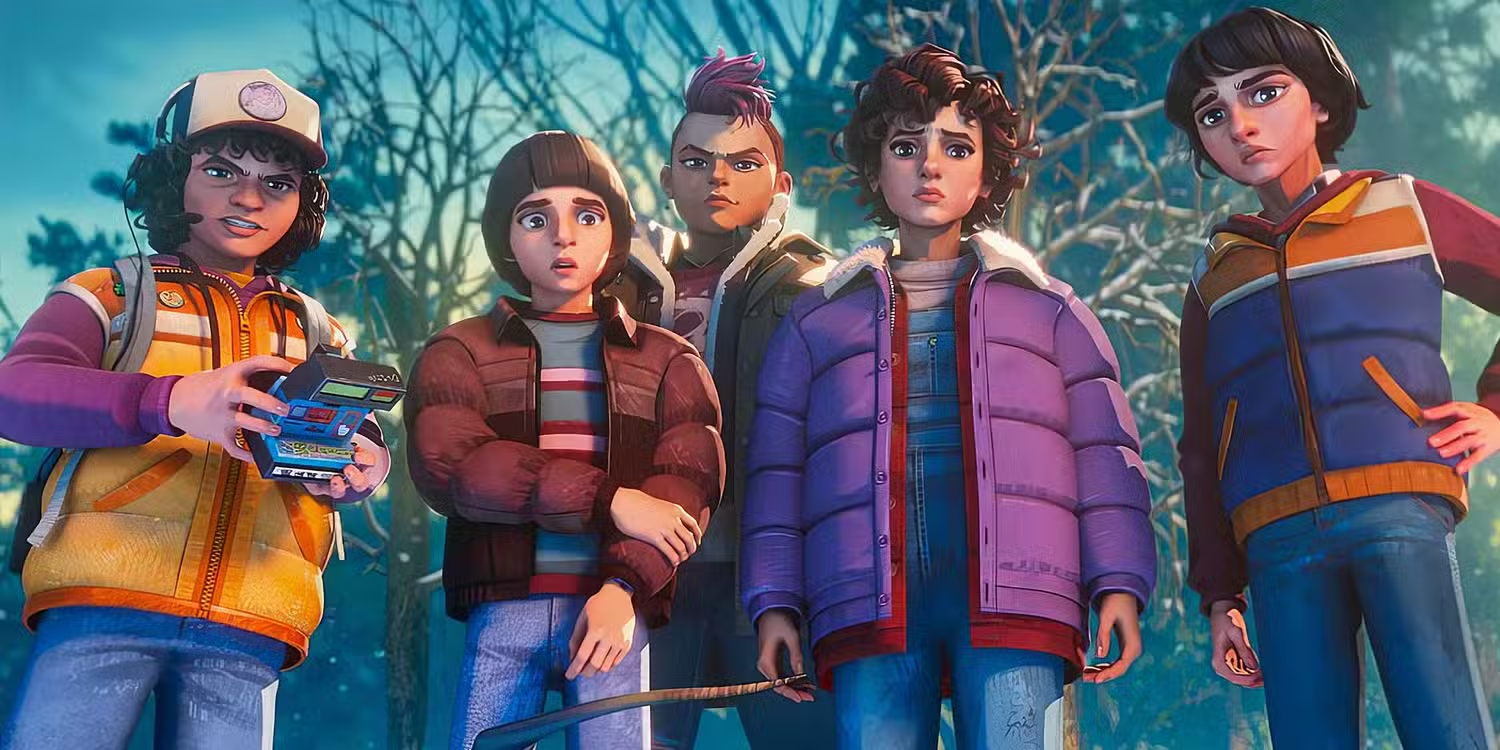
Netflix has long relied on *Stranger Things* as the cornerstone of its original programming, a cultural juggernaut that bridged the gap between niche sci-fi and mass-market appeal. But with the main series scheduled to conclude in December 2025, the company faces the \"post-hit\" dilemma familiar to traditional Hollywood studios. This week’s debut of a new production set within the show’s universe marks the beginning of a broader effort to transform a finite story into a perpetual franchise.
The move is less about creative necessity and more about the cold logic of the streaming economy. In an environment where subscriber acquisition has plateaued, retention is governed by the familiarity of intellectual property. By revisiting the world of the Upside Down before the original cast takes their final bow, Netflix is attempting to build a self-sustaining ecosystem that can survive the departure of its primary stars.
This expansion strategy reflects a shift in how digital platforms manage their most successful assets. Rather than allowing a narrative to reach a definitive end, the goal is now total immersion—keeping the audience tethered to a specific brand through a variety of formats and perspectives. For Netflix, the success of this week’s release will be a key indicator of whether *Stranger Things* can endure as a legacy brand or if its magic is tied strictly to its original timeline.
With reporting from Exame Inovação.
Source · Exame Inovação