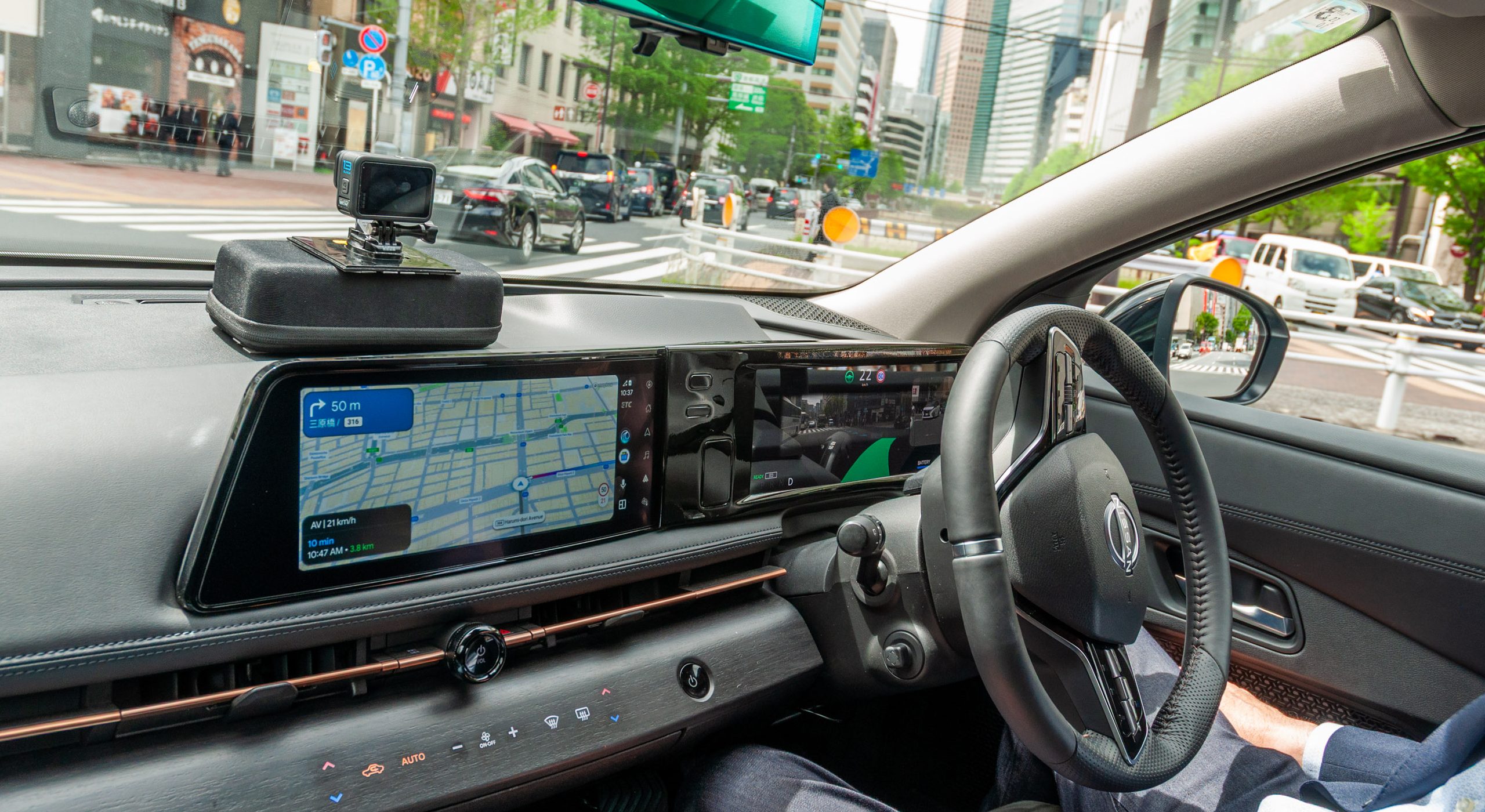
Nissan is recalibrating its position in the autonomous driving race, moving beyond incremental driver assistance toward a system it claims can match the intuition and safety of a human operator. During a recent demonstration in Tokyo, the automaker showcased a prototype of its next-generation ProPilot Assist, a software-defined platform scheduled for a commercial debut in 2027.
The technology relies on a sophisticated hardware suite comprising 11 cameras, five radar units, and a Lidar array. While the current prototype—a modified Nissan Ariya—wears its sensors in an external housing, the production version intends to integrate these components seamlessly into the vehicle's body. The shift is more than physical; it represents a move toward AI-based logic designed to navigate the unpredictability of urban environments without the rigid constraints of traditional, rule-based programming.
In a 40-minute trial through the dense traffic of Tokyo’s city streets and highways, the system managed uncontrolled scenarios with a level of confidence that Nissan’s executive chief engineer, Tetsuya Iijima, places on par with industry leaders like Tesla and Wayve. By framing its upcoming technology as "equal to or better than" a human driver, Nissan is signaling a transition from passive safety features to active, high-level autonomy.
With reporting from *The Drive*.
Source · The Drive