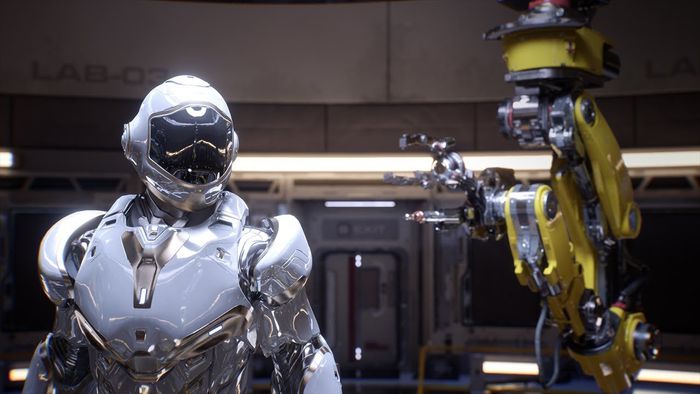
For years, the pursuit of photorealism in digital environments has been a war of attrition against hardware. While traditional ray tracing selectively calculates light effects to maintain performance, path tracing—the "holy grail" of rendering—simulates the behavior of light across an entire scene. The result is breathtakingly lifelike, but the computational cost is so high that it has largely remained the exclusive province of top-tier hardware like NVIDIA’s flagship RTX 5090.
NVIDIA’s research arm is now aiming to lower that barrier. By refining the ReSTIR (Reservoir Spatio-Temporal Importance Resampling) algorithm, the company claims it can make path tracing up to three times faster while significantly reducing visual noise. The breakthrough shifts the focus from brute-force calculation to intelligent selection, fundamentally changing how a GPU decides which photons matter most to the final image.
Rather than calculating billions of random light rays—many of which contribute little to what the viewer actually sees—the new technique allows the hardware to "recycle" calculations from neighboring pixels and previous frames. This spatial and temporal reuse ensures that the GPU spends its cycles only on the most impactful light paths. By streamlining this sampling process, NVIDIA aims to deliver the fidelity of path tracing without the prohibitive processing tax that currently defines the medium.
With reporting from Canaltech.
Source · Canaltech