Architecture is frequently critiqued as a finished object—a static arrangement of concrete and glass frozen at the moment of completion. For Región Austral, the winner of ArchDaily’s 2025 Next Practices Awards, the true design process begins only after the scaffolding is removed. Their work treats public space not as a monument, but as a scaffold for the "architecture of everyday life," where the success of a project is measured by its capacity for adaptation and social negotiation.
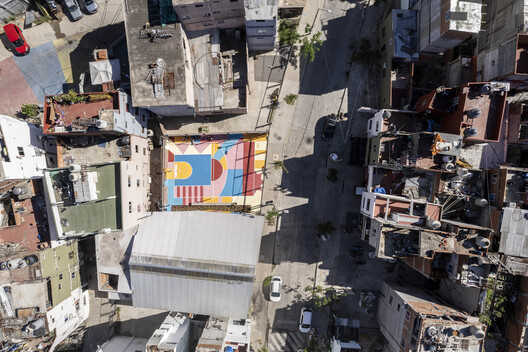
This philosophy is most evident in projects like the Playón de Chacarita network and the Olympic Neighborhood Square. In these contexts, where urban fragmentation and social inequality often dictate the rhythm of life, Región Austral eschews rigid, predefined forms. Instead, they focus on creating the conditions for collective activity. By treating the physical intervention as a baseline rather than a finality, the firm allows the community to activate and sustain the space over time, turning design into a continuous dialogue with the neighborhood.
By employing incremental strategies and deep participation, Región Austral addresses the complexities of the modern city without imposing a singular vision. Their approach suggests that the most resilient urban spaces are those that remain unfinished—vessels designed to be filled by the unpredictable, messy, and essential movements of the public. It is a shift from architecture as a product to architecture as a process, prioritizing the lived experience of the commons over the aesthetic purity of the plan.
With reporting from ArchDaily.
Source · ArchDaily