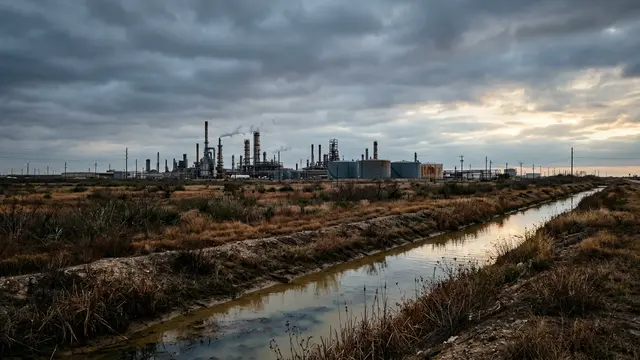
The American factory floor is, in many cases, a monument to architectural inertia. Facilities responsible for a significant share of domestic manufacturing output were designed decades before autonomous systems existed as a practical category of technology. Manual routing, fragmented control networks, and floor plans optimized for human-operated forklifts define these environments. For companies pushing the boundaries of high-volume production, such legacy infrastructure creates persistent friction — and, increasingly, an opportunity to rethink how automation enters the picture.
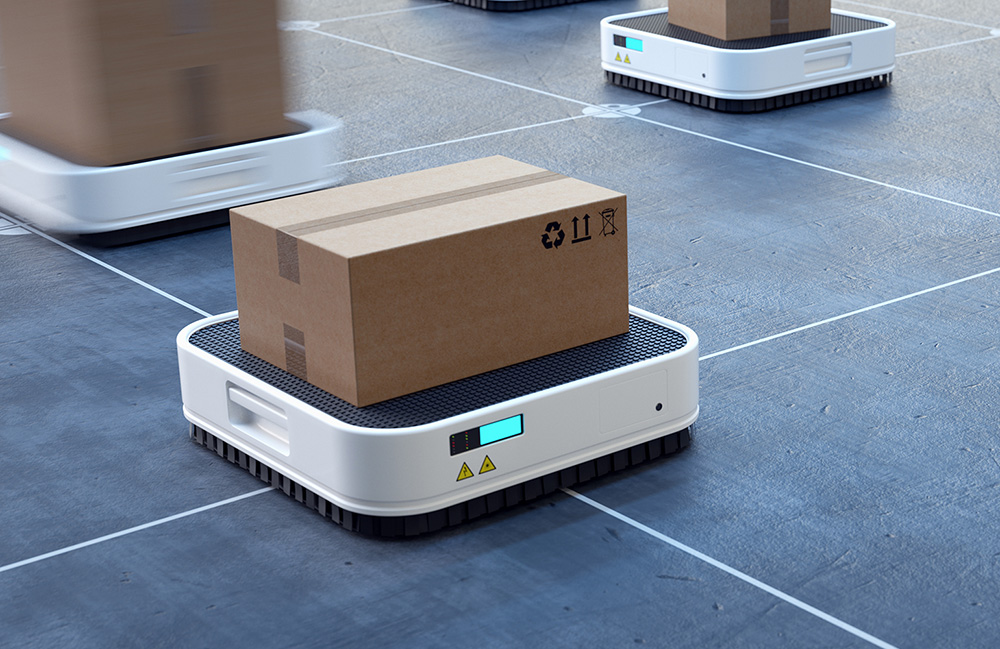
Tesla, which operates some of the most closely watched manufacturing lines in the automotive industry, appears to be treating this challenge as a strategic priority. At the Robotics Summit & Expo scheduled for May 2026, Joshua Joseph, a deployment engineer at Tesla, is set to present the company's internal roadmap for scaling autonomous mobile robots (AMRs) within older factory environments. AMRs — robots capable of navigating dynamic spaces without fixed tracks or guides — have become a growing presence in warehousing and logistics, but their integration into legacy manufacturing plants raises a distinct set of engineering problems.
From isolated tools to infrastructure layer
The core of Tesla's approach, as outlined ahead of the presentation, reframes AMRs not as standalone tools performing discrete tasks but as a foundational layer of factory infrastructure. The distinction matters. In conventional deployments, mobile robots tend to be bolted onto existing workflows — moving a pallet here, ferrying parts there — without fundamentally altering how material flows through a facility. Tesla's strategy instead positions AMRs as the connective tissue between production lines and logistics operations, targeting the high-friction material movements that still depend heavily on manual labor.
This framing echoes a broader shift in manufacturing philosophy. The most capital-efficient path to automation in legacy environments is rarely demolition and reconstruction. It is retrofitting: layering new capabilities onto existing physical and digital infrastructure. Tesla's deployment reportedly involves integrating fleet management software and real-time analytics with legacy PLC-controlled equipment — programmable logic controllers that have governed factory machinery for decades. PLCs were never designed to communicate with autonomous robots, which means the integration challenge is as much about software interoperability as it is about physical navigation.
The difficulty of this kind of work is easy to underestimate. Legacy factories present uneven floors, narrow aisles, inconsistent wireless coverage, and control systems that speak protocols from a different era of computing. Each of these variables can degrade AMR performance or create safety risks in environments where humans and machines share space.
The retrofit thesis and its limits
Tesla's bet on intelligent retrofitting rather than greenfield construction aligns with a pragmatic reality facing American manufacturing. The installed base of factories is enormous, and the cost of replacing them wholesale is prohibitive for most operators. If AMRs can be made to function reliably within these constraints, the addressable market for such deployments extends well beyond any single automaker.
The approach also carries implicit tensions. Data-driven fleet management demands robust connectivity and sensor coverage — infrastructure that legacy buildings often lack. Human-robot collaboration in tight, cluttered spaces requires not just technical reliability but also trust from the workforce operating alongside autonomous machines. And scaling from a pilot deployment to full production coverage introduces complexity that grows nonlinearly: what works with a handful of AMRs on a single line may behave unpredictably at fleet scale across an entire facility.
The vision Tesla appears to be advancing — that the future of factory automation lies not in the fully autonomous "lights-out" plant but in the systematic upgrading of existing industrial spaces — is a thesis with significant implications for the robotics industry. It suggests that the highest-value engineering problems are not in building faster or more capable robots, but in making current-generation machines function within the messy, constrained reality of infrastructure that already exists. Whether that thesis holds at scale, and whether the economics work beyond Tesla's own operations, remains an open question that the broader manufacturing sector will be watching closely.
With reporting from The Robot Report.
Source · The Robot Report