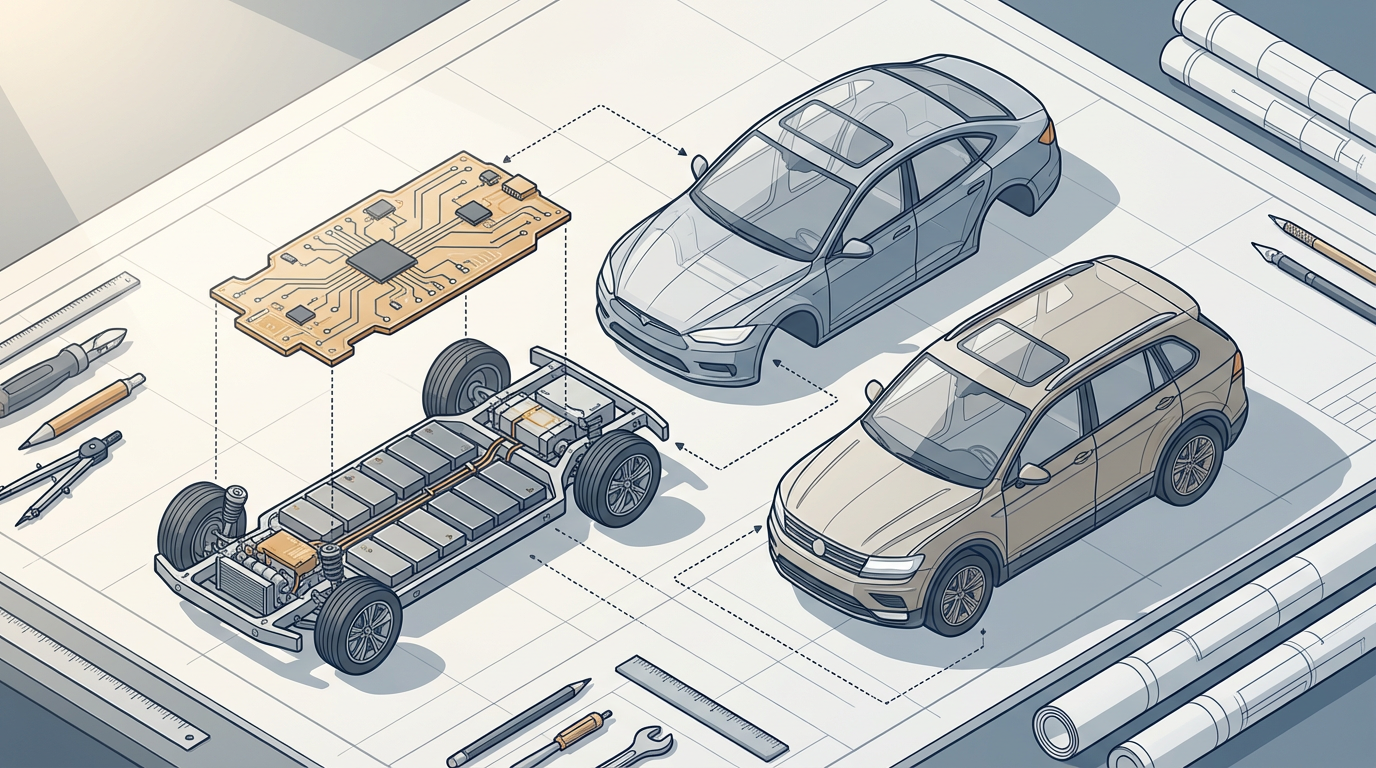
Rivian has announced a strategic shift to license its proprietary software stack to other automotive manufacturers, a move that positions the electric vehicle maker as a potential technology supplier rather than merely a vehicle assembler. According to Financial Times reporting, the company is actively seeking to export its vehicle operating system, a core component of its electric platform, to competitors in an attempt to diversify its revenue streams beyond the capital-intensive business of manufacturing automobiles.
This transition reflects a broader industry trend where carmakers are struggling to balance the immense costs of hardware production with the high-margin potential of software-defined vehicles. By attempting to commoditize its software, Rivian is essentially betting that its digital architecture can serve as a foundational layer for other brands, effectively attempting to replicate the model used by mobile operating systems in the consumer electronics space.
The Software-Defined Vehicle Paradigm
The automotive industry has historically been defined by mechanical engineering and supply chain logistics. However, the rise of electric vehicles has fundamentally altered the value proposition of a car. As vehicles become increasingly reliant on complex electronic control units, connectivity, and autonomous driving features, the software stack has emerged as the primary differentiator for consumers. Rivian’s decision to license its platform is an acknowledgment that the traditional model of bespoke, siloed software development is becoming unsustainable for many legacy manufacturers.
For decades, carmakers maintained tight control over their proprietary systems, often resulting in fragmented, cumbersome, and difficult-to-update software. This approach created a significant barrier for legacy firms attempting to modernize their fleets. Rivian’s strategy suggests that the future of automotive competitiveness may lie in the ability to abstract software from hardware. By offering a standardized software environment, Rivian hopes to solve the integration headaches that have plagued the industry’s transition to electrification.
Historical precedents in other sectors, such as the evolution of cloud computing or the ubiquity of Android in smartphones, illustrate the potential for a horizontal software provider to disrupt vertical incumbents. If Rivian successfully positions its operating system as a reliable, scalable, and secure platform, it could effectively lower the barrier to entry for smaller or less tech-savvy manufacturers, while simultaneously creating a lucrative, high-margin software-as-a-service (SaaS) business for itself.
Incentives and Strategic Dynamics
The economic logic driving Rivian’s pivot is clear: the manufacturing of electric vehicles is a brutal, low-margin business that requires massive capital expenditure. While scaling production is essential, the path to profitability is often elusive due to the volatility of raw material prices and the intense competition from established players. By contrast, software licensing offers a high-margin, scalable revenue stream that is decoupled from the physical assembly line, providing the company with a hedge against the cyclical nature of vehicle sales.
However, the mechanism of this strategy faces significant friction. Automotive manufacturers are notoriously protective of their intellectual property and brand identity. Entrusting a core component of the user experience—the vehicle interface and control logic—to an outside competitor like Rivian involves a loss of control that many legacy executives may find unacceptable. The challenge for Rivian lies in convincing these firms that the benefits of speed-to-market and reduced development costs outweigh the strategic risk of relying on a competitor for a critical technology layer.
Furthermore, the complexity of vehicle integration cannot be overstated. Unlike a mobile app, an automotive operating system must interface with a vast array of hardware sensors, safety systems, and power management modules. This requires a level of customization that could potentially undermine the efficiency of a standardized software platform. Rivian must navigate the delicate balance between providing a turnkey solution and offering enough flexibility to satisfy the unique requirements of diverse vehicle platforms and brand architectures.
Implications for Industry Stakeholders
For regulators and safety agencies, the move toward shared, standardized software platforms introduces new complexities in oversight. If a single software architecture powers multiple brands, a critical bug or security vulnerability could have systemic implications, affecting a wide range of vehicles simultaneously. Regulators will likely demand higher standards of transparency and rigorous testing procedures for any software-as-a-service provider that gains significant market penetration in the automotive sector.
For competitors, Rivian’s move is both an opportunity and a threat. Smaller carmakers, lacking the resources to build a world-class software team from scratch, may find in Rivian an essential partner that allows them to remain competitive in a tech-driven market. Conversely, larger, more established firms may view this as an encroachment on their autonomy, prompting them to accelerate their own internal software development efforts to avoid dependency. The result is likely to be a more bifurcated market, where manufacturers either develop their own proprietary stacks or gravitate toward a few dominant, standardized operating systems.
The Uncertain Path Forward
It remains to be seen whether the automotive industry is prepared to adopt a 'platform-first' mentality. The history of the sector is littered with failed attempts to standardize components, and the cultural resistance within legacy organizations remains a formidable hurdle. Whether Rivian can effectively manage the transition from a hardware-focused manufacturer to a software-centric technology provider is a question that will be answered only over the next several years as it navigates these complex partnerships.
Market observers will need to watch how Rivian balances its own vehicle production targets with the needs of its software licensees. Any perception that the company is prioritizing external partners over its own product roadmap could alienate its core customer base. Furthermore, the long-term viability of this model will depend on Rivian’s ability to maintain a competitive edge in software innovation, ensuring that its platform remains the industry standard rather than a legacy system that eventually falls behind.
As the automotive landscape continues to evolve, the distinction between a carmaker and a software developer will only become more blurred. The success of Rivian’s licensing strategy may well determine whether the future of transportation is defined by a handful of integrated giants or a more modular, software-driven ecosystem where technology providers play an increasingly central role in the mobility value chain. With reporting from Financial Times
Source · Financial Times — Technology