The robotics industry is undergoing a structural transition. For decades, warehouse automation relied on machines engineered for narrow, repetitive tasks — picking a known object from a fixed location, transporting pallets along a predetermined route. These systems performed well under tightly controlled conditions but struggled with variability. Skild AI, a Pittsburgh-based startup building foundation models for physical machines, has now moved to accelerate the shift away from that paradigm by acquiring the robotics division of Zebra Technologies, formerly known as Fetch Robotics. The deal gives Skild something most AI-native startups lack: a fleet of hardware already operating in real warehouses.
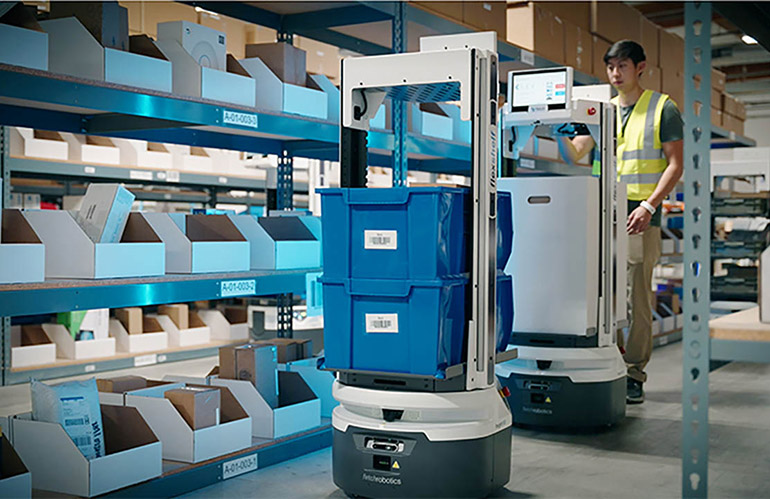
Fetch Robotics built its reputation on autonomous mobile robots (AMRs) — machines that navigate warehouse floors to move goods without fixed infrastructure like conveyor belts or rails. Zebra Technologies, a company rooted in enterprise asset tracking and barcode scanning, acquired Fetch in 2021 as part of a broader push into warehouse automation. The decision to divest the robotics division now suggests a strategic recalibration at Zebra, while handing Skild a ready-made deployment footprint and an established customer base in third-party logistics.
A foundation model meets the warehouse floor
Skild AI's central thesis is that robotic intelligence should not be tethered to a single machine form. The company has developed what it describes as a hardware-agnostic foundation model — a large-scale AI system trained to control diverse robotic bodies rather than one specific platform. The concept borrows from the same logic that underpins large language models in software: train a general-purpose system on broad data, then fine-tune it for specific applications. In Skild's case, the applications are physical — grasping, navigating, manipulating objects in unstructured environments.
Integrating this intelligence layer with Fetch's existing AMR platforms and Zebra's Symmetry orchestration software is the immediate operational goal. Symmetry coordinates fleets of robots within a facility, assigning tasks and managing traffic. If Skild can embed its foundation model into that stack, the result would be a system where individual robots are not merely following scripted instructions but adapting to real-time conditions — rerouting around obstacles, handling unfamiliar objects, adjusting to shifts in order volume without manual reprogramming.
The ambition is significant, but so is the gap between laboratory demonstrations and reliable warehouse performance. Foundation models for robotics remain far less mature than their counterparts in language and vision. Physical environments introduce latency, safety constraints, and edge cases that text generation does not face. A robot that hesitates or misjudges a grasp in a busy fulfillment center creates downstream delays that compound quickly.
The data flywheel and the talent acquisition
Beyond hardware, the acquisition is a play for two assets that cannot be purchased off the shelf: deployment expertise and operational data. Skild CEO Deepak Pathak identified the Fetch team's years of field experience as a primary motivation for the deal. Engineers who have spent years debugging robots in live warehouse environments carry institutional knowledge about failure modes, integration challenges, and customer expectations that no simulation can replicate.
The data dimension may prove equally consequential. Foundation models improve with scale, and scale in robotics means hours of real-world interaction data — sensor readings, navigation logs, manipulation attempts. Fetch's installed base provides a channel for collecting that data continuously, creating what the industry calls a data flywheel: deployment generates data, data improves the model, the improved model drives further deployment. This self-reinforcing loop is the mechanism through which companies like Tesla have sought to build durable advantages in autonomous driving, and Skild appears to be pursuing an analogous strategy for warehouse robotics.
Financial terms of the acquisition remain undisclosed. Skild has stated it will continue supporting the existing Fetch install base, a necessary commitment to retain customers who made purchasing decisions based on Zebra's backing. Whether those customers will embrace a startup's AI layer on top of their existing fleet — or view it as an unwelcome source of risk — remains an open question.
The broader tension is one the entire robotics industry faces. General-purpose intelligence promises flexibility and long-term cost advantages, but warehouse operators tend to be conservative buyers who prioritize reliability over capability. Skild now holds both sides of that equation: an ambitious AI platform and a fleet of proven machines. Whether the foundation model can deliver measurable gains in environments where uptime is non-negotiable — before the capital required to sustain both a hardware business and a research lab strains the company's resources — will determine whether the acquisition becomes a template or a cautionary tale.
With reporting from The Robot Report.
Source · The Robot Report