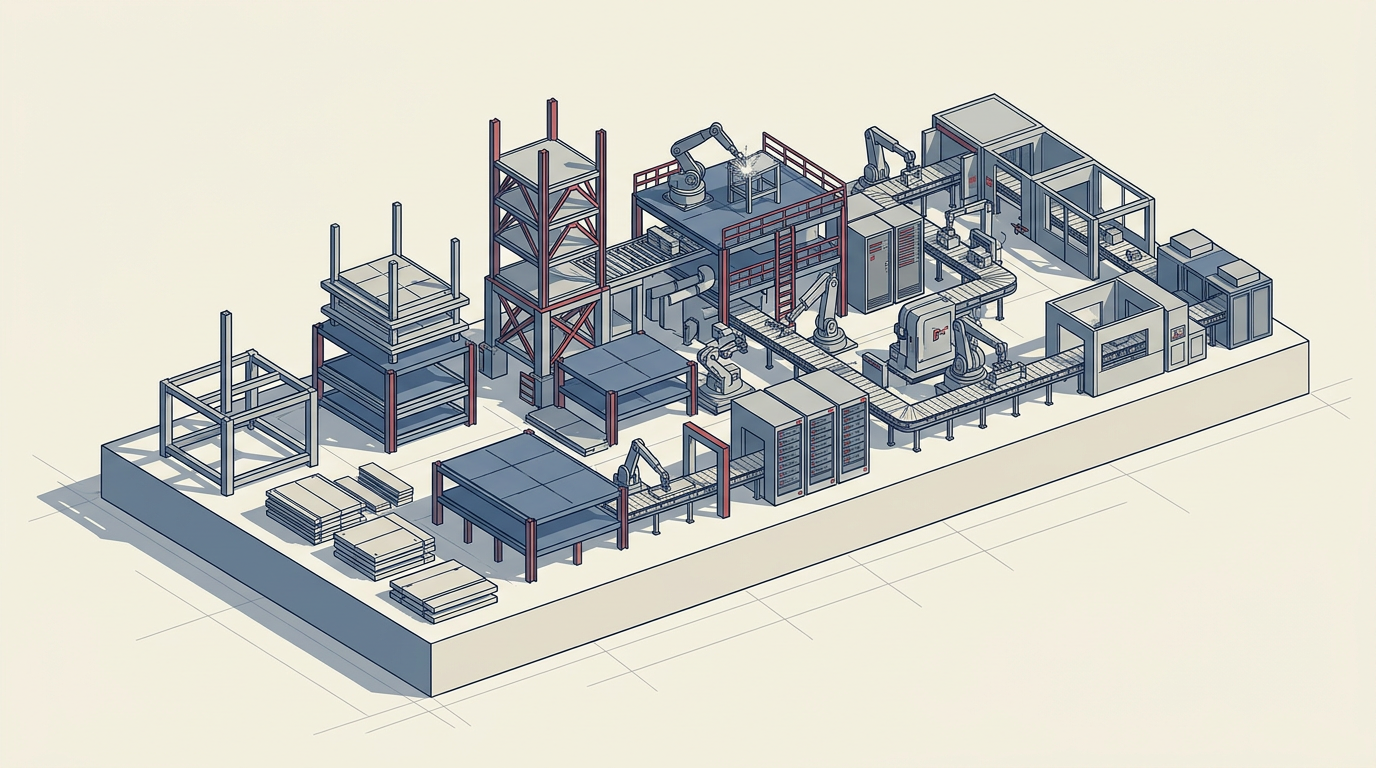
SoftBank Group Corp. has initiated plans to establish and list a new artificial intelligence and robotics entity, tentatively named Roze, within the United States. According to Bloomberg reporting, the conglomerate is positioning this venture as a strategic vehicle to consolidate its recent interests in advanced automation and machine learning, potentially seeking a public listing to secure the substantial capital required for scaling these high-intensity technological operations.
This development represents a significant evolution in Masayoshi Son’s investment philosophy, moving beyond the traditional venture capital model of the Vision Fund toward the active creation of vertically integrated technology firms. By seeking a US listing for Roze, SoftBank is not merely diversifying its portfolio but is explicitly aligning its corporate structure with the deep-pocketed, AI-enthusiastic investor base found in American capital markets, signaling a departure from its historical reliance on private funding cycles.
The Structural Shift in SoftBank’s Investment Thesis
For years, SoftBank functioned primarily as a global venture capital powerhouse, deploying massive amounts of liquidity into late-stage startups across various sectors. The transition toward creating entities like Roze suggests a realization that the current era of AI development requires a different level of control and operational oversight than what a passive investment model can provide. By architecting its own companies, SoftBank is attempting to capture more value across the entire technological stack, from foundational hardware and robotics to the software layers that govern them.
This pivot is consistent with the broader consolidation seen among global technology conglomerates that find themselves racing to secure a competitive foothold in the AI domain. The challenge for SoftBank lies in transitioning from an investment holding company to an incubator of industrial-scale robotics. This requires a shift in internal expertise, moving away from purely financial analysis toward deep engineering and product management, which presents a significant cultural and operational hurdle for an organization historically defined by its financial engineering prowess.
Furthermore, the focus on robotics as a core pillar of the Roze project reflects a long-standing interest of Masayoshi Son, who has frequently articulated a vision of a future dominated by advanced automation. By centralizing these efforts, SoftBank is betting that the synergy between AI and physical robotics will define the next decade of industrial productivity. This is an ambitious structural play that seeks to bypass the limitations of traditional portfolio management by building a dedicated, public-facing engine for innovation.
The Mechanics of Capital and Market Positioning
Listing a dedicated AI firm in the United States is a calculated move to tap into the premium valuations currently afforded to companies with clear exposure to machine learning and generative AI. US investors have demonstrated an appetite for high-growth, technology-driven narratives that domestic markets in Japan or elsewhere may not fully capture. By placing Roze in the US, SoftBank is positioning itself to benefit from the liquidity and the high valuation multiples that define the American tech sector.
This mechanism also serves to isolate the risks associated with AI and robotics development from the rest of the SoftBank Group balance sheet. If Roze operates as a separate, publicly traded entity, it allows the parent company to benefit from the upside of a successful IPO while creating a distinct vehicle for fundraising. This structure is designed to attract institutional investors who may be wary of the broader, more complex SoftBank conglomerate but are eager to gain direct exposure to a pure-play AI robotics firm.
Moreover, the decision to list in the US brings the company under the scrutiny of the Securities and Exchange Commission and other regulatory bodies, which demands a higher level of transparency and corporate governance. This transition to public status is a test of SoftBank's ability to operate under the rigorous demands of US capital markets. The success of this endeavor will likely depend on the company's ability to demonstrate clear technological differentiation and a sustainable path to profitability in a sector that is increasingly crowded with well-funded incumbents and agile startups.
Implications for Stakeholders and the Competitive Landscape
For competitors, the emergence of a well-capitalized entity like Roze, backed by the SoftBank ecosystem, represents a new form of rivalry. Unlike startups that rely on periodic funding rounds, Roze will have the backing of a major global conglomerate, potentially allowing it to pursue long-term research and development cycles that others cannot afford. This could pressure existing robotics firms to accelerate their own timelines or seek strategic partnerships to remain relevant in a market that is consolidating around large-scale players.
For regulators, the move highlights the growing concentration of power within the AI industry. As SoftBank and other tech giants continue to spin off or create dedicated AI units, the oversight of these entities becomes increasingly complex. Regulators will be watching to see how these companies manage data, intellectual property, and cross-border technological transfers, especially given the sensitive nature of robotics and advanced machine learning technologies. The international implications of such a firm, balancing Japanese roots with a US listing, will likely draw significant attention from trade and security authorities concerned with the global distribution of AI capabilities.
Open Questions and the Outlook for AI Integration
Several uncertainties remain regarding the operational roadmap for Roze. It is unclear how much of the existing Vision Fund portfolio will be integrated into this new entity or whether Roze will focus on developing proprietary technology from the ground up. The integration of diverse robotics and AI assets into a cohesive, publicly traded company is a complex undertaking that has historically proven difficult for even the most disciplined organizations to execute effectively.
Furthermore, the broader economic environment will play a critical role in determining the viability of a new AI-focused IPO. While current market sentiment remains optimistic about the potential of AI, the long-term sustainability of high valuations in the sector remains a subject of debate among analysts. As SoftBank moves forward with its plans for Roze, the focus will shift to how the company demonstrates value beyond the initial hype cycle, particularly in terms of tangible, revenue-generating applications of its robotics technology.
The development of Roze is a testament to the ongoing transformation of the global technology landscape, where the lines between venture capital, private equity, and industrial development continue to blur. As the company prepares for its debut, the market will be carefully observing whether SoftBank’s latest bet can successfully navigate the transition from a vision of the future to a functional, value-creating, and publicly traded reality. With reporting from Bloomberg
Source · Bloomberg — Technology


