The velocity of venture capital deployment in the artificial intelligence sector is compressing traditional fundraising timelines into a matter of weeks. According to reports from The Information, Core Automation—an AI model developer founded in late March by former OpenAI researcher Jerry Tworek—is currently seeking between $300 million and $500 million at a valuation of approximately $4 billion. This unverified target comes shortly after the company reportedly raised $100 million at a $1 billion valuation, a round that included participation from Nvidia.
This rapid markup is part of a broader surge in AI-focused capital formation, spanning both foundational models and applied services. In Europe, Stockholm-based startup Pit recently exited stealth with a €13.6 million funding round to provide "AI product teams as a service," while an unnamed anti-drone AI startup is reportedly in talks for a $2 billion valuation. Together, these signals suggest that strategic investments from chipmakers are acting as a powerful catalyst for traditional venture firms, accelerating early-stage dealmaking even as massive infrastructure financing faces emerging complexities.
The strategic premium on AI lineage
The reported trajectory of Core Automation illustrates the intense premium investors are placing on technical talent with direct experience at leading AI labs. OpenAI, the Microsoft-backed research organization behind ChatGPT, has become a primary credential for founders seeking immediate mega-rounds. If Core Automation successfully secures a $4 billion valuation just six weeks after its inception, it would underscore a market dynamic where traditional venture capital firms are aggressively following the lead of strategic corporate investors. Nvidia, the dominant designer of AI accelerators, has systematically invested in startups utilizing its hardware, effectively signaling technical viability to the broader venture ecosystem and compressing the time between seed and growth-stage rounds.
This aggressive capital deployment is not limited to foundational model developers in Silicon Valley. The €13.6 million funding round for Stockholm’s Pit, led by a16z—one of the technology industry's most influential venture capital firms—demonstrates a parallel appetite for applied AI solutions. By targeting AI product teams, Pit represents the secondary wave of the AI boom: startups building the operational scaffolding required to deploy generative models into enterprise environments. The willingness of top-tier firms to lead substantial early-stage rounds in European applied AI indicates that the investment thesis is broadening beyond core infrastructure.
Infrastructure scale and valuation friction
As venture capital flows rapidly into software and model development, the valuation expectations for specialized AI applications are also expanding. The unverified report of an anti-drone AI startup negotiating a $2 billion valuation highlights the convergence of artificial intelligence and defense technology. Investors are increasingly willing to assign foundational-model-like premiums to companies applying machine learning to physical security and autonomous systems, reflecting a belief that AI will fundamentally restructure defense procurement.
However, the physical infrastructure required to sustain this software ecosystem presents a distinctly different financing challenge. Recent reports indicate a potential snag in an $18 billion financing arrangement involving OpenAI and Broadcom, a major semiconductor and infrastructure software provider. While venture capital can swiftly capitalize a six-week-old software startup, the massive capital expenditures required for custom silicon fabrication and data center expansion involve complex debt and equity structuring. This reported friction suggests that the physical constraints of the AI boom may test the limits of current financing models, even as early-stage venture capital remains highly liquid.
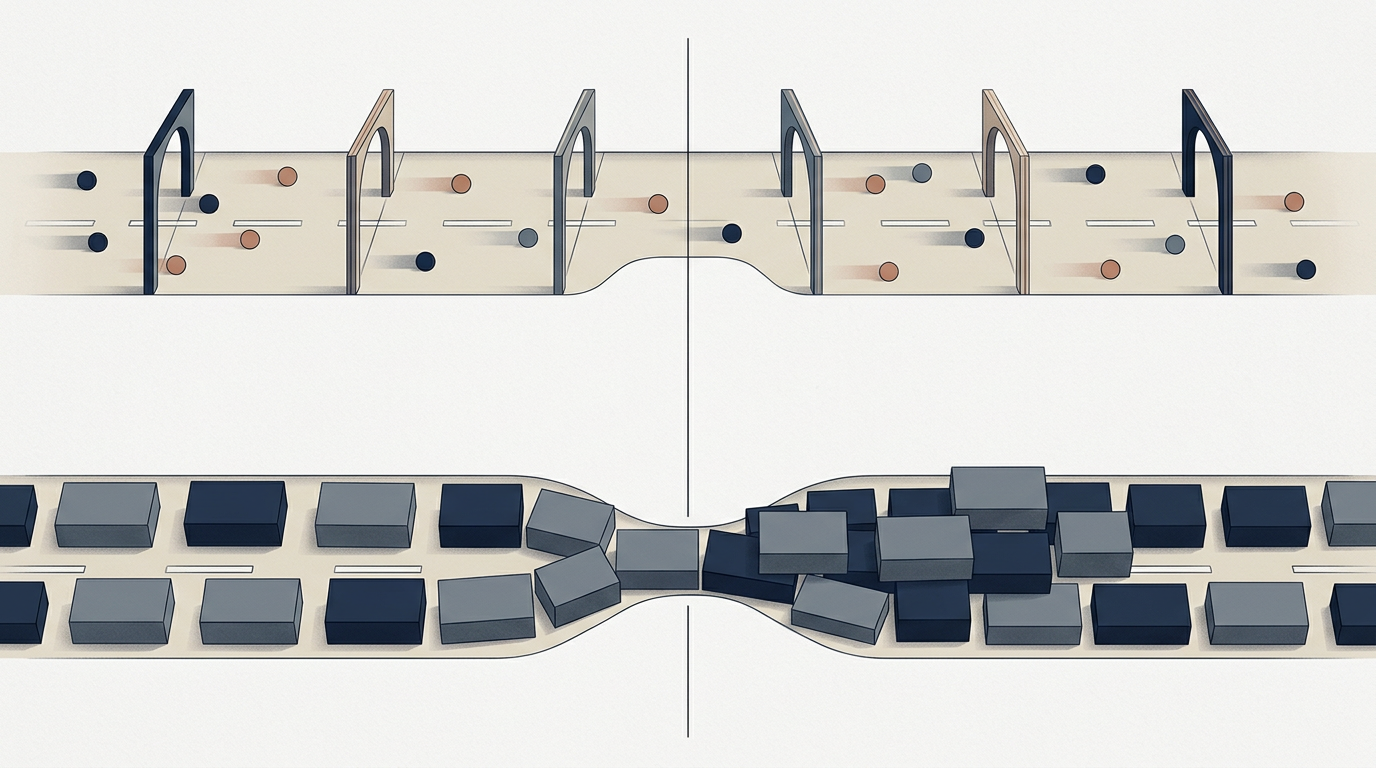
The current environment reveals a bifurcated AI capital market. On one end, strategic signaling from hardware incumbents is driving unprecedented early-stage markups for software and model developers. On the other, the sheer scale of capital required to build the underlying silicon infrastructure is introducing new friction points. As startups continue to raise back-to-back rounds, the ultimate test will be whether these accelerated valuations can withstand the gravitational pull of escalating compute costs.
With reporting from The Information, EU-Startups
Source · The Information